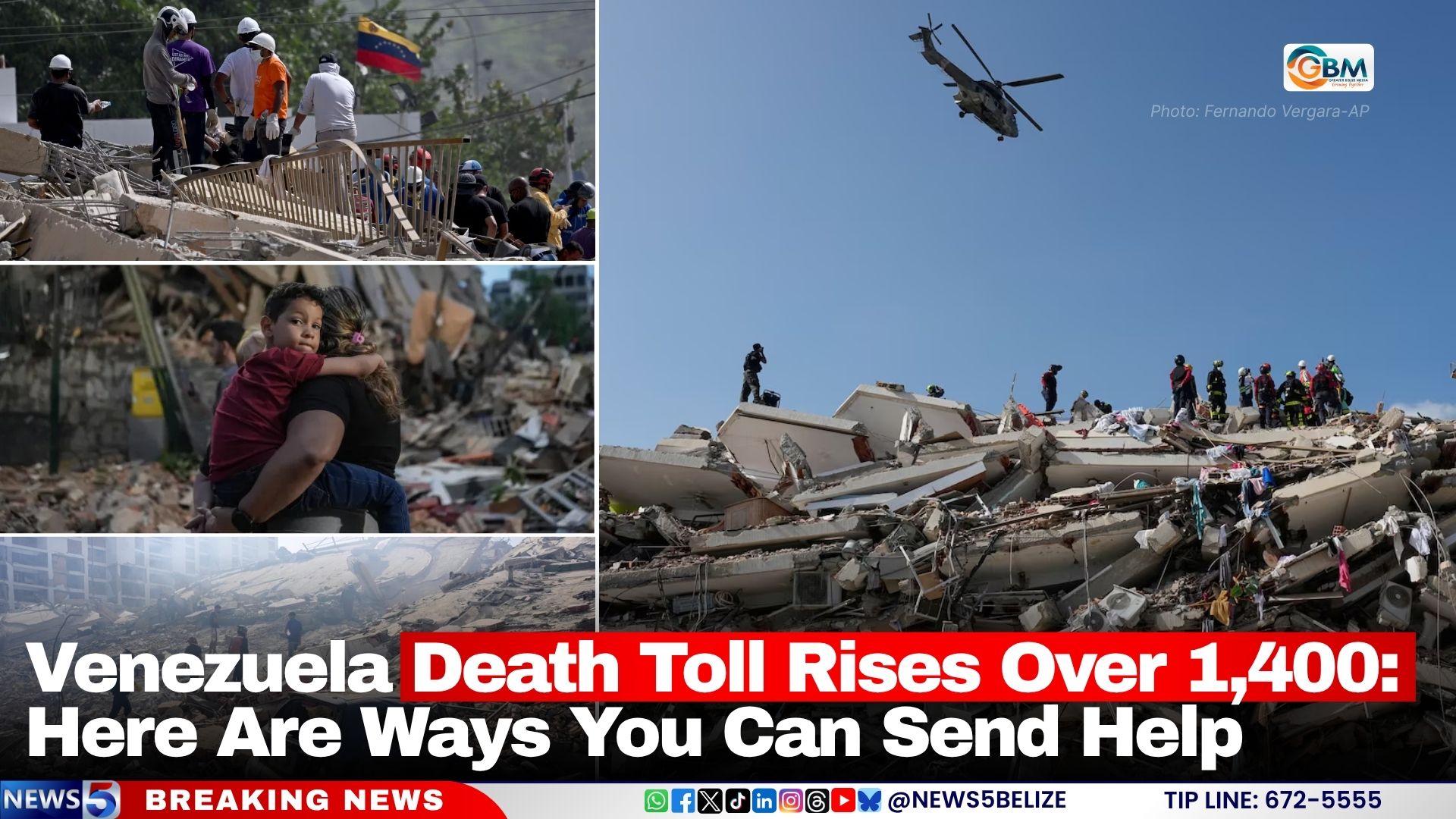
Three days after a pair of devastating earthquakes struck Venezuela on June 24, 2026, the human cost of the disaster continues to climb. Official updates put the confirmed death toll at 1,430, with nearly 69,000 people still unaccounted for and an estimated 6.76 million residents impacted across affected regions. As international rescue teams ramp up search and recovery operations, Venezuelan officials have shared clear, official channels for residents of Belize who wish to contribute humanitarian support to the crisis response.
Gerardo Antonio Argote, Venezuela’s Ambassador to Belize, has highlighted two verified avenues for donations: a dedicated national reconstruction fund administered by the Development Bank of Latin America and the Caribbean (CAF), and an emergency fundraising effort run by UNICEF.
For donors choosing to contribute directly to Venezuela’s long-term recovery and reconstruction, CAF manages the official Fund for the Recovery and Reconstruction of Venezuela, accepting donations in both U.S. dollars and euros. To complete a donation, contributors must first coordinate with CAF, include the reference line “Fondo para la Recuperación y Reconstrucción de Venezuela” alongside the donor’s full name in the transfer details. After processing the transfer, donors are required to send a copy of their bank receipt to alianzas@caf.com and trustfunds@caf.com, along with their full name, donation amount, currency used, transfer date, and contact information.
The second verified pathway is through UNICEF’s emergency response appeal, which is focused on meeting urgent needs for vulnerable communities, particularly children. The organization estimates that 1.8 million people, including 680,000 children, currently require life-saving humanitarian support across earthquake-impacted areas. UNICEF has already pre-positioned and deployed critical medical supplies, clean water infrastructure, and sanitation materials, but has issued a call for $52 million in additional funding to sustain its operations through the coming weeks and months.
“Three days into the response, the scale of need is becoming clearer,” explained Manuel Rodriguez Pumarol, UNICEF’s Representative in Venezuela. “Hospitals are operating beyond capacity, thousands of children don’t have reliable access to safe water, and many schools have been damaged.”
Acroads the worst-hit regions of La Guaira and Caracas, more than 2,000 rescue teams from 21 different international organizations continue working around the clock to pull survivors from collapsed structures and clear rubble. The international community has stepped up with additional support in recent days: the Trump administration confirmed it is preparing a new nine-figure aid package for Venezuela, which comes on top of the $150 million in emergency aid committed the day after the earthquakes struck. Per reporting from NBC News, SpaceX’s Starlink satellite internet service has also committed to providing free connectivity to support emergency coordination and recovery operations throughout the impacted zone.
Even as rescue efforts progress, survivors are still grappling with the trauma of the disaster. “People are still terrified to reenter what were their homes,” Loyce Pace, regional director for the International Red Cross, told NBC News.