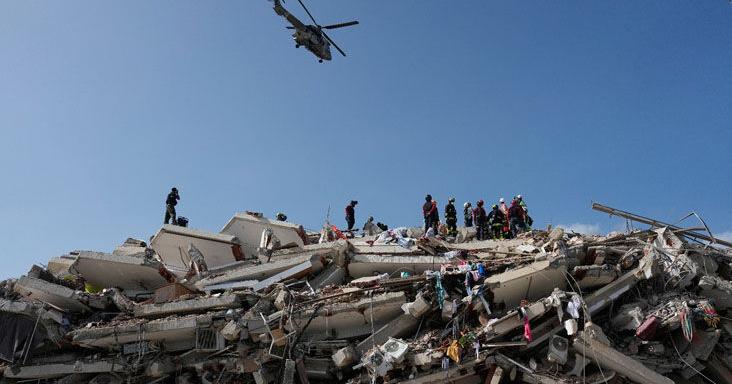
Just hours after a pair of powerful earthquakes struck Venezuela’s northern coastline last Wednesday, the United Nations Development Programme (UNDP) completed a rapid satellite-powered damage assessment that paints a stark picture of the disaster’s scale. The preliminary Rapid Digital Assessment (RAPIDA) pegs direct physical damage from the magnitude 7.2 and 7.5 quakes at an estimated US$6.7 billion – a sum equal to roughly 6% of the South American nation’s total annual gross domestic product.
The twin tremors were felt across Venezuela’s most densely populated and economically critical regions, including the capital city of Caracas and the coastal and inland states of La Guaira, Carabobo, Miranda, Yaracuy, and Aragua. According to the UNDP’s analysis, released publicly this week, approximately 8.6 million people across northern Venezuela were exposed to at least moderate shaking, with 2.1 million experiencing stronger, more destructive seismic activity. As of June 26, the official national death toll stands at 920, though UNDP officials note that casualty numbers are likely to climb as search-and-rescue teams continue working through damaged and collapsed structures.
In total, around 1.7 million buildings sit in the affected zones, with large concentrations located in the hardest-hit states. The UNDP’s mid-range estimate for direct damage puts the figure between US$4.7 billion and US$8.7 billion, with the majority of losses tied to destroyed or damaged residential housing and critical economic assets. Importantly, this preliminary figure does not account for damage to public infrastructure, broader national economic disruptions, or long-term reconstruction costs. Historical disaster data shows that total disaster impact typically lands between 1.5 and 3 times the value of calculated direct damage, meaning the final overall cost could reach as high as $26 billion. Satellite analysis also detected measurable reductions in night-time light output across parts of Carabobo, La Guaira, Caracas and Aragua, indicating widespread, persistent power outages in those regions in the immediate aftermath of the quakes.
Luis Francisco Thais, UNDP Resident Representative in Venezuela, emphasized that rapid, data-driven assessments are foundational to effective disaster response planning. “The speed and accuracy of early assessments are essential for an effective response,” Thais explained. Unlike traditional on-the-ground assessments that can take days or weeks to compile initial data, RAPIDA leverages artificial intelligence, high-resolution satellite imagery, and Geographic Information Systems (GIS) technology to deliver a comprehensive situational overview within 72 hours of a crisis. The tool helps response teams quickly map damage, identify at-risk vulnerable populations, and coordinate cross-agency interventions. Thais added that disasters also present an opportunity to reframe long-term development: “Every crisis is an opportunity to rethink development strategies with resilience at their core. This ensures that recovery not only restores what was lost but also builds a more sustainable future.” The UNDP is continuing to refine its assessment as higher-resolution satellite imagery becomes available, with Venezuelan authorities still working to count displaced persons and map full infrastructure damage.
Beyond the damage assessment, regional development bank CAF – Development Bank of Latin America and the Caribbean – has moved quickly to support recovery efforts, announcing the launch of a dedicated Venezuela Recovery and Reconstruction Fund this week. The new fund is designed to pool public and private donations from around the world, channeling resources directly to the reconstruction priorities identified by the Venezuelan government. The mechanism aims to cut through fragmented aid delivery to speed up recovery in impacted communities.
CAF is kicking off the fund with an initial US$1 million in seed capital, added to the $300,000 in humanitarian assistance the bank previously pledged. Critically, the bank will not charge any administrative fees for the fund, ensuring 100 percent of all donations go directly to emergency response and reconstruction work.
“Acts of nature are met with acts of humanity and solidarity, and Venezuela needs us today more than ever,” said Sergio Díaz-Granados, CAF’s executive president. As a founding member of CAF and the host country for the bank’s headquarters, Venezuela holds a unique place in the institution’s history, he explained. “We are launching this fund for reconstruction: an agile and transparent mechanism that we invite governments and the private sector to join, so that their contributions, together with ours, become part of an effective response. Our commitment is to accompany the Venezuelan people not only during the emergency, but throughout the entire path of recovery and reconstruction that lies ahead.”
The fund will roll out in three sequential phases, aligned with the progression of disaster recovery. The first phase focuses on immediate emergency relief and life-saving humanitarian aid. The second phase prioritizes restoring core essential services, including healthcare, water and sanitation, energy access, education, and digital connectivity. The final phase will focus on long-term infrastructure rebuilding, restoring local livelihoods for displaced and impacted communities, and upgrading construction standards to improve resilience against future natural disasters.
To ensure full transparency and accountability, all fund resources are held separately from CAF’s own operating capital, with full traceability for every individual intervention, regular public financial reporting, and independent third-party audits. Donations can be made in either U.S. dollars or euros, and resources can be deployed flexibly through pre-vetted implementing organizations or managed directly by CAF when that structure proves more efficient. In a statement, CAF reaffirmed its long-term commitment to leveraging its technical and financial capacity to mobilize regional and international solidarity in support of the Venezuelan people through the entire recovery process.