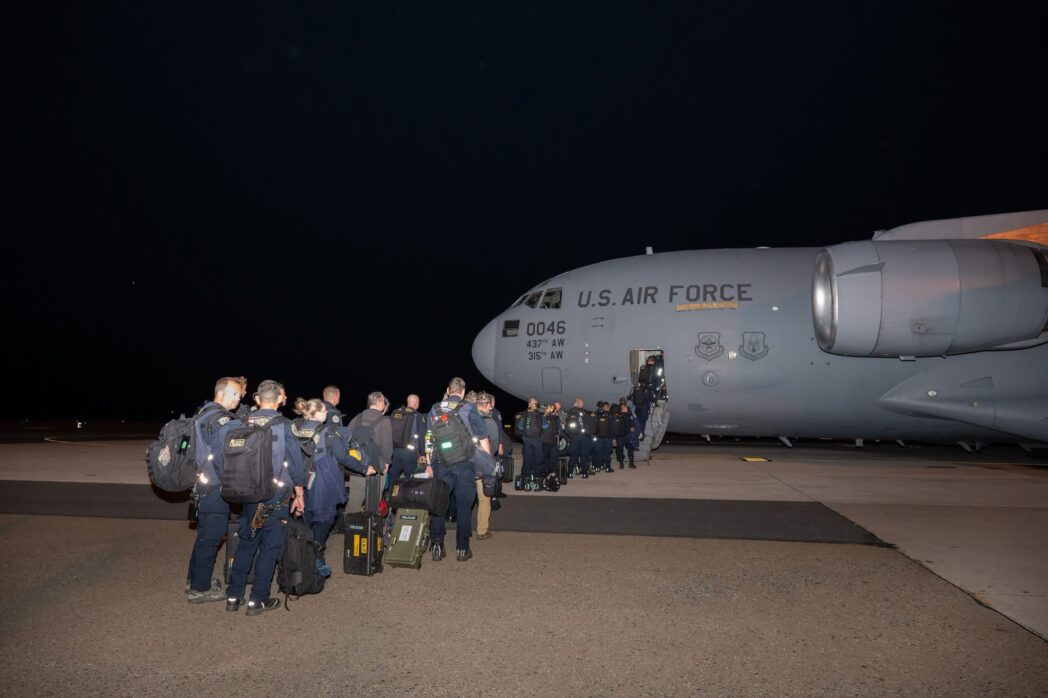
In the immediate aftermath of a series of destructive earthquakes that struck Venezuela overnight, the United States has moved quickly to mobilize life-saving resources, rolling out a whole-of-government emergency response to support affected populations. Within hours of the disaster, former U.S. President Donald Trump authorized an extensive package of support that combines direct financial aid, on-the-ground search and rescue operations, and close collaboration with Venezuela’s interim authorities to meet the urgent needs of communities impacted by the quakes.
Senior officials from the U.S. Department of State, which is leading the federal response effort, have underscored that the first 24 hours following a major natural disaster are the most critical for saving lives in the Western Hemisphere. To that end, the department has deployed a regional Disaster Assistance Response Team (DART), which includes two elite urban search and rescue units tasked with locating and extracting survivors trapped under rubble. Back at the department’s Washington D.C. headquarters, agency leaders have established a dedicated Venezuela Earthquake Response Task Force to synchronize relief efforts across public and private sector partners, conduct rapid needs assessments, and deliver consular support to any U.S. citizens affected by the disaster.
Beyond immediate search and rescue operations, airlift capacity, and cross-agency coordination, the U.S. is making $150 million in emergency humanitarian assistance available to Venezuelan populations through experienced implementing partners. The package breaks down into $50 million in new bilateral grants for frontline organizations already operating in Venezuela, including World Vision, Samaritan’s Purse, Catholic Relief Services, International Medical Corps, the International Organization for Migration, and the World Food Programme. An additional $100 million is being contributed to the United Nations Office for the Coordination of Humanitarian Affairs (OCHA) Venezuela pooled humanitarian fund, expanding the scope of coordinated relief across affected areas. Department of State staff are also supporting partner organizations with logistics planning and official liaison with interim Venezuelan governance bodies.
The response effort draws heavily on close coordination with the U.S. Department of War (DoW), leveraging the military’s unmatched logistical and operational infrastructure to speed the movement of response teams, rescue equipment, and life-saving aid into hard-hit zones. For large-scale natural disasters like this earthquake sequence, securing reliable logistics to move personnel and supplies into affected areas is the top operational priority. DoW will deploy both fixed-wing and rotary aircraft to provide specialized mobility support, enabling response teams, U.S. government personnel, and implementing partners to conduct damage assessments, locate injured survivors, and deliver critical emergency supplies.
The interagency coordination cell activated by the State Department integrates expertise from across multiple federal agencies, with DoW providing dedicated support to secure logistics pathways, access pre-positioned military assets in the region, and deploy forward personnel to cut down on response time and boost operational effectiveness. The Venezuela Earthquakes Response Task Force, stood up within hours of the first quake, brings together specialists from the State Department’s Bureau of Disaster and Humanitarian Response, Bureau of Consular Affairs, DoW, and other federal partners. Task Force leadership is made up of senior experts with direct experience managing past regional disasters, including Hurricane Melissa, ensuring immediate operational readiness and proven crisis leadership.
The deployed DART brings global-class disaster response expertise, technical and programmatic guidance, on-the-ground operational leadership, and real-time coordination to the response effort. Made up of veteran disaster specialists from across the State Department, the team’s core mandates include conducting on-the-ground condition assessments, prioritizing the most urgent unmet humanitarian needs, and leading overall U.S. government response activities. DART members are working alongside existing State Department assistance staff and U.S. Embassy diplomatic personnel to synchronize efforts with local authorities and international partner organizations.
The two urban search and rescue teams activated for the response draw trained personnel from the Fairfax County, Virginia, and Los Angeles County, California, fire departments. As core components of the DART deployment, these units are the U.S. government’s primary international search and rescue assets, with each team including highly qualified personnel: career firefighters, emergency physicians, structural engineers, and certified canine search specialists. Both teams previously deployed in response to Hurricane Melissa in October 2025, where they conducted damage surveys across impacted areas of Jamaica, cleared debris to open access routes for relief convoys, and supported the transportation of emergency supplies to vulnerable communities.
DoW elements, including U.S. Southern Command (SOUTHCOM), are working in lockstep with the DART to deliver life-saving support in close coordination with local partners, leveraging SOUTHCOM’s longstanding regional presence to ensure rapid, sustained operational backing for the relief effort.
Consistent with the Trump administration’s stated priority of protecting the safety and security of U.S. citizens overseas, the State Department is working around the clock to provide consular support to U.S. citizens and their family members in earthquake-affected areas. The department has launched a dedicated Venezuela Earthquakes Information webpage to host the latest updates on the U.S. response, and U.S. citizens in Venezuela are directed to the STEP.state.gov portal to receive real-time safety updates from the U.S. Embassy and review the department’s official Travel Advisory for Venezuela.
In closing, the U.S. government reaffirmed its unwavering commitment to supporting Venezuela through recovery from the devastating disaster, noting that officials will continue to identify and deploy additional meaningful assistance throughout the ongoing crisis response period.