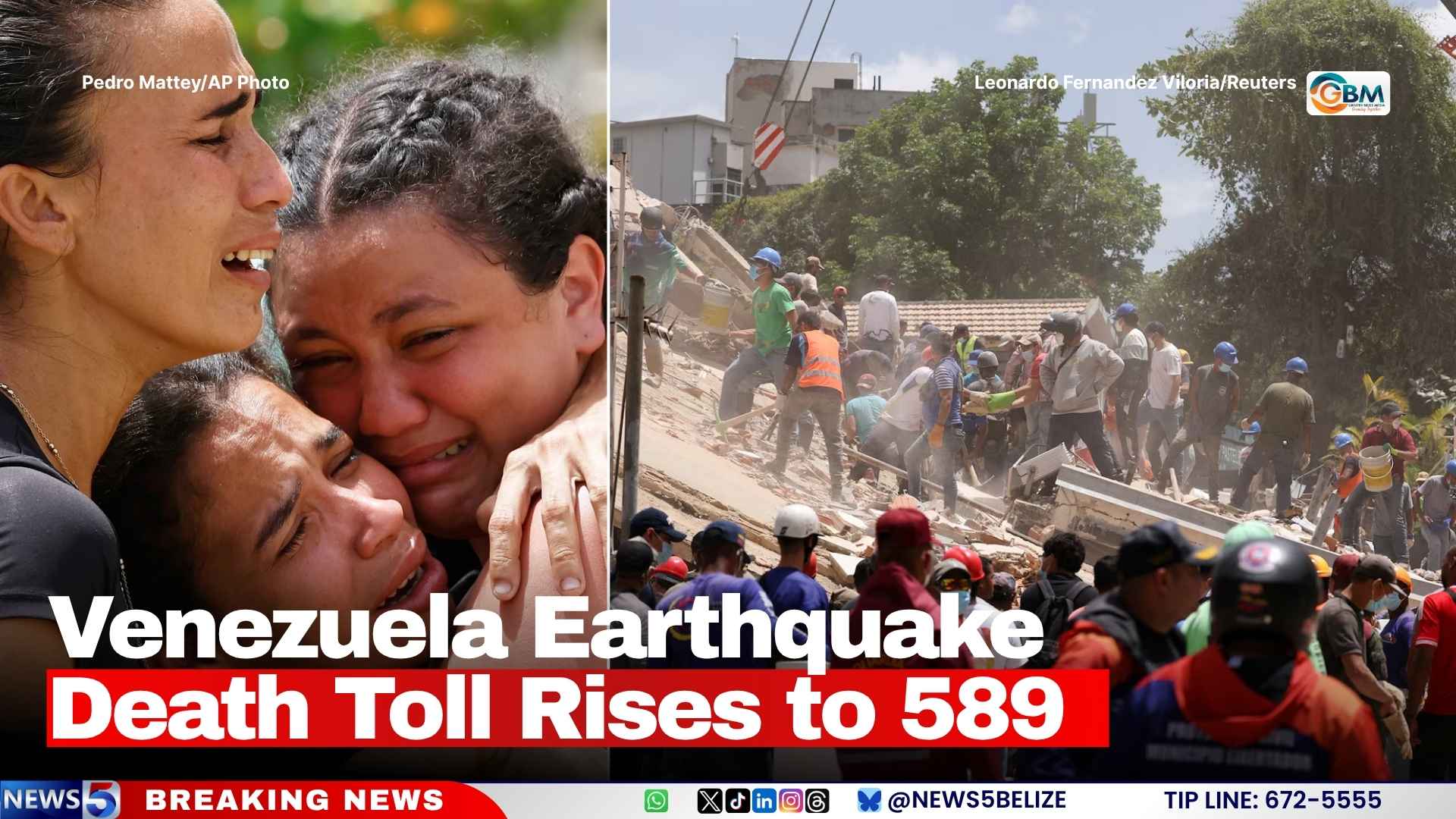
On the evening of Wednesday, June 24, 2026, Venezuela’s northern coastal region was shattered by two back-to-back massive earthquakes that have become the country’s deadliest seismic event in nearly 60 years. As of June 26, the confirmed death toll has climbed to 589, with thousands more injured and widespread destruction across urban and rural communities near the capital.
The disaster unfolded with devastating speed: a 7.2-magnitude tremor struck first, collapsing residential and commercial structures across Caracas and forcing panicked residents to flee into open streets. Within minutes, a stronger 7.5-magnitude quake hit the same region, compounding damage and trapping thousands under rubble.
There remains a discrepancy in reported injury figures: Venezuela’s Health Ministry tallied more than 4,300 people harmed by the quakes on Thursday, while acting President Delcy Rodríguez released a lower count of 2,980 injured one day later. At least 18 foreign nationals from five countries—Portugal, Spain, Brazil, China, and Chile—are among those confirmed dead. Rodríguez confirmed that intensive search-and-rescue operations are ongoing 24 hours a day, but warned the death toll will almost certainly continue to rise as emergency teams gain access to remote and isolated communities still cut off by damaged infrastructure.
In response to the disaster, a wave of international aid has begun to arrive. Neighboring Latin American nations including Mexico, Chile, and El Salvador have deployed specialized search-and-rescue teams along with critical medical supplies. The United States has repositioned two Navy ships off Venezuela’s coast and sent transport aircraft and helicopters to support rescue operations, damage assessments, and emergency supply delivery. Regional bodies and global leaders have also extended solidarity: Belize Prime Minister John Briceño offered deep condolences via social media, noting that crises of this scale reaffirm that “our shared humanity is stronger than any challenge nature may bring.” The Caribbean Community (CARICOM) issued an official statement mourning the loss of life, expressing full solidarity with the Venezuelan people during their “period of immense grief,” and praising first responders and local volunteers working in harsh conditions to save lives.
The disaster comes as Venezuela already faces widespread food insecurity, a reality the World Food Programme (WFP) has warned will worsen following the quakes. “The loss of livelihoods and assets is likely to compound the situation,” the WFP said, adding that food is one of the most urgent unmet needs in impacted areas. The agency’s United States branch confirmed WFP teams are already on the ground coordinating response efforts, but warned the organization requires immediate additional funding and support to scale up life-saving humanitarian assistance across affected regions.
The 1967 Caracas earthquake, a 6.7-magnitude event that killed more than 200 people, was the last major seismic disaster to strike Venezuela prior to this week’s events, making the 2026 quakes the deadliest in modern Venezuelan history.