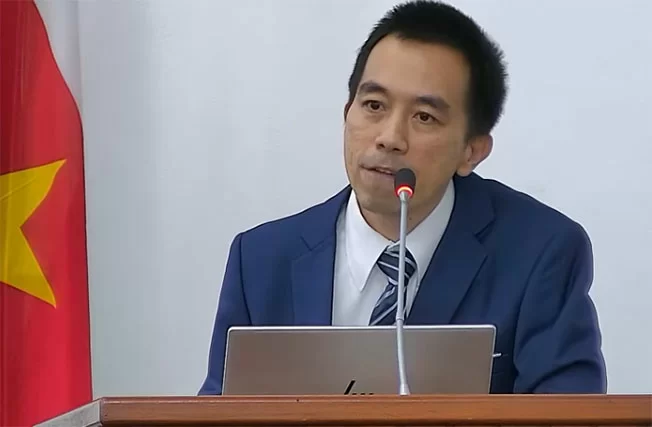
As Suriname stands on the cusp of a transformative new era driven by upcoming offshore oil and gas production, a senior Surinamese lawmaker has urged the nation to strengthen its administrative and policy delivery capabilities long before revenue starts flowing in. Jeffrey Lau, a member of the National Assembly from the National Party of Suriname (NPS) and part of the influential Committee of Rapporteurs, outlined his stance during the second round of national budget deliberations on June 26.
Lau emphasized that Suriname is currently at a historic crossroads, with projected oil and gas revenues unlocking unprecedented opportunities for national development. But he pushed back against the common assumption that natural resource wealth alone will deliver long-term, sustainable growth. Contrary to the narrative that oil development only begins when commercial extraction starts, Lau argued that the foundation of Suriname’s oil economy is being built right now, through the policy choices and budget decisions the country makes today.
A core warning from the lawmaker centered on the misallocation of future oil earnings: he stressed that incoming resource revenues should not be used to patch up long-standing, unresolved fiscal and structural problems. Instead, Suriname must prioritize strategic investments in three foundational areas: robust public institutions, transparent and effective governance, and long-term human capital development.
On the current state of governance, Lau acknowledged that Suriname has already put in place key legal and regulatory frameworks to improve public financial management, including the Accounting Act and the legal structure for the country’s Savings and Stabilization Fund. Even with these structural advances in place, however, the country continues to struggle with consistent, effective policy implementation. “Suriname does not primarily face a money problem – it faces an implementation problem,” Lau explained. “We have already put together plans, passed legislation, and drafted policy documents, but what society demands and deserves is tangible results.”
To address this gap, Lau called for the Surinamese government to adopt a more professional, efficient, and results-focused working culture. He also noted that the National Assembly retains a critical oversight role, requiring lawmakers to continue monitoring policy delivery with rigorous, critical scrutiny.
Transparency and public accountability were another key focus of Lau’s remarks. He highlighted persistent transparency failures in the public and parastatal sectors, pointing to the Suriname Airways (SLM) as a prominent example: the state-owned airline has not published a full annual financial report for multiple consecutive years. Lau argued that the national government must enforce requirements for state-owned entities to submit timely financial disclosures, so that both parliament and the general public can oversee how public funds are being used.
In closing, Lau stressed that oil revenues should be treated as a tool for development, not an end goal in themselves. The long-term future of Suriname will not be determined by how much crude oil the country extracts from its offshore reserves, but by how the proceeds from that extraction are invested to improve public welfare. Key priority areas for investment, he said, should include education, public healthcare, national infrastructure, and institutional capacity building.
“The true wealth of a nation does not lie beneath its soil – it lies in its people,” Lau emphasized. “History will not judge us by how much oil we discover. It will judge us by what we build with that resource.”