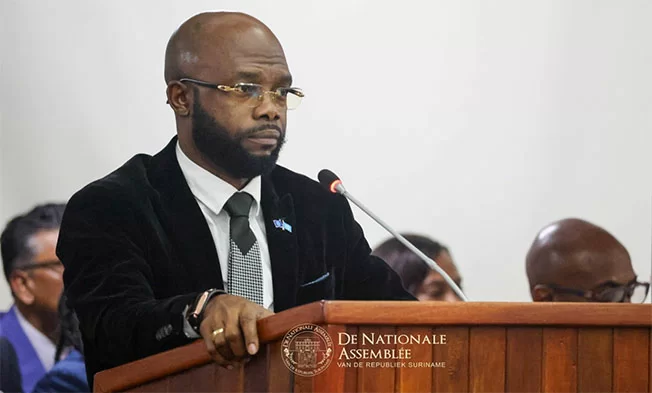
Suriname’s Minister of Public Health, Welfare and Labor (VWA) André Misiekaba has unveiled an ambitious plan to deliver long-overdue recognition for the nation’s nursing workforce, marking a landmark step toward addressing the country’s growing health care staffing crisis. Speaking for over three hours during the national budget debate in the National Assembly, Misiekaba firmly threw his support behind a special working group’s proposal to significantly boost nurse salaries, a move designed to slow the steady exodus of skilled health personnel to higher-income countries abroad.
Misiekaba emphasized that fair financial compensation for nurses stands as the top priority for his ministry’s sweeping health care reform agenda. The working group’s draft pay framework proposes setting entry-level nurse salaries between $700 and $1,000 U.S. dollars, converted to local Surinamese dollars, with final pay levels adjusted based on the classification and size of the facility where a nurse works. According to the minister, the proposal will undergo additional technical and financial reviews before being submitted to the Surinamese cabinet for approval around August.
Making his stance on nurse compensation unmistakably clear, Misiekaba stated firmly: “No one will touch my nurses.” He described nurses as the literal backbone of Suriname’s entire health care system, noting they have gone without adequate recognition and fair pay for far too long. For years, the minister explained, nurses have been systematically underpaid and undervalued despite bearing full responsibility for keeping health care services running every single day. He specifically highlighted the irreplaceable role nurses played in the country’s response to the COVID-19 pandemic, and pointed to the ongoing global shortage of skilled health care workers that has created intense competition for qualified nursing staff.
Official data shared by the minister shows that between 2020 and 2025 alone, Suriname lost more than 1,000 nurses to migration, with most relocating to the Netherlands, Belgium, and Sint Maarten. Left unaddressed, Misiekaba warned, this damaging brain drain will only continue to erode the capacity of Suriname’s health care system.
The minister rejected a piecemeal alternative proposal that would have only increased nurse allowances, arguing that the administration is intentionally pursuing a structural, long-term solution. The new standardized pay scale will harmonize salaries across the entire health sector and bring compensation in line with the value of nurses’ work, he explained.
Beyond salary adjustments, the plan includes additional measures to retain nursing talent. Starting in 2027, the Surinamese government will fully cover the cost of nursing training for students at the COVAB nursing school, in exchange for a requirement that graduates work in the country for a set number of years after completing their program. Officials are also exploring targeted housing support for nurses, and are negotiating with the Netherlands to develop joint nursing training programs that align with Suriname’s long-term staffing needs.