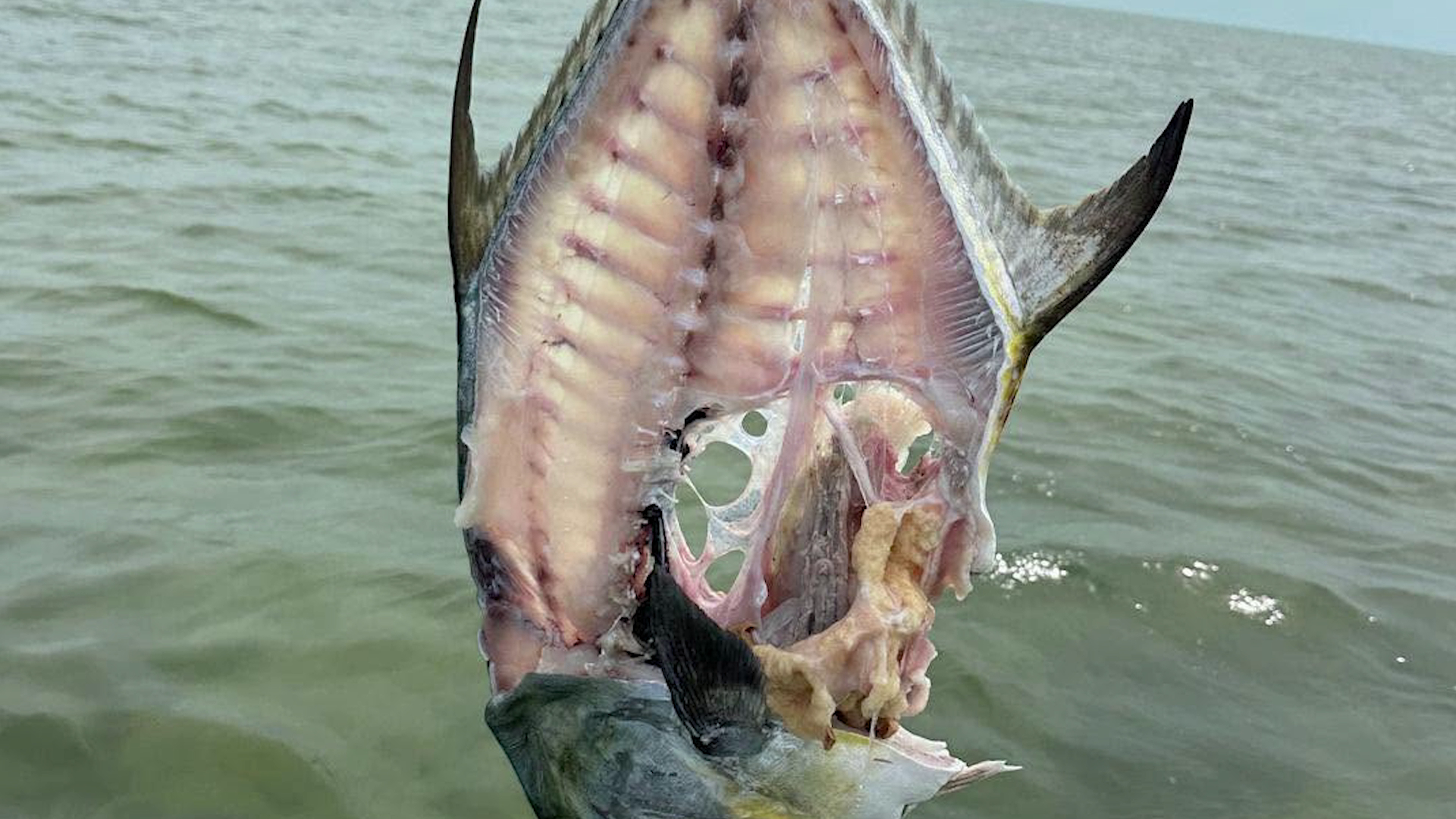
Off the coastal waters of San Pedro, a grisly discovery has ignited urgent warnings about the future of Belize’s iconic marine protected areas and its billion-dollar recreational fishing economy. Earlier this week, the skinned carcass of a permit fish — a species strictly protected under Belizean conservation and fishing regulations — was found abandoned near an unregulated fish trap, prompting the Belize Flats Fishery Association (BFFA) to call for an immediate, full investigation into the incident.
Permit fish are far more than just a native marine species in Belize: they form the backbone of the country’s world-renowned catch-and-release flats sport fishing sector, a multi-million-dollar industry that supports thousands of livelihoods in coastal communities across the nation. Industry leaders warn that rising poaching of protected game fish like permit, tarpon, and bonefish threatens not only the fragile local marine ecosystem but also the economic stability of regions that rely on tourism and recreational fishing.
In a phone interview, BFFA President Eworth Garbutt emphasized that weak enforcement of existing protection rules is the primary driver of growing illegal harvesting of protected species. “This is our bread and butter — the industry we all depend on is being drained because we don’t have enough enforcement on the water,” Garbutt explained.
To address the gap in public awareness, the BFFA is currently rolling out new public education initiatives, including informational signage at key fishing spots around San Pedro. Garbutt noted that the problem is not limited to commercial poachers: even recreational guides and occasional anglers are increasingly violating catch-and-release rules, making widespread outreach a critical priority. “It’s an ongoing, really prevalent issue,” he added.
Financial data collected several years ago pegs the annual economic contribution of Belize’s catch-and-release sport fishing sector at more than $200 million, underscoring the stakes of failing to curb poaching. Under current regulations, all fishing for permit is required to follow strict catch-and-release standards: anglers are prohibited from keeping the fish out of water for longer than three seconds, just enough time for a photo before the animal is returned to the ocean to survive.
The BFFA is now calling on all Belizeans and visitors to report any suspicious activity involving the catching, killing, selling, or possession of protected marine species to relevant authorities. Industry leaders stress that protecting Belize’s coastal waters is not an optional conservation measure — it is a core requirement to safeguard both the country’s unique marine ecosystem and the economic future of coastal communities that depend on sustainable recreational fishing.
This report is based on a transcript from an evening television newscast published online.