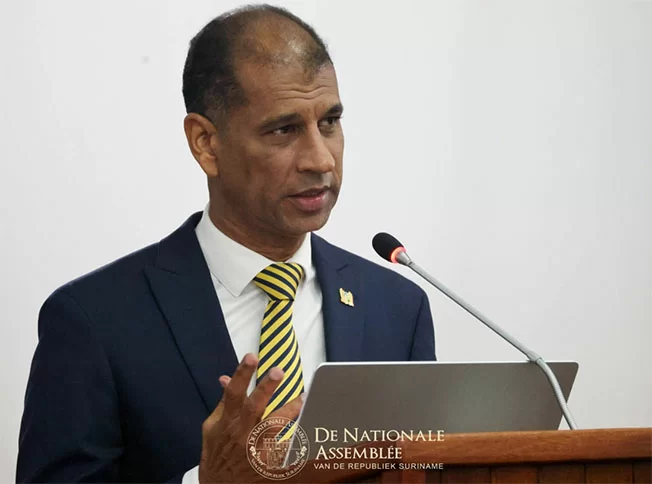
Suriname is on the cusp of a landmark milestone in its climate finance development, with advanced preparations underway for its first-ever international carbon credit offering, according to Minister of Oil, Gas and Environment Patrick Brunings. The first binding sales agreements could be signed as early as next month, Brunings announced during budget debates in the country’s National Assembly.
Brunings confirmed that the Surinamese government has already finalized a partnership with Deutsche Bank to oversee the trading process for the carbon credits, putting the multi-year development project on track for its launch. Preliminary discussions with potential buyers are already in motion, with major global industrial players Bayer and Siemens among the entities that have expressed interest in purchasing credits.
“We are now in the final stretch,” Brunings said of the multi-year initiative to develop the country’s carbon credit market. He added that he will travel abroad in early July to conclude the final negotiating rounds, and did not rule out that the first sales contracts will be executed immediately during those talks.
Currently, Suriname holds approximately 4.8 million verified carbon credits ready to be offered to international buyers. The country is targeting a gold standard price point of around $25 per credit, though negotiators will aim to secure a higher rate during buyer discussions, Brunings noted.
For context, carbon credits are tradable certificates that allow countries or private companies to offset their greenhouse gas emissions by funding carbon sequestration and conservation projects. Suriname is one of a small handful of nations globally that are carbon-negative – meaning the country sequesters more carbon than it emits – thanks to its vast, intact old-growth forest landscapes. This unique ecological position allows Suriname to generate sustainable revenue from protecting its natural forest ecosystems through the global carbon market.
In a key transparency and development commitment, Brunings emphasized that all proceeds from the carbon credit sales will not be directed to the general national treasury. Instead, 100% of the revenue will be allocated to two core priorities: ongoing environmental conservation initiatives across the country, and community development for Suriname’s Indigenous and tribal peoples, who are the primary stewards of much of the nation’s forest lands.
To ensure transparent and accountable management of these new funds, the Surinamese government is establishing a dedicated governance framework for carbon credit revenue. The planned structure includes an oversight body led by key cabinet ministers and the president, a technical working group to assess and approve proposed projects, and a multi-stakeholder commission with representation from Indigenous and tribal communities, the private sector, and other relevant interest groups.
Brunings noted that the projected revenue from carbon credit sales will also provide critical financial support for high-priority public projects that currently place a heavy strain on the country’s national budget.
The upcoming carbon credit launch aligns closely with the national climate strategy Suriname unveiled at the COP30 climate conference held in Belém, Brazil earlier this year. At that summit, the government reaffirmed its commitment to balancing inclusive economic growth with the preservation of its status as one of the world’s most heavily forested and carbon-negative nations.