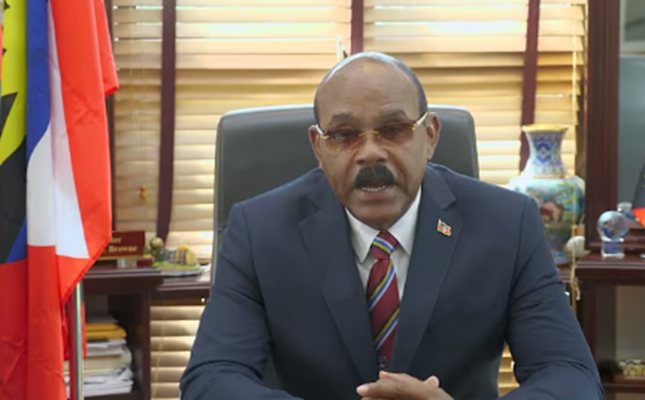
As the Organisation of Eastern Caribbean States (OECS) marks its 45th year of advancing regional cooperation, the bloc is confronting a growing roster of unprecedented challenges that test the sovereignty and resilience of its small island member states. At the 78th OECS Authority Meeting held in St. John’s, Antigua and Barbuda, Prime Minister Gaston Browne delivered a blunt, unflinching address calling out coercive foreign pressure from the United States over the forced acceptance of third-country deportees, a crisis that threatens to destabilize the small Caribbean nation.
For nearly half a century, the OECS has anchored integration and progress across the Eastern Caribbean, building shared institutions from the Eastern Caribbean Supreme Court to the Eastern Caribbean Civil Aviation Authority that have lifted development outcomes for all member states. But in 2026, shifting global power dynamics have created a new set of cascading pressures that regional leaders cannot ignore. Browne framed the current global moment as a period of profound transformation: marked by intensifying great power competition, regional conflicts with global spillover effects, fractured global supply chains, a growing retreat from multilateral cooperation, and the increasing use of economic coercion as a tool of international statecraft.
The most pressing immediate challenge Browne highlighted is the U.S. push to force OECS nations to accept hundreds of third-country deportees, many of whom have criminal records. Browne confirmed that small island states across the region have been pressured into accepting the deportees, with implicit threats of punishment if they refuse to comply. Many Caribbean governments have already begun pushing back to prevent the influx of criminal individuals that would strain local resources and undermine public safety.
Speaking directly to U.S. authorities, Browne made clear that his government would not compromise Antigua and Barbuda’s national interest for foreign demands. “I cannot willingly cooperate with any other power, any country, to destroy our beautiful Twin Island state,” he stated, adding that his administration has drawn a clear line: it will not accept any criminal deportees, and will cap the total number of deportees allowed into the country at a level the nation can support.
Originally, U.S. proposals called for Antigua and Barbuda to accept up to 120 deportees, a figure Browne’s administration rejected outright as completely unacceptable. In its place, the government tabled a counterproposal to accept a maximum of just 10 deportees per year, a limit aligned with the nation’s small population and limited administrative, social and law enforcement resources. Browne emphasized that he hopes the United States will respect the nation’s sovereign right to set its own policies on entry and resettlement, avoiding acrimony or punitive measures in response to Antigua and Barbuda’s position.
Beyond the deportation crisis, Browne used the OECS meeting platform to draw attention to another existential threat facing small island developing states across the Caribbean: skyrocketing living costs driven largely by global energy price volatility and external economic shocks beyond the region’s control. For small, import-dependent Caribbean nations, Browne noted, these overlapping economic and geopolitical challenges are not just policy issues—they threaten the livelihoods and stability of communities across the subregion.