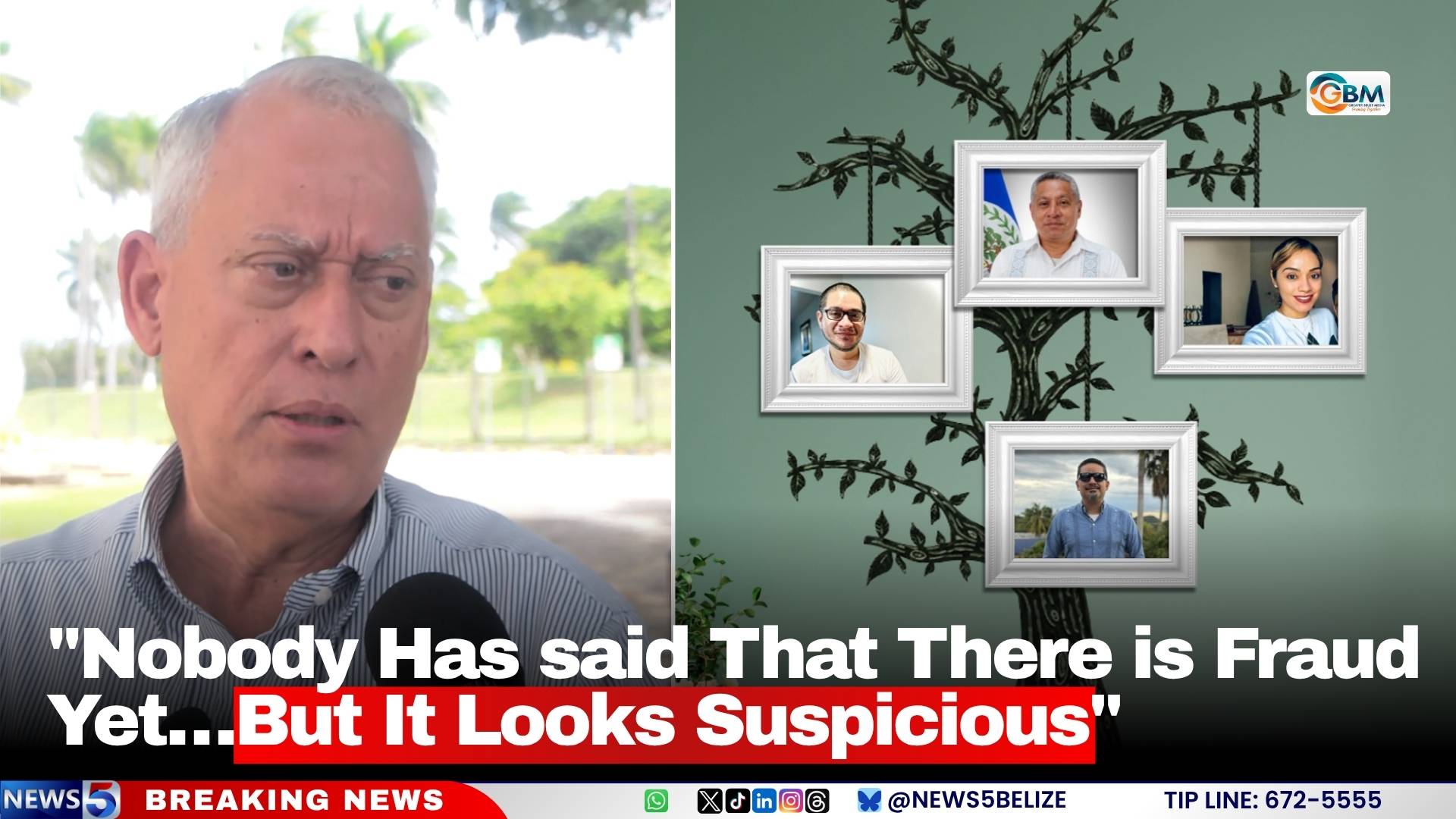
A growing public controversy over potential government procurement misconduct has emerged in Belize, after the nation’s top financial official acknowledged that questionable payments to firms linked to a sitting cabinet minister’s family should have triggered immediate oversight alerts. In a candid interview with local outlet News 5, Financial Secretary Joseph Waight opened up about irregularities uncovered through leaked procurement documents from the SmartStream system, confirming that the transactions in question deviate sharply from established government financial protocols.
Waight, the country’s top civil servant for public finance management, pointed to a clear failure in the existing oversight framework. “Clearly there was a breakdown in the system. It wasn’t intended to work this way,” he told reporters, adding that the irregular pattern could stem from anything from severe negligence to deliberate collusion between parties involved in processing the payments. “Either somebody dropped the ball, fell asleep, or worse, they moved together on it.”
At the heart of the scandal are hundreds of thousands of dollars in public funds disbursed by the Ministry of Defence to private suppliers owned by immediate and extended relatives of Minister of Defence Oscar Mira. Multiple sources familiar with the investigation confirm that nearly all of these transactions were processed for amounts just under $10,000 — the statutory threshold that requires mandatory additional review and approval from the national Treasury Department.
When asked directly if this structured pattern of small-value transactions was a deliberate tactic to evade official Treasury oversight, Waight did not mince words. “It is possible. It looks as if there was some wilful intention there to dodge on that,” he said. While Waight acknowledged that splitting large contracts into incremental instalments is a standard and legal practice in some public procurement scenarios, he emphasized that the current batch of scrutinized transactions does not meet the criteria for legitimate instalment payments. “But not in this case,” he said. “This case looks cute to me.”
Waight also drew attention to another anomalous practice uncovered during initial reviews: the existence of unregistered “ghost dots” in official supplier account records, a feature he described as highly unusual and unorthodox. “First time I saw that…It took a certain amount of creativity,” he noted, adding that any trained financial officer reviewing the transaction log should have immediately flagged the irregular pattern for further investigation. “It should have raised an eyebrow,” he admitted.
Of particular note to investigators is a single day of transactions that saw more than $400,000 in total payments disbursed to the family-linked suppliers, all split into chunks below the $10,000 oversight threshold. That lumpy, concentrated pattern has deepened concerns about intentional misconduct.
Thus far, no formal allegations of fraud have been filed, and an official audit ordered by Prime Minister John Briceño is currently underway to determine whether any existing financial regulations or national laws were broken. Waight stressed that until the audit process is complete and all evidence is compiled, he will avoid making definitive claims of wrongdoing or assigning blame to individual officials. Still, the top financial official made clear that the circumstances surrounding the payments raise serious red flags. “Nobody has said that there is fraud yet,” he said. “But it looks suspicious.”