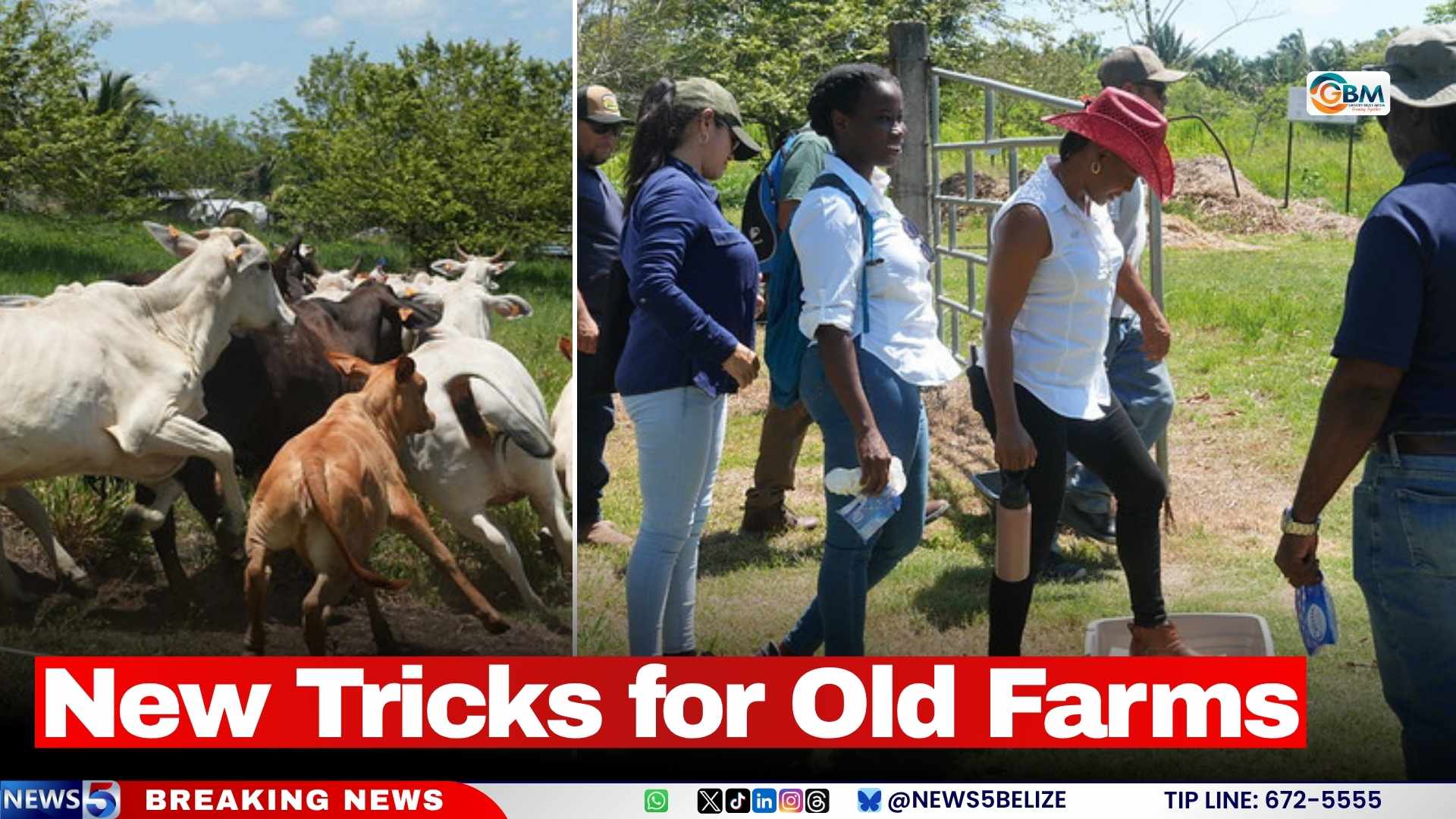
On a Thursday ceremony marking the conclusion of a capacity-building Farmer Field School program focused on boosting livestock output and modernizing farm management, smallholder farmers across western Belize walked away with critical new resources: electric fencing kits and high-quality forage growing materials, ready to implement the sustainable techniques they learned over the course of the training.
The hands-on program, which blended classroom learning with on-site practical demonstrations, has already driven tangible changes to how participating farmers operate their land and manage their herds. Multiple participants took the stage at the closing event to share their early successes with the new approaches they adopted.
One farmer told the crowd he had already cultivated nearly 200 leucaena seedlings, divided his grazing property into managed paddocks, and established an on-site nursery for elephant grass. This shift eliminates the need to haul planting material from distant farms, cutting both his costs and logistical burden dramatically.
A second participant explained a new low-impact land clearing strategy he now follows: instead of clearing all existing vegetation and planting new shade trees that often fall victim to cattle damage, he selectively preserves naturally established shade trees that already thrive on his land. This approach reduces labor and capital costs while maintaining the shade that cattle need for heat stress relief.
A third farmer showcased even more innovative technology adoption: he now uses a consumer drone to herd cattle across large pasture tracts. The tool has cut his reliance on hired herders, reducing operating expenses, and made it far faster and easier to locate stray calves scattered within large herds.
Not all remarks focused solely on success, however; several participants raised ongoing challenges facing their operations, most notably unpredictable weather patterns that threaten newly planted seedlings and forage crops. They called for expanded access to affordable irrigation systems and sprinklers to help protect their agricultural investments from drought and erratic rainfall.
As part of the program, participants took a guided study tour of the Belmopan Model Farm, a demonstration facility where they got to see rotational grazing systems and electric fencing infrastructure in action first-hand. They also attended a hands-on demonstration of effective screwworm treatment products, a critical tool for protecting livestock health in the region.
William Usher, Chief Executive Officer of the Belize Livestock Producers Association (BLPA), opened the ceremony and emphasized that the model farm is a permanent community resource open to all BLPA members. “This is your association,” Usher told attendees. “You can come here anytime. You can walk into this office anytime. Don’t feel that we who are here are the ones dictating anything to you guys. You are here to dictate to us where to go as far as we are concerned in terms of this industry.”
The Farmer Field School initiative was conceptualized and developed by the Nature Conservancy (TNC), with BLPA leading on-the-ground implementation. The program was delivered in formal partnership with Belize’s Ministry of Agriculture, the Belize Maya Forest Trust, and the University of Belize Central Farm, bringing together public, private, non-profit and academic stakeholders to support smallholder agricultural development in the region.