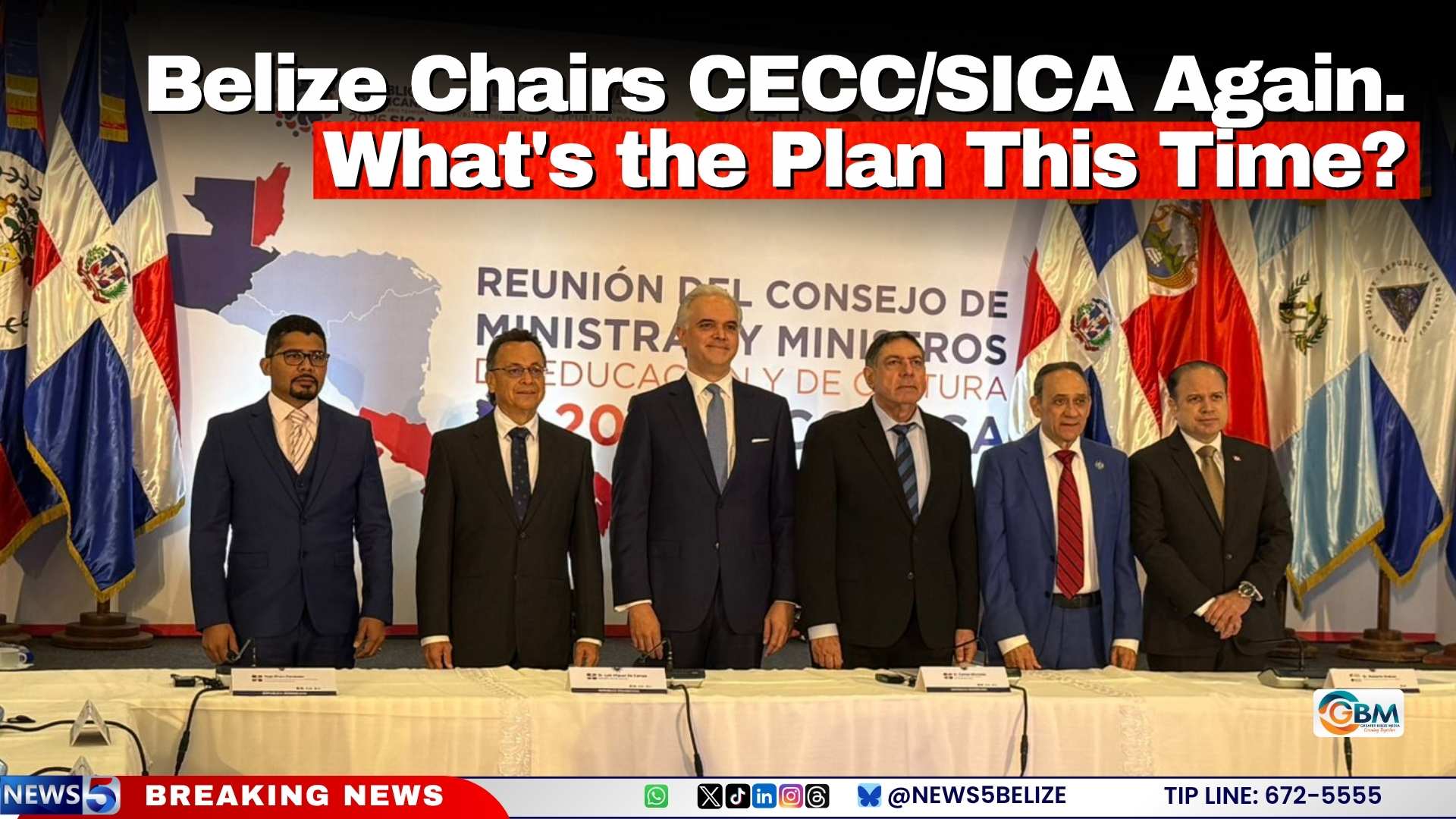
In a formal handover ceremony held during the 51st Ordinary Meeting of the Council of Ministers of Education and Culture in Santo Domingo, Dominican Republic on June 17, 2026, Belize officially assumed the six-month Pro Tempore Presidency of the Central American Educational and Cultural Coordination (CECC/SICA), marking the second time the small Central American-Caribbean nation has held this regional leadership position since January 2023.
Ramon Cervantes, Minister of State in Belize’s Ministry of Education, Culture, Science and Technology, accepted the presidential mandate on behalf of the Belizean government, stepping into the role after the Dominican Republic completed its outgoing term. The rotational presidency of CECC/SICA follows a fixed six-month sequence, moving sequentially from north to south across member states with Belize opening the rotation cycle, placing the country in a foundational role for each full round of regional planning.
Cervantes used the handover occasion to outline three core strategic priorities that will guide Belize’s leadership over its term. First, the country will push to advance inclusive access to education across the region, working to ensure that no learner is excluded from quality educational opportunities regardless of geographic location or socioeconomic background. Second, Belize will prioritize strengthening cultural preservation and promotion, positioning shared and diverse cultural heritage as a core pillar of both national identity and sustainable regional development. Third, the administration will prioritize accelerating digital transformation across education and cultural sectors across member states. To illustrate this commitment, Cervantes highlighted Belize’s own domestic 501 Academy initiative as a replicable model for scalable educational digitalization that other regional nations can adapt to their own contexts.
Looking back to Belize’s first turn in the CECC/SICA presidency in 2023, led at that time by former Minister of State Louis Zabaneh, the administration focused its efforts on regional curriculum reform, expanded integration of science and technology into education systems, and increased institutional recognition of Afro-descendant and Indigenous communities across Central America. During that term, Education Minister Francis Fonseca emphasized that Belize’s unique geographic positioning, bridging the Central American isthmus and the Caribbean basin, gives the country a distinct comparative advantage in advancing cross-regional collaboration and connecting different cultural and economic blocs.
As the new term gets underway, regional observers will track how Belize delivers on its three stated priorities, building on the progress of its 2023 leadership to advance the shared educational and cultural goals of CECC/SICA member states.