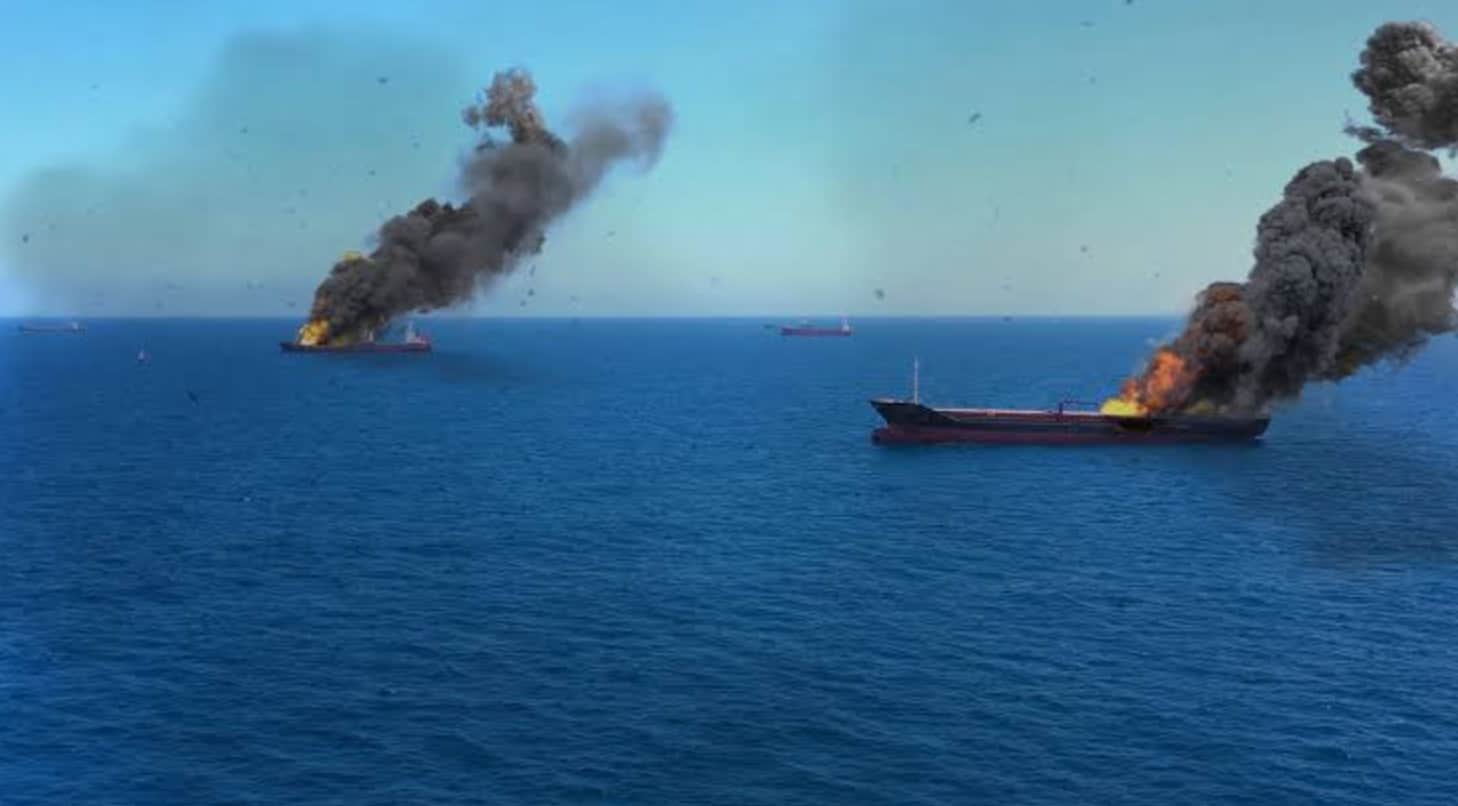
In the latest escalation of targeted attacks against civilian maritime traffic in Ukraine’s Black Sea corridor, Russian drones struck two foreign-flagged cargo ships on June 19, leaving one crew member dead and five others injured, Ukrainian officials confirmed. The attack has renewed international alarm over Moscow’s campaign to disrupt global grain trade and undermine freedom of navigation in the key waterway.
One of the targeted vessels was registered in Panama, and the other flies the flag of St. Kitts and Nevis. According to Oleksii Kuleba, Ukraine’s Deputy Prime Minister for Restoration and Minister for Development of Communities and Territories, the attack on the Panamanian-registered ship killed one crew member and wounded two more. The St. Kitts and Nevis-flagged vessel also sustained direct damage from the strike, leaving three of its crew members injured. Both ships were en route to a port in the Greater Odesa region to load grain for export when the drone attack occurred, per official details released by Ukrainian authorities.
The strike ignited an onboard fire and knocked out critical navigation systems on the attacked vessels, though neither ship sank. Emergency response teams dispatched a patrol vessel to assist the damaged craft, and both have since resumed their voyages. Oleh Kiper, head of the Odesa Oblast Military Administration, emphasized that the incident is part of a broader, sustained Russian offensive against civilian shipping operating near Ukraine’s internationally recognized Black Sea maritime corridor.
“This attack underscores the ongoing threat Russia poses to civilian shipping, legitimate international trade, freedom of navigation, and global food security,” Kiper stated, adding that port operations in the region have continued under heightened security protocols following the strike.
For Kuleba, the June 19 attack is fresh evidence that Moscow is deliberately targeting critical infrastructure that supports global food supplies. “This is yet another proof that Russia is waging a war against freedom of navigation, international trade, and global food security,” Kuleba told Ukrainian state news agency Ukrinform. He called on the international community to formally classify these targeted attacks on civilian merchant vessels, crews and humanitarian export infrastructure as acts of terrorism, noting that the world cannot normalize the targeting of innocent civilian sailors by Russian forces.
“Civilian crews, merchant ships, and the maritime infrastructure that supports humanitarian and export routes are under the sights. But such crimes should receive a clear international assessment – terrorism. The world cannot get used to civilian sailors becoming targets for Russian weapons,” Kuleba added.
This latest incident fits a clear pattern of repeated Russian attacks on civilian maritime routes in the Black Sea, stretching back months. Since the outbreak of full-scale war in Ukraine, commercial vessels, grain shipments and port infrastructure in the region have faced consistent targeting. Just last month, Russian forces carried out multiple similar attacks: on May 18, a Russian Shahed drone struck a Chinese-flagged vessel in the corridor, just days before Russian President Vladimir Putin’s scheduled visit to Beijing. Eleven days later, on May 29, Russian drones hit three additional foreign-flagged ships in the same waterway. On June 8, a Russian attack on two Maritime Search and Rescue Service boats on a humanitarian mission left multiple casualties.
The targeting of a St. Kitts and Nevis-registered vessel has sparked particular concern for the small Caribbean nation, whose open ship registry hosts thousands of internationally operating commercial vessels that sail across global trade routes.