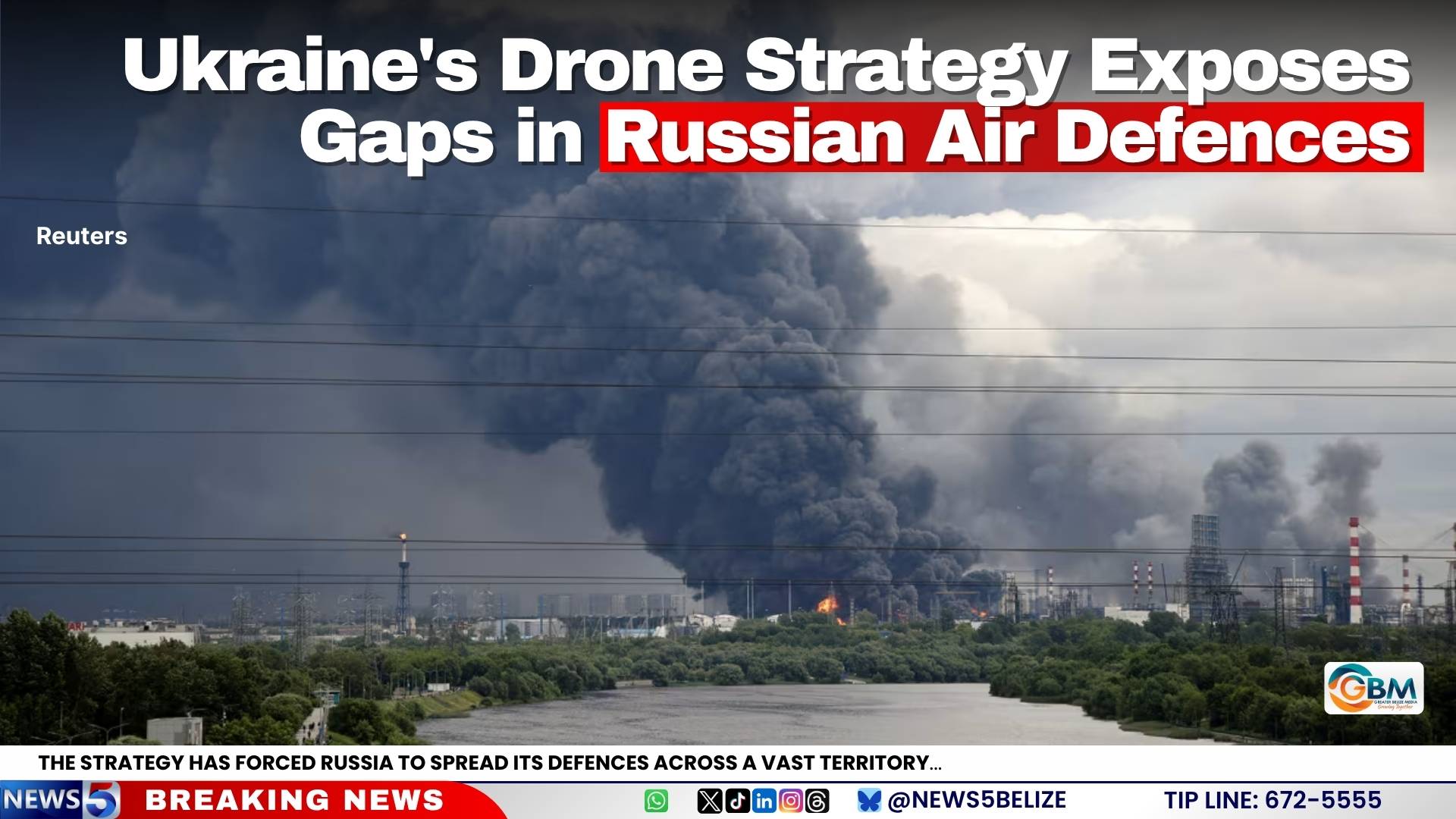
On June 19, 2026, Ukraine launched its largest drone assault on Moscow since the beginning of the full-scale invasion, an attack that has brought long-simmering questions about Russia’s ability to protect its sovereign airspace against coordinated unmanned aerial assaults into sharp global focus.
User-recorded video footage circulating from the Russian capital captured dramatic scenes of conflict within urban areas: Russian soldiers deployed portable anti-aircraft weapons from busy highway corridors, while civilian residents scrambled for emergency shelter as incoming drones and falling defense debris crashed into locations near residential neighborhoods. In one particularly notable misfire, Russian defense sources confirmed that an air-defense missile, launched to intercept an incoming drone, missed its intended target and collided with an oil storage facility, causing damage to the infrastructure.
Military analysts tracking the evolution of Ukraine’s drone warfare tactics say Kyiv has invested years of systematic development into expanding its domestic and international drone capabilities, pairing production growth with targeted strikes on Russian early-warning radar stations and fixed air-defense launcher sites across occupied and border regions. This gradual strategy has forced Russian military command to stretch its limited air-defense resources across a massive 1,000-plus kilometer front line and deep into Russian core territory, diluting defensive coverage around high-priority domestic targets such as energy infrastructure and government sites.
Further, defense experts point out a fundamental design flaw in the majority of Russia’s legacy air-defense systems: most were engineered decades ago to counter large, high-fidelity targets such as combat aircraft and ballistic missiles, not the small, low-flying, mass-deployed drones that Ukraine now uses. This mismatch creates an overwhelming effect for Russian defenders: when Kyiv launches salvos of more than 100 drones in a single coordinated attack, defensive systems become overloaded with targets, allowing a portion of the drones to slip through coverage and strike their intended objectives deep inside Russia.
While Russian official statements consistently claim that the vast majority of incoming Ukrainian drones are intercepted before reaching their targets, the growing frequency of successful attacks on key Russian sites — including central Moscow, St. Petersburg, critical oil storage and refining facilities, and military command outposts — makes clear that Ukraine has steadily improved its ability to penetrate even Russia’s most heavily defended airspace.
Top defense analysts have issued a clear warning: unless Russian military leadership undertakes a sweeping, comprehensive upgrade of its integrated air-defense network to address the growing threat of mass drone attacks, the country will continue to face repeated incursions and critical infrastructure damage from Kyiv’s evolving unmanned warfare strategy.