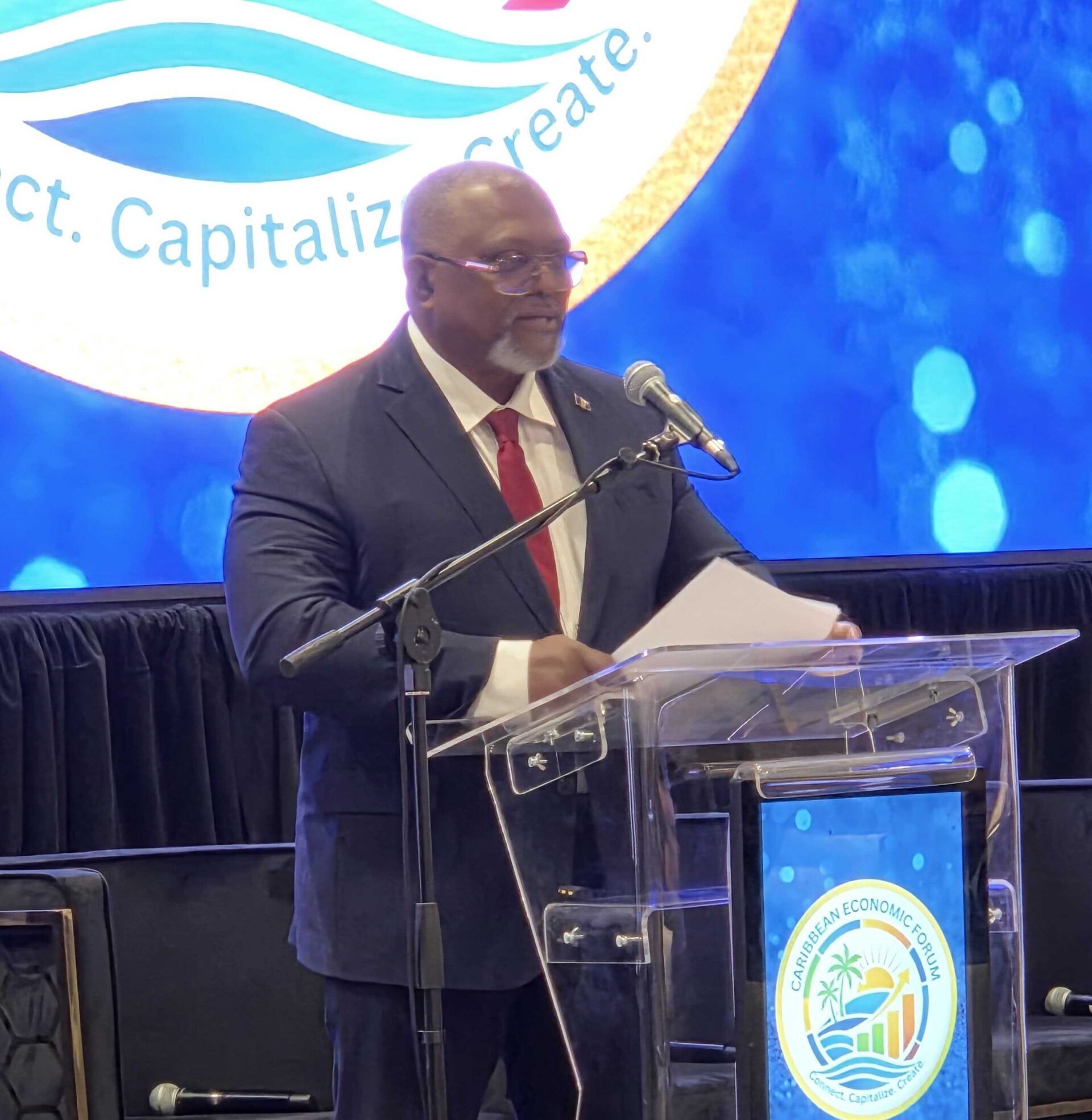
Against a backdrop of growing global economic fragmentation and escalating geopolitical tensions, small island nation Barbados is executing an ambitious strategy to cement its status as the leading entry point for international capital seeking access to the broader Caribbean market. Speaking at the inaugural Caribbean Economic Forum, which brought together hundreds of international financiers, startup founders, and regional policy leaders to explore cross-sector transformation in renewable energy, digital infrastructure, and the blue economy, Public and Private Investment Minister Indar Weir laid out the government’s comprehensive plan to capitalize on the country’s longstanding reputation for stability. Weir emphasized that shifting global conditions have fundamentally rewired investor priorities: in an era defined by systemic uncertainty, businesses no longer chase just low costs — they prioritize jurisdictions that can deliver consistent, predictable operating environments. For decades, Barbados has built its foundations on exactly those attributes, he argued, making it uniquely positioned to meet the new demands of global capital. “When investors across the world are asking where they can find stability, security, and certainty in an uncertain landscape, Barbados has been answering that question for generations,” Weir told attendees. While international audiences often associate Barbados solely with its world-class leisure tourism sector, the minister pointed out that the country’s most valuable competitive asset is an intangible ecosystem of trust, strong institutions, consistent policy, rule of law, and accountable governance forged over 60 years of sovereign independence. This track record, he noted, gives multinational firms the confidence to anchor their regional headquarters on the island, using it as a stable base to expand across the Caribbean. Unlike many small economies that frame their limited geographic size as a disadvantage, the Barbadian government is repositioning its small footprint as a unique strategic advantage. Weir explained that the government’s ability to coordinate and roll out unified cross-ministerial policies allows the country to adapt to shifting global market trends far faster than much larger, more bureaucratic economies can manage. “Our size is not a limitation — it is a strategic asset,” Weir stressed. “As a small island developing state, we can implement a whole-of-government response to new challenges and opportunities far quicker than larger nations, all while upholding our commitment to supporting the international business and investment community.” As a concrete example of this adaptive agility, Weir pointed to the landmark Barbados Welcome Stamp Programme launched at the height of the COVID-19 pandemic. Recognizing the coming shift to global remote work before peer competitors, Barbados pioneered a purpose-built remote work visa that attracted thousands of global professionals to the island, keeping international business connectivity intact even when global travel ground to a halt. That early, proactive move cemented Barbados’ reputation as a forward-thinking, reliable base for global workers and businesses. The push to position the country as a regional investment hub comes as Barbados is already seeing a significant surge in commercial activity. The country was recently named the fastest-growing travel destination in the Americas and Caribbean for 2026, driving a sharp uptick in foreign direct investment across sectors. “Barbados is currently in one of the most intense periods of tourism investment in our entire history,” Weir shared. “In just the last 12 months, we have an unprecedented number of hotel developments under construction at the same time, representing well over $1 billion in total investment — and we’re ready to unlock even more capital from that momentum.” To support this growth and maintain the country’s competitive edge as a global gateway, the Mia Mottley administration has prioritized sweeping modernization of Barbados’ fiscal and regulatory infrastructure. Just one week before the forum, the government launched the Caribbean’s first standalone national payment system, a major reform that will speed up cross-border financial transactions and sharply reduce operational costs for both domestic and international businesses operating on the island. Understanding that international investors require streamlined, predictable regulatory processes to commit capital, the government also established the dedicated Ministry of Public and Private Investment earlier this year. The new ministry acts as a centralized one-stop facilitation body, working in lockstep with the national investment promotion agency Invest Barbados to cut through bureaucratic red tape and accelerate the approval and delivery of high-value regional projects. “The ministry was created with a clear mandate: strengthen investment facilitation, deepen productive public-private partnerships, and ensure investors have a seamless journey from initial inquiry to full project implementation,” Weir said. The new body is also designed to act as a bridge between global capital providers and project developers across the wider Caribbean, turning exploratory interest into tangible, job-creating infrastructure across the region. In closing remarks to forum delegates, Weir called on attendees to leverage Barbados’ unique strategic position to unlock inclusive, long-term growth across the Caribbean, urging collaborative investments that will deliver benefits for multiple generations. “This forum is about bringing stakeholders together to unlock new opportunities, build durable partnerships, and generate investment returns that lift communities across our region for decades to come,” Weir said. “But above all, this is about doing good business together. I welcome all of you to partner with Barbados, and let’s capitalize on every opportunity we have to grow together.”