When global football fans tune into the World Cup to watch superstars like Lionel Messi, Kylian Mbappé, Sadio Mané and Vinícius Júnior, most eyes fix on their multimillion-dollar contracts and on-pitch glory. What often slips through the cracks of popular narrative is the reality that nearly all of these legendary players launched their football journeys in unlikely, underprivileged settings: on dusty city streets, uneven sand pitches, and impoverished neighborhoods such as Brazil’s iconic favelas. In these communities, football was never just a game — for millions of children across the globe, it remains one of the only clear pathways to build a better life and escape cycles of systemic poverty.
For decades, Brazil has stood as the most famous example of this phenomenon. Generations of world-conquering Brazilian footballers first learned to dribble, pass and outthink opponents on the unmarked streets, crowded favela squares and makeshift pitches of their hometowns before stepping onto the global stage. But the story of social mobility through football is far from exclusive to Brazil.
Consider Lionel Messi, widely regarded as the greatest player of his generation. Messi grew up in a working-class family in Rosario, a gritty industrial Argentine city. As a young teen, he was diagnosed with a growth deficiency that required costly treatment his family could not afford on their own. It was FC Barcelona that stepped in to offer a life-changing opportunity, covering his medical care and giving him a spot in the club’s youth academy — a chance that turned a working-class kid with a rare medical challenge into a global icon.
Few stories, however, capture the public imagination quite like that of Sadio Mané. The Senegalese star grew up in Bambali, a remote small village where basic public services were barely accessible to most residents. Before he broke through onto the international football scene, almost no one outside of Senegal knew his name. But after achieving fame and fortune, Mané made the deliberate choice to reinvest a huge share of his wealth back into his home community. He has funded the construction of a primary school, a full-service hospital, public sports facilities and critical infrastructure projects for his birth village. And Mané’s commitment to giving back is far from unique.
Many African football stars who rose from poverty maintain deeply rooted ties to their hometowns. Having grown up in regions where extreme poverty, limited access to healthcare, and underfunded education are daily realities, many feel a profound responsibility to lift up the communities that shaped them. Ivorian legend Didier Drogba poured his resources into expanding access to healthcare across his home country. Cameroonian icon Samuel Eto’o has long supported youth development and education initiatives for underserved children. Egyptian star Mohamed Salah has funded community projects in his hometown of Nagrig for years, improving access to basic services for local residents. For these athletes, success is no longer measured only by goals scored and trophies lifted — it is measured by the tangible change they bring to the communities that gave them their start.
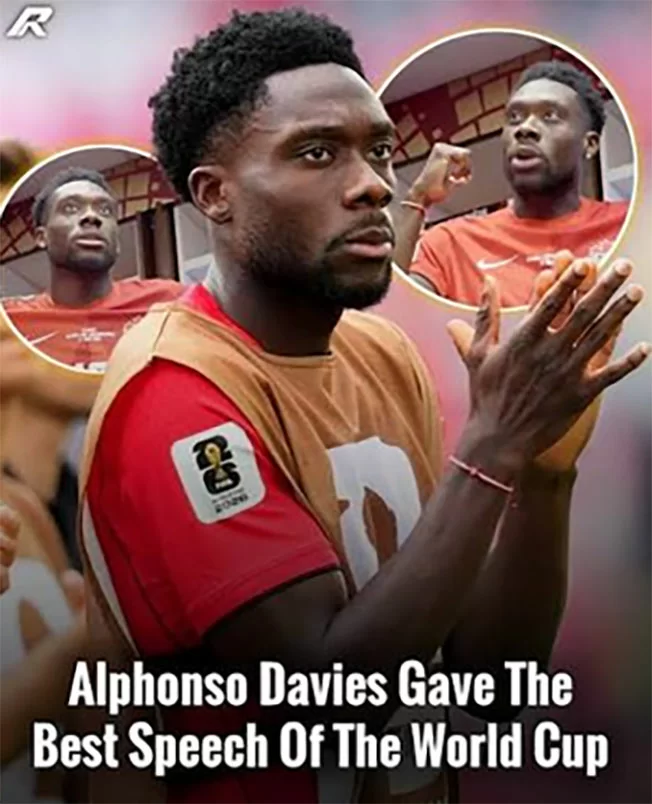
One of the most remarkable stories of modern football is that of Alphonso Davies, the Canadian star who currently plays for Bayern Munich. Davies was born in a Ghanaian refugee camp to Liberian parents who fled their home country during the brutal civil war that tore through Liberia in the 1990s. When Davies was still a young child, his family resettled in Canada, and his talent on the pitch quickly set him apart. Within a decade, he was representing Canada at the World Cup and establishing himself as one of the best full-backs in European club football. His life story proves that football is far more than just a professional career — for many, it is a symbol of hope, integration, and life-changing second chances.
Poverty and limited opportunity are not challenges unique to developing nations, even in Europe, working-class and underserved neighborhoods have produced some of the world’s biggest stars. Kylian Mbappé, one of the most recognizable players in modern football, grew up in Bondy, a working-class Paris suburb that is frequently cited in discussions of systemic disadvantage and limited youth opportunity. Many other French national team players also trace their roots to immigrant neighborhoods, where football has long played a critical social role: it gives young people structure, discipline, and a tangible sense of hope for the future when other pathways are closed off.
In past decades, it was common for promising young talents to derail their careers shortly after they earned their first big contracts. Luxury spending, unwise investments, and entourages that only cared about the players’ newfound wealth cut short the careers of countless promising athletes. Today, the industry handles this challenge far more professionally, with dedicated support teams surrounding young talent that include psychologists, financial advisors, education coaches and agents to help them navigate newfound fame and fortune. Even with this modern support structure, one lesson holds consistent across generations: the most beloved and respected players are almost always the ones who never forget where they came from.
The World Cup is most often framed as a high-stakes competition between nations. But behind every starting lineup, every goal, and every trophy, there are hundreds of individual stories of unlikely rise: stories of a kid from a favela, a working-class housing project, a refugee camp, or a remote rural village who started playing with a tattered ball on a dusty, uneven sand pitch. For some, that journey led to global fame and enormous wealth. For many others, success became a tool to lift up entire communities that still face the same challenges they once overcame.
Perhaps that is the most beautiful, underreported side of the World Cup. It is not the multimillion-dollar contracts, not the global advertising campaigns, not the gleaming silver trophy that makes the tournament special. It is the living, breathing proof that the biggest dreams in the world so often start in the most unexpected, unassuming places.