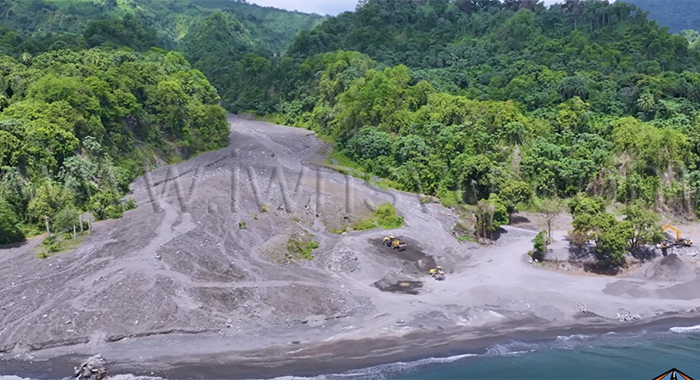
At a community gathering hosted by North Leeward Member of Parliament Kishore Shallow as part of his ongoing “North Leeward Matters” outreach initiative on June 9, 2026 in Golden Grove, Kem Bartholomew, chief executive officer of the Barbados River Aggregate Stone Authority (BRAGSA), laid out the findings of recent geological surveys that have uncovered a massive untapped reserve of construction-grade aggregate. The surveys, which mapped a three-kilometer stretch of the Roseau Valley in North Leeward, confirmed roughly 4.2 million cubic meters of harvestable, high-quality natural aggregate in the area.
To put the scale of this discovery in perspective, Bartholomew noted that BRAGSA’s current long-running aggregate operation at Rabacca, on St. Vincent’s eastern coast, only spans one kilometer of river territory, where extraction has been carried out for generations. When calculating the potential economic value of the new find, Bartholomew projected that even at the current base price of EC$34.80 per cubic meter, harvesting 75% of the confirmed reserve would generate at least EC$73 million in revenue. If negotiated higher selling prices are factored in, that total could climb past EC$83 million, he said.
Against this backdrop of major economic potential, Bartholomew presented a clear choice to both local policymakers and North Leeward residents: allow the naturally replenishing aggregate to wash out to sea unused, or develop the reserve to generate long-term benefits for the community. “We want to contribute to this community,” he emphasized during the meeting, pushing back against the option of inaction.
Addressing widespread resident concerns about local employment and community participation, the BRAGSA CEO clarified that the project remains in its early temporary phase, and the authority has prioritized hiring local workers for both pre-operational construction and ongoing extraction work. Currently, BRAGSA staff travel to the site daily from other parts of the island, a unsustainable arrangement that Bartholomew said will end once local hires are brought on board. He acknowledged that no local residents have yet inquired about open positions at BRAGSA’s Chateaubelair office, and stressed that “we need persons here” to fill upcoming roles.
Early infrastructure work, including construction of an on-site comfort station and storage facility, will require local tradespeople immediately. Bartholomew confirmed the project will need roughly 20 local employees during the initial development phase, with a permanent workforce of around 10 once operations are fully established. He added that the long-term scope of employment and extraction timeline will ultimately be tied to market demand, as aggregate will only be harvested to fulfill confirmed purchase contracts via barge shipments. Plans are already in motion to provide specialized training for local machine operators, he noted, with training protocols to be adjusted as the project scales.
The meeting also included sharp questions from local fishermen, environmental activists, and indigenous rights advocates, who raised concerns about potential ecological harm, including increased water turbidity that could damage nearshore fishing grounds and adjacent agricultural crops, as well as issues around inadequate consultation, historical land rights, and tangible community benefits. In response, Bartholomew explained that the operation targets existing natural gravel deposits rather than disturbing intact soil, reducing the risk of excessive sediment runoff. He pledged that BRAGSA will implement ongoing environmental monitoring and adjust operational practices immediately if unanticipated negative impacts are detected.
Quoting the late American author and activist Maya Angelou to frame the organization’s approach, Bartholomew said: “It is doing our best with what we know. Until we know better, we do better.” Reaffirming BRAGSA’s commitment to responsible development, he stressed that inaction is never a viable outcome when a resource worth tens of millions of dollars is being lost to the ocean annually, and that the project can deliver shared prosperity for the North Leeward community if developed responsibly.