BASSETERRE, St. Kitts – June 11, 2026 – As the Federation of St. Kitts and Nevis grapples with one of the most intense drought events recorded in recent decades, Prime Minister Dr. Terrance Drew, who also oversees the National Emergency Management Authority (NEMA), has sounded a clear call for immediate, decisive action to address climate change, warning that the crisis is no longer a hypothetical future risk but an immediate threat reshaping daily life for all citizens and residents across the island nation.
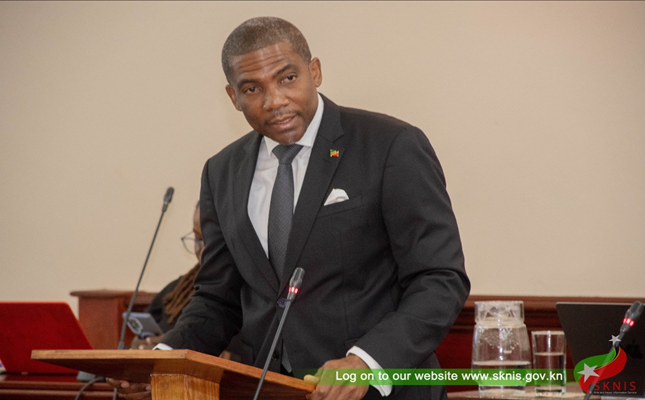
Speaking before the National Assembly on Thursday, Drew framed the ongoing dry spell as a critical national challenge fueled by overlapping climate drivers: the cyclical weather pattern of El Niño, compounded by the long-term impacts of human-caused global climate change. He detailed how steadily climbing regional temperatures, shifted seasonal rainfall patterns, and growing volatility in extreme weather events have combined to put unprecedented strain on the Federation’s already limited freshwater supplies.
According to Drew, the current crisis underscores the foresight of the St. Kitts and Nevis government’s flagship Sustainable Island State Agenda (SISA), a strategic framework designed from its launch to proactively tackle emerging climate hazards and build long-term national adaptive capacity. For small island developing states (SIDS) like St. Kitts and Nevis, which face disproportionate climate risk despite contributing very little to global emissions, these shifting conditions are not abstract statistics, he emphasized.
“Rising temperatures, changing rainfall patterns, and increasingly unpredictable weather events are realities that small island developing states, such as ours, must now confront with urgency and determination,” Drew told legislative representatives.
The Prime Minister openly acknowledged the widespread hardship the drought has imposed on local households, small businesses, and community groups across the Federation, moving to reassure the public that the national government is fully mobilized to respond to the emergency. “We understand the frustration and inconvenience that families, businesses, and communities are facing. This government does not minimize those concerns – these are serious issues, and we are responding to them with seriousness and resolve,” he said.
Drew recalled that climate resilience has been a core policy priority for his administration since it took office in August 2022. Immediately upon assuming power, the government prioritized targeted investments to shore up national water security, after reviewing long-term climate forecasts that warned of growing drought risk and potential freshwater shortages across the islands. “We were only elected in 2022 and right away we got to work, Madam Speaker, because when we went into office, we picked up what was on the desk: a forecast that showed St. Kitts and Nevis would experience significant drought and water shortages. That is why we invested so much from day one,” he explained.
To date, the government’s proactive interventions include expanded groundwater drilling programs, the construction of a large-scale new desalination plant, comprehensive upgrades to aging water distribution networks, and the installation of upgraded pipelines and pumping infrastructure to boost water output and improve service reliability across St. Kitts.
Drew stressed that the nation’s approach to climate adaptation must be rooted in long-term strategic planning, intentional resilience-building, and sustained investment. “Our objective remains clear: to build a modern, resilient, and sustainable water system capable of delivering reliable access to water for every citizen and resident of Saint Kitts and Nevis,” he said.
The national government has maintained close collaborative partnerships with regional and international stakeholders to advance these critical water security goals, including the Republic of China (Taiwan), whose financial and technical support has accelerated progress on key infrastructure projects.
As climate change continues to exacerbate extreme weather and water scarcity risks for small island developing states across the Caribbean region, the government of St. Kitts and Nevis reaffirmed its commitment to rolling out practical, community-centered solutions that strengthen national resilience, protect vulnerable populations, and safeguard critical natural resources for future generations.