KINGSTON, Jamaica – For Jamaican enterprises seeking capital to scale operations, boost exports, and modernize production capabilities, the African Export-Import Bank (Afreximbank)’s expanding footprint in Jamaica represents far more than a routine diplomatic milestone. It opens a critical alternative funding channel that could reshape growth trajectories for businesses across the island’s key economic sectors.
On June 2, Afreximbank hosted its inaugural Jamaica roadshow at Kingston’s AC Hotel, bringing its full suite of trade finance, direct investment, and business advisory services directly to local company leaders, domestic financial stakeholders, and senior government officials. The event came on the heels of two landmark developments: Jamaica formalized a partnership agreement with Afreximbank in July 2025, followed quickly by the pan-African lender’s approval of a $5 billion regional financing facility earmarked for Caribbean economies, Jamaica included.
The core challenge Afreximbank is targeting is a practical, widespread pain point for Jamaican businesses: while many firms have demand for their goods and services, they lack the upfront capital to scale. Whether a manufacturer needs to purchase new equipment, a tourism operator wants to renovate hospitality properties, a logistics firm aims to expand distribution capacity, or a small producer wants to transition to large-scale commercial operations, access to flexible, affordable capital is often the rate-limiting step to growth. Afreximbank has positioned itself as a strategic financing partner to fill this gap.
As a pan-African multilateral financial institution, Afreximbank’s core mandate is to fund and facilitate intra-African trade, as well as commercial exchange between Africa and global markets. Its expanding engagement in the Caribbean falls under its flagship “Global Africa” agenda, an initiative designed to strengthen economic and commercial ties between Africa, Caribbean nations, and the broader African diaspora worldwide.
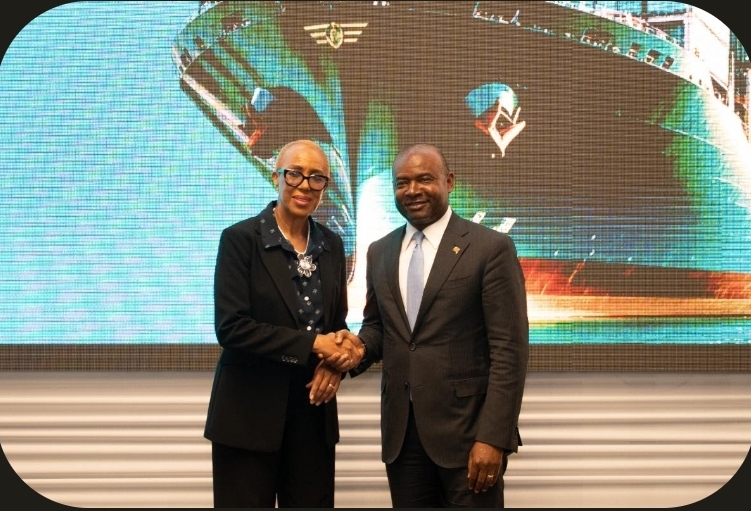
Delivering the roadshow’s keynote address, Jamaica’s Minister of Finance and Public Service Fayval Williams emphasized that collaboration between Kingston and Afreximbank is on a steady upward trajectory. “We recognize that for over three decades, Afreximbank has delivered targeted financing solutions that underpin trade and accelerate inclusive economic growth across the African continent,” Williams noted. “Today, its influence extends beyond Africa’s borders, with the bank building a growing, robust presence across the Caribbean.”
She added: “It is undeniable that the partnership between Afreximbank and Jamaica continues to deepen. I encourage every Jamaican institution represented here today to strengthen their engagement with the bank, so that together we can unlock expanded opportunities for two-way trade and mutual investment between Jamaica and the African continent.”
For Jamaica, the value of this partnership extends far beyond having another international financial institution express interest in the market. What makes Afreximbank’s entry unique is the breadth of its product offerings, which cover trade finance lines, growth capital for investment, strategic advisory support, and dedicated funding for key sectors from manufacturing and tourism to industrial park development and special economic zone expansion.
This breadth of coverage matters because sustained trade growth cannot exist without expanded domestic production capacity. A manufacturer aiming to grow export volumes needs upfront financing for new machinery, quality certification, packaging, and working capital to support large production runs. A hospitality business requires capital to renovate properties, expand capacity, or rebrand for new target markets. Agro-processing and logistics firms need funding to scale output, meet new international regulatory standards, and serve larger regional customer bases. In every scenario, securing financing is the critical first step before any export growth can occur.
Eric Monchu Intong, Afreximbank’s Group Managing Director for Client Relations and Regional Office Operations, emphasized that intentional industrial development must be the foundation of deeper trade ties between Jamaica and Africa. “At Afreximbank, we firmly believe that industrialization is the bedrock of sustainable trade and lasting economic transformation,” Intong explained. “To trade successfully with Global Africa, we must first build productive capacity at home.”
He added: “Through strategic investments in industrial parks, special economic zones, and domestic manufacturing, Jamaica has a transformative opportunity to cut reliance on costly imports, grow the share of value-added exports, create new formal jobs, and strengthen overall national economic resilience. This development model has already delivered proven results across 18 African countries.”
This is where the promise of the partnership meets its key test. Afreximbank is not only pitching expanded trade between Africa and the Caribbean; it is also advocating for broader systemic progress: more domestic manufacturing, more value-added production, more export-ready small and medium enterprises (SMEs), and stronger local investment enabling environments. Even with the $5 billion facility in place, financing alone cannot solve Jamaica’s production capacity gaps.
Local Jamaican businesses still need to develop bankable project proposals, maintain transparent, standardized financial records, outline clear, actionable expansion blueprints, secure credible commercial partners, and build the operational capacity to fulfill large, consistent export orders. Local public agencies and domestic financial institutions will also need to collaborate to structure access: will smaller Jamaican firms be able to access the facility directly, or will most funding flow through large domestic banks, major established corporations, and government-backed projects?
This structural question is make-or-break for Jamaica’s SME community, which forms the backbone of the island’s private sector. If access requirements are overly complex and burdensome, the benefits of the facility will likely be limited exclusively to large corporations and major infrastructure projects. But if financing can be structured to flow through local intermediaries and tailored to meet the needs of export-ready small and medium firms, it can dramatically expand the number of Jamaican businesses able to participate in and benefit from growing Africa-Caribbean trade.
The $5 billion Caribbean regional facility gives this new partnership meaningful scale, but the funding will only deliver tangible value if it reaches viable projects that generate increased output, new formal jobs, expanded export volumes, and durable, mutually beneficial trade links between Jamaica and Africa.
For Jamaica right now, the opportunity is unambiguous: at a time when hundreds of local companies are eager to expand beyond the constraints of the small domestic market, Afreximbank’s entry adds a valuable new source of growth capital to the market. The next critical question that remains unanswered is: are Jamaican businesses ready to leverage this opportunity?