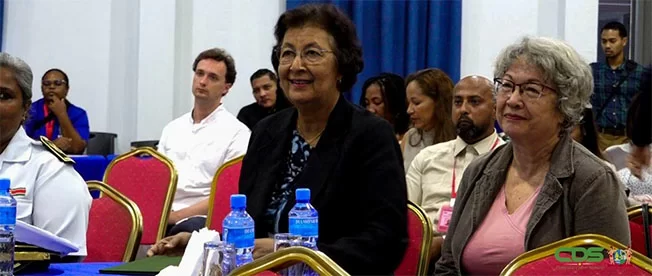
On June 10, during a dedicated theme day hosted by the Surinamese foundation Stichting Projekta, top national leaders and academic experts drew urgent public attention to the pervasive, underrecognized crisis of violence against children, much of which occurs behind closed doors in family homes.
Suriname President Jennifer Simons took the stage to emphasize that many forms of harm inflicted on children fly under the radar, escaping detection and intervention from communities and authorities. Contrary to common public perception, she explained, violence against children extends far beyond the obvious cases of physical or sexual abuse. Insults, repeated humiliation, constant belittlement, and other patterns of psychological abuse can leave lifelong emotional and developmental scars on young victims, she noted.
Simons also pointed to the growing threat of bullying and cyberbullying, which has evolved beyond the boundaries of school classrooms. With the rise of social media, abusive behavior can now follow children into their own homes 24 hours a day, amplifying its damaging impact. “Too many adults fail to grasp the long-term harm that words and thoughtless behavior can inflict on a developing child,” Simons said, adding that many harmful practices are still incorrectly normalized as acceptable parts of childhood or parenting across Surinamese society.
Leading sociologist Julia Terborg reinforced the president’s remarks, sharing key findings from recent research that confirm the majority of all violence against children occurs within the domestic sphere. This harm is not limited to direct abuse; children who witness intimate partner violence between adult household members also suffer severe, lasting trauma, she explained. Terborg stressed that research conclusions on this issue remain highly relevant today, and in some key areas, the situation has actually worsened in recent years.
One particularly persistent problem she highlighted is the use of violent discipline in childrearing. “What starts as a so-called corrective slap can quickly escalate into severe, life-altering abuse,” Terborg warned. She called for wider adoption of non-violent parenting strategies across the country, alongside expanded support systems to help parents struggling with caregiving stress.
Terborg also linked rising risks of domestic violence against children to broader economic pressures. Financial instability and persistent social stress create heightened tension within households, which significantly increases the likelihood that children will experience abuse, she explained. Ahead of the upcoming national budget debate, the sociologist urged Suriname’s policymakers to elevate child protection to a top priority on the national policy agenda.
She argued that sustained, long-term investment is critical: meaningful progress requires expanded resources for prevention programs, targeted support for at-risk families, and ongoing public awareness campaigns to reduce the normalization of abuse. This national theme day built on the outcomes of a landmark national study on violence against children, conducted earlier by Anton de Kom University of Suriname with partnership and support from UNICEF.