A landmark international agroecology project has already empowered more than 10,000 small-scale farmers across four nations in Africa and Latin America, expanding their access to cutting-edge sustainable knowledge, climate-resilient technologies, and tailored professional agricultural support. Now entering its next phase of expansion, the Rural Advisory and Agroecology Project (known as AERAS) has spent two years supporting producers to adopt regenerative agroecological models that deliver balanced benefits across environmental health, economic stability, and community well-being, according to an official announcement from the Inter-American Institute for Cooperation on Agriculture (IICA).
From its launch, the initiative has centered its mission on strengthening regional food systems while lifting incomes and quality of life for vulnerable rural communities. It operates as a multi-stakeholder partnership between IICA, the Latin American Network of Rural Extension Services (RELASER), and the Global Forum for Rural Advisory Services (GFRAS). AERAS forms a core component of the broader Global Programme for Small-Scale Agroecology Producers and Sustainable Food Systems Transformation (GP-SAEP), which receives core funding from the European Commission, Belgian Development Cooperation, and Access Agriculture.
The project targets persistent systemic barriers that have slowed widespread adoption of agroecological practices in four focus countries: Costa Rica and Ecuador in Latin America, and Madagascar and Uganda in Africa. Over its first two years, participating producers have received hands-on training and ongoing technical guidance across a wide range of high-priority agricultural sectors, including livestock management, specialty cash crop cultivation for cocoa and coffee, small-scale vegetable production, Musaceae crops such as bananas and plantains, and tropical root crop farming.
Beyond direct technical support, AERAS has worked to break down silos between producers, government agricultural agencies, academic research institutions, and private sector partners. This collaborative framework is designed to help farming communities build greater capacity to adapt to growing climate-related environmental pressures and volatile global market uncertainties.
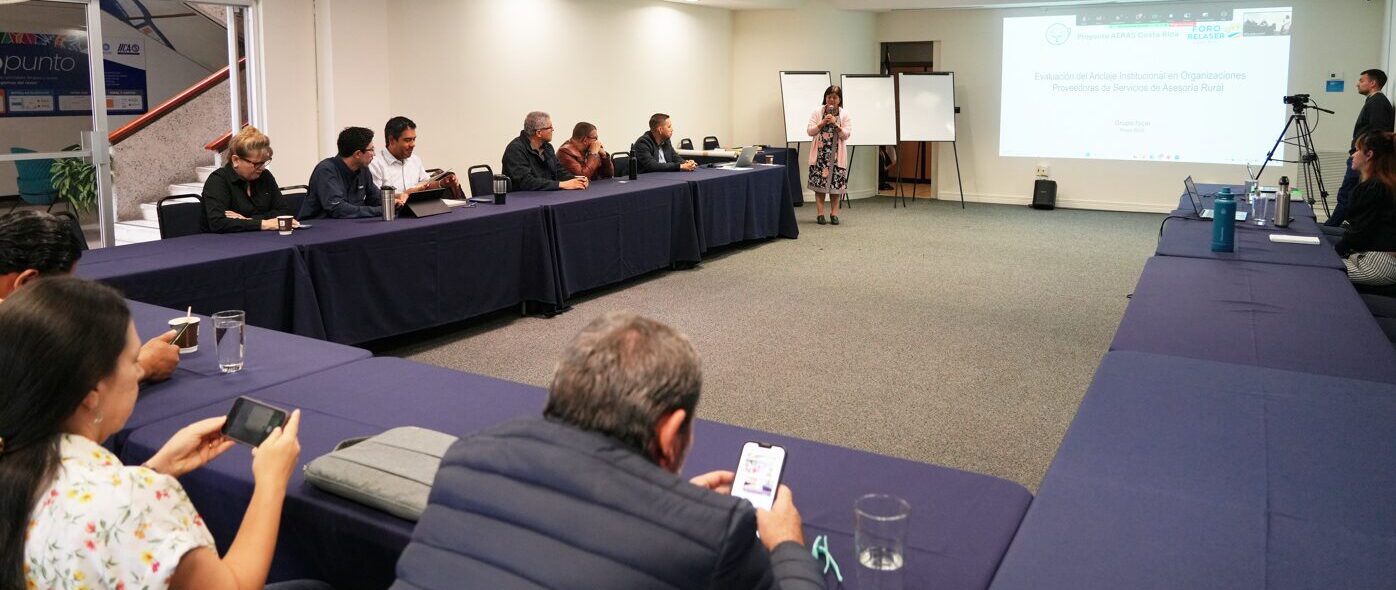
To mark the transition into the project’s next implementation phase, key stakeholders, partner institution representatives, and rural extension officers gathered recently for a focused strategy meeting at IICA’s headquarters in Costa Rica. During the meeting, participants reviewed progress achieved to date, documented key lessons from early implementation, and aligned on long-term strategies to lock in the initiative’s impact for years to come.
Laura Ramírez Cartín, AERAS Project Coordinator and representative of Foro Relaser Costa Rica, outlined the multifaceted benefits the program has delivered to participating producers. “AERAS has enabled farmers to acquire knowledge in areas such as the reduction of external inputs, soil health, biodiversity, synergies, economic diversification, joint knowledge creation, food security, impartiality, connectivity, land governance, and resources,” she explained.
Kenneth Solano, IICA’s Project Management and Agribusiness Specialist based in Costa Rica, emphasized the critical role of sustainability-focused initiatives at a moment when smallholder farmers face intensifying competitive pressures in global agricultural markets. “These environmental, social, and economic sustainability projects are fundamental in tackling the challenges of an increasingly competitive agriculture sector; and they require proper support to generate a long-lasting impact,” Solano noted.
He added that structured reflection and ongoing evaluation are key to the program’s long-term success. “These reflective and evaluation exercises are vital in laying the foundation for our work and defining the next steps of the project, to ensure that this effort will endure and continue to create positive results in the region,” he said.
Oswaldo Páez Aponte, a project consultant, echoed this focus on long-term systemic change, noting that the initiative’s true success will not be measured by short-term output alone but by its lasting impact after the project’s formal funding timeline ends. “The most valuable changes stemming from AERAS are those that will extend beyond the duration of the project. The most significant thing is to ensure that these agroecological practices do not remain on paper but gain traction in the organizations that are providing extension and consultancy services in rural areas,” he explained.
Looking forward, the AERAS leadership plans to deepen cross-sector partnerships between public and private institutions, building a more robust interconnected network to share resources, technical expertise, and shared commitments to sustainable agriculture. Organizers note that these expanded collaborative efforts will preserve the progress already achieved and scale up adoption of agroecological practices across all participating countries in the coming years.