A fresh wave of calls for the formal regulation of private hire (PH) vehicle drivers has swept through Trinidad and Tobago’s transport sector, triggered by the brutal murder of 12-year-old Mercedez Layne. Speaking to local media outlet the Express on Tuesday, leaders and drivers from both registered taxi and private hire circles across the Morvant and San Juan transport routes uniformly demanded that policymakers finally move to formalize the unregulated segment of the industry, more than a decade after discussions on the reform first began.
Brenton Knights, president of the Route 2 Maxi-Taxi Association, said the repeated cycle of public outcry after violent tragedies linked to unregulated transport must end. He noted that the issue of PH regularization first sparked national fury following the 2021 murder of 22-year-old court clerk Andrea Bharatt, who accepted a ride from an unlicensed driver she mistook for a legitimate taxi in Arima. Bharatt’s body was discovered a week later dumped on a precipice in the Heights of Aripo, and despite nationwide calls for reform, no substantive regulatory changes were ever implemented.
“It should have been done a long time ago,” Knights told the Express in a phone interview. “We had the Andrea Bharatt issue. There was a national outcry. We are in pain again. We should not have to revert to that discussion again. It’s heartbreaking. Every time a tragedy like this happens, we come out complaining. Then it becomes a nine-day wonder. It opens old wounds again. I don’t mind sharing my ideas. It’s no ifs, buts or maybes—PH drivers should be regularised.”
For Kern Warner, a Morvant-based PH driver with 15 years of experience working the route, regularization would not only improve public safety but also level the playing field for all transport workers. In an on-the-record interview at Port of Spain’s Independence Square, Warner said formal licensing would address longstanding systemic flaws in the sector. “They should regularise everybody. Give the PH drivers their taxi badges. It would take care of some of the problems in the system. Give everybody a fair playing field,” he said, echoing the widespread grief over Layne’s killing. As a father of three, Warner extended his deepest condolences to Layne’s family: “It’s sad. It’s not nice to know what happened to Mercedez. My heart goes out to her family and loved ones. She did not deserve to die like that.”
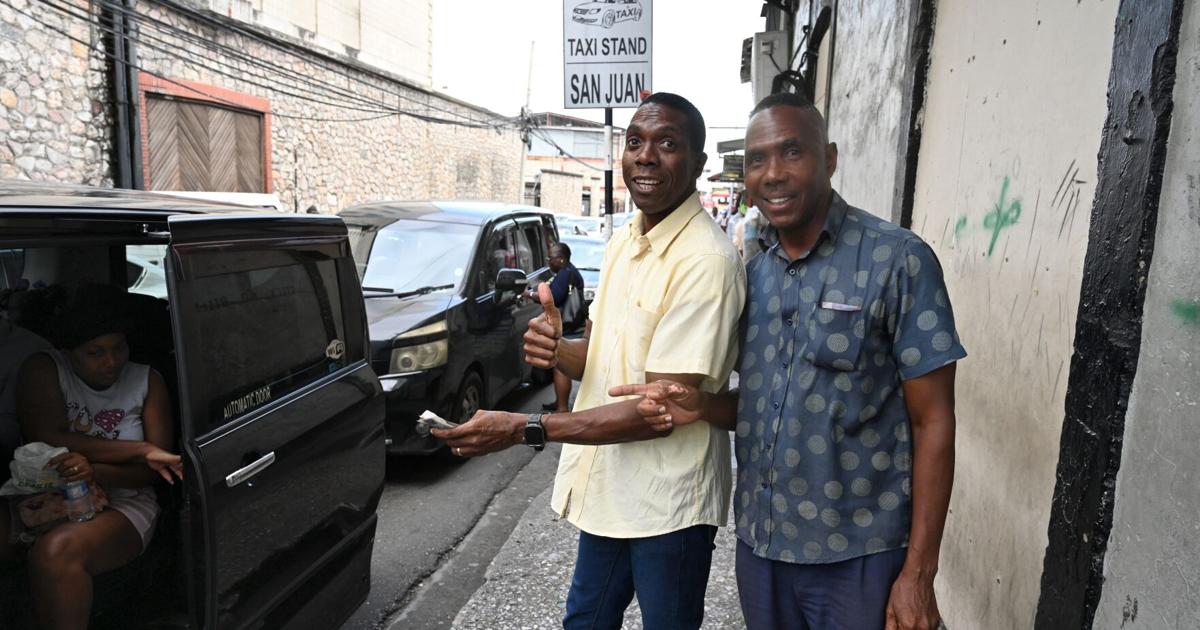
At the San Juan taxi stand, long-time registered taxi driver Samuel “Sam” Blades noted that discussions around PH regulation stretch all the way back to 2010, when Jack Warner held the post of Transport Minister – and that decades of talk have never translated into action. Blades pointed out that unregulated PH operations have become a permanent fixture of the sector, and that attempts to eliminate the segment have failed completely. “They have been talking about regularising it since 2010. Since (then-Transport Minister) Jack Warner was in charge. Nothing has happened. You can’t stop the PH drivers,” he said. Pointing to chronic congestion from unregulated PH vehicles on Port of Spain’s Charlotte Street, Blades noted that unlicensed drivers operate with no oversight, while all drivers earn roughly the same income regardless of licensing status. “Just look at what his happening there. There are clogging up the streets. They don’t care how they come out to work. How they dress. But what can you do? Everybody is making the same $6,” he added.
Fellow San Juan registered taxi driver Garvin Boynes echoed Blades’ frustration, noting that licensed drivers bear the full cost of regulatory compliance including insurance, while unlicensed PH drivers pay no such fees, creating an uneven playing field. Both Blades and Boynes shared the broader community’s sorrow over Layne’s murder, with Blades calling the killing “not easy” to process. For his part, Charlotte Street-based PH driver Joel Peter said regulators should not only formalize the sector but also allocate dedicated pick-up stands for licensed PH operators.
Regular commuters at the Morvant stand also weighed in on the debate, noting that PH drivers fill critical gaps in the island’s public transport network that traditional taxis do not cover. Many PH operators offer door-to-door “village” taxi services that drop commuters directly at their homes, are willing to travel to remote, underserved areas, and adjust their fares to fit low-income passengers’ budgets. Despite these benefits, drivers across all segments of the sector agree that formal regulation is long overdue to prevent further tragedies like the deaths of Bharatt and Layne.