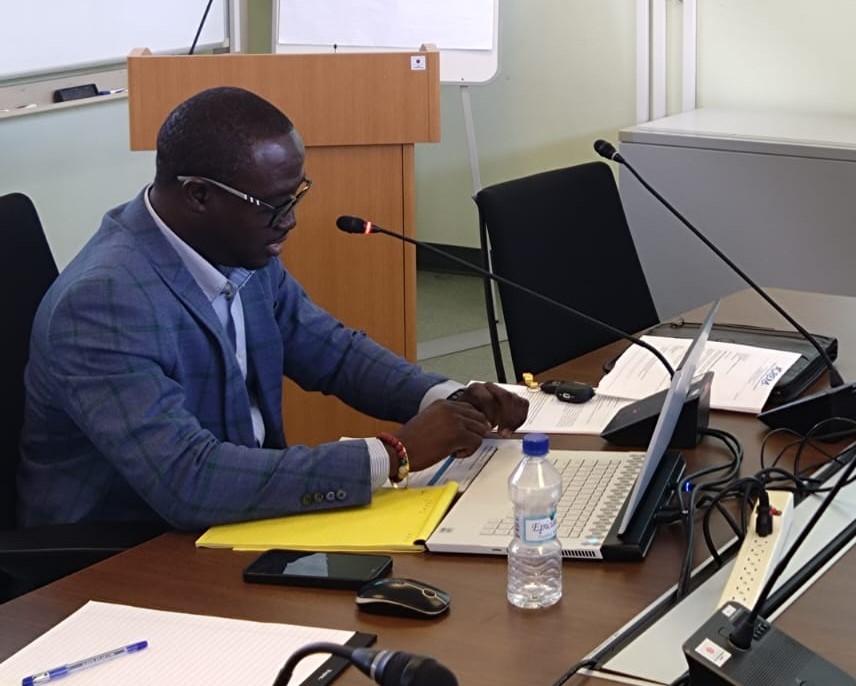
The Ministerial Council of the Caribbean Regional Fisheries Mechanism (CRFM), the regional intergovernmental body affiliated with the Caribbean Community (CARICOM), kicked off its 20th Regular Meeting on Wednesday, bringing together fisheries, aquaculture and blue economy ministers from across the Caribbean region to address pressing challenges facing the marine sector via remote teleconference.
Before diving into policy deliberations, the council formally elected Hon. Randy Baltimore, Minister of State in Antigua and Barbuda’s Ministry of Agriculture, Lands, Fisheries and the Blue Economy, as its new chair. Baltimore takes over the role from Hon. Kyle Hodge, Minister of Economic Development, Industry, Commerce, Lands, Planning, Water, and Natural Resources of Anguilla, who was widely recognized for delivering exceptional leadership during his one-year tenure in the position.
In his acceptance remarks, Baltimore reaffirmed Antigua and Barbuda’s unwavering commitment to deepening regional collaboration, advancing the sustainable stewardship of marine resources, protecting the livelihoods of small-scale fisherfolk, and scaling innovative solutions to the most pressing threats facing the regional fisheries sector—from accelerating climate change to persistent illegal fishing activity and fragmented marine management.
“The Government of Antigua and Barbuda is eager to partner closely with all CRFM Member States and regional stakeholders to advance the sustainable development of Caribbean fisheries and the broader blue economy throughout our term as chair,” Baltimore stated, noting he had only recently taken on the fisheries portfolio following Antigua and Barbuda’s recent national elections.
Supported by Caribbean Fisheries Forum Chair Ian Horsford, who also serves as Antigua and Barbuda’s Chief Fisheries Officer, ministers made steady progress through the meeting’s agenda, ultimately approving 19 binding resolutions that are expected to drive meaningful progress for the regional fisheries and aquaculture sectors.
In closing remarks to the gathering, CRFM Executive Director Dr. Marc Williams framed the moment as a turning point for the region. “The Caribbean stands at a pivotal moment when sustainable fisheries, aquaculture, the Blue Economy, climate resilience, and ocean governance must be integrated to secure prosperity for present and future generations,” Dr. Williams said. “I encourage all Member States to maintain their strong engagement in implementing today’s resolutions and to continue supporting the CRFM as a premier regional institution for fisheries and ocean governance.”
Among the most significant outcomes of the meeting was the approval of a new 5-year strategic aquaculture development action plan, alongside a two-year work plan and operating budget for the CRFM covering the 2026-2027 period. Ministers also received detailed progress updates on three major ongoing regional initiatives led by the CRFM in partnership with member states and global institutional partners: the Canadian-funded Sustainable Technologies for Adaptation and Resilience in Fisheries (STAR-fish) Project, the IICA/EDF-EU Food Security Project, and the GEF/FAO/CAF/CRFM BE-CLME+ Project, which works to advance national blue economy priorities through marine spatial planning across the Caribbean Large Marine Ecosystem and adjacent areas.
Dr. Williams emphasized that the council’s decisions on institutional priorities, budget allocations, financial governance, and staffing structure lay a solid foundation for the CRFM to deliver on its core mission and create tangible, lasting benefits for the millions of Caribbean people whose livelihoods depend on healthy marine resources.
The council has scheduled its next plenary meeting for later this year, to be held in conjunction with the 20th Caribbean Week of Agriculture in Jamaica.