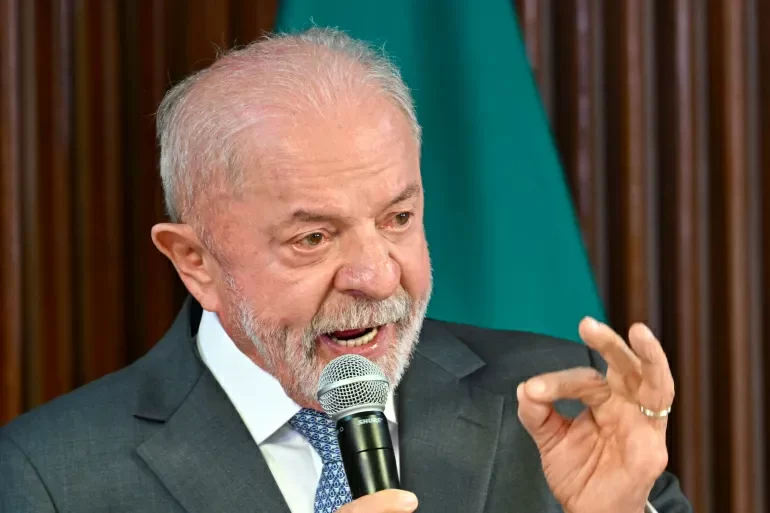
In a sharp rebuke that has underscored growing frictions between Brasilia and Washington, Brazilian President Luiz Inacio Lula da Silva has publicly condemned the second Trump administration’s recent proposal to impose 25% tariffs on a range of Brazilian imports entering the United States. Lula has labeled the planned trade measure “unacceptable”, expressing deep surprise that the move would come at a time when ties between the two nations were just beginning to show signs of improvement after years of disagreement. The announcement caught many observers off guard, coming just one month after Lula met with U.S. President Donald Trump at the White House, a meeting that left Lula expressing cautious optimism about a potential thaw in bilateral relations. For years, relations between the two countries have been strained over disputes spanning trade policy, human rights disagreements, and competing priorities in regional politics, but the high-profile Washington meeting had been widely interpreted as the start of a new détente between the two governments. The relationship between Trump and Lula has long been complicated and fraught with ideological divides. Since Trump began his second presidential term in January 2025, he has maintained consistent criticism of Lula’s left-leaning administration. Trump has repeatedly spoken out against what he claims is censorship of right-wing political voices in Brazil, and has kept close personal and political ties to former Brazilian president Jair Bolsonaro and his family, leading figures in Brazil’s conservative right-wing movement. Bolsonaro is currently serving a 27-year prison sentence after being convicted of plotting to undermine Brazil’s democratic system following his narrow loss to Lula in the 2022 presidential election. The new U.S. tariffs were introduced following a U.S. investigation into alleged unfair Brazilian trade practices, including claims of illegal Amazon deforestation, restricted access to Brazil’s domestic ethanol market, and inconsistent enforcement of anti-corruption rules. U.S. Trade Representative Jamieson Greer has argued that current trade practices between the two nations are “unreasonable” and create unfair barriers to American commerce, adding that the U.S. faces a large trade deficit with Brazil. However, publicly available official trade data directly contradicts this claim: in March 2026 alone, the U.S. recorded a $420 million trade surplus with Brazil, rather than a deficit. Independent trade analysts say the proposed tariffs are part of a strategic shift by the Trump administration, which lost its broad legal authority to impose global tariffs under the International Emergency Economic Powers Act following a February 2026 ruling by the U.S. Supreme Court. The new levies are instead being enacted under Section 301 of U.S. trade law, a statute that grants the executive branch wide authority to impose trade sanctions when it claims trade agreement violations have occurred. Key Brazilian export sectors have been granted exemptions from the proposed 25% tariffs, including beef, coffee, rare earth elements, industrial metals, energy products, and aircraft components. The tariffs are still in a public consultation period that will conclude in early July 2026, leaving final implementation uncertain for now. The tariff announcement comes at an extraordinarily sensitive political moment for Lula, who is gearing up for a tightly contested general election in November, where his coalition will face off against a ticket led by Flavio Bolsonaro, former president Jair Bolsonaro’s eldest son. Despite his sharp criticism of the new trade measure, Lula has reaffirmed Brazil’s commitment to building stable, institutional relations with the United States. At the same time, he issued a clear warning that Brazil will actively diversify its trade partnerships and turn to other global markets if the tariffs are ultimately implemented.
Lula hekelt nieuwe Amerikaanse tarieven: ‘Wij accepteren deze behandeling niet’