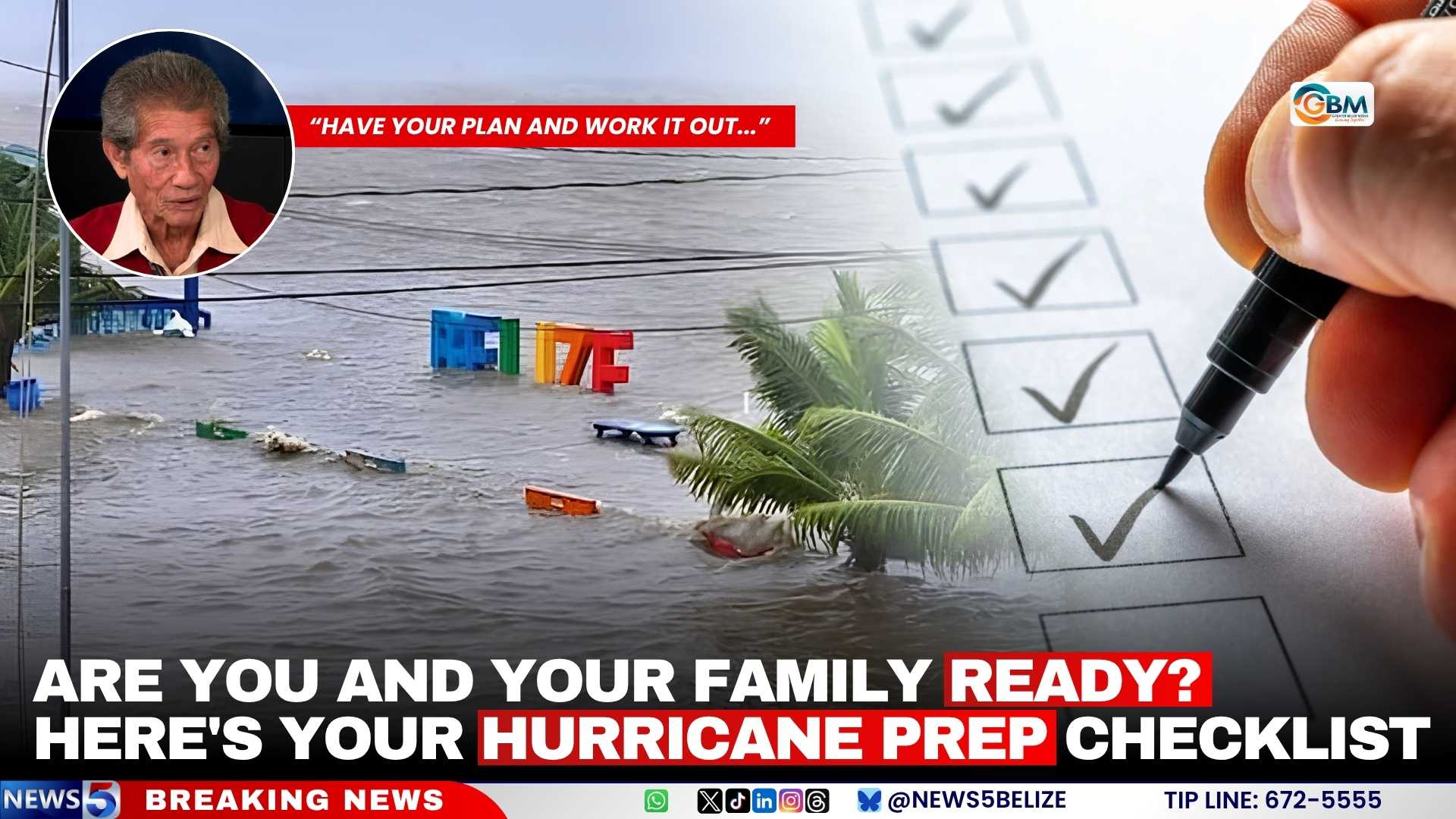
As the 2026 Atlantic hurricane season enters its second day, no active storm systems are currently developing across regional waters, but disaster response officials in Belize are already sounding the call for proactive preparation, warning residents against waiting until a storm is imminent to get ready.
In a public appeal on the local morning current affairs program *Open Your Eyes*, Red Cross volunteer Feliciana Vernon and Fred Hunter, head of Disaster Risk Reduction at the Belize Red Cross, emphasized that advance planning is the most critical step to avoiding chaos and danger when a hurricane strikes.
“Sometimes we might wait too long, too late to actually go to the shelter. We hope that at least there is a set plan so that when you do decide, you’re moving quickly,” Vernon explained during the appearance.
The pair outlined a comprehensive preparedness checklist for Belizean households, starting with a formal family emergency plan that accounts for every member of the household, including those with special medical or access needs. The plan should map out all available evacuation routes, cover whether residents will head to an official community shelter, stay with nearby family, or shelter with a neighbor, and detail how the household will travel to their safe location, whether by private vehicle, bus, boat, or on foot. It should also include a pre-designated meeting point for any family members who become separated during evacuation, and a clear list of contacts who will be notified of the household’s evacuation plans before the storm hits.
Vernon noted that communication infrastructure is often knocked offline in the aftermath of a major hurricane, making advance coordination all the more important. “After a hurricane passes, there probably won’t be internet for a couple of days. So let your family know where you would go,” she said.
In addition to a written emergency plan, the Belize Red Cross advises every household to pack a dedicated grab-and-go emergency bag that can be grabbed at a moment’s notice when an evacuation order is issued. The bag should be stocked with three days of non-perishable food and clean drinking water, with recommended options including canned fruits and vegetables, canned meats, peanut butter, tortillas, johnny cake, and high-energy trail snacks or bars.
Essential tools and supplies to include are a flashlight with extra batteries, a kerosene lamp, manual can opener, basic hand tools including a hammer, nails, pliers, a wrench and scissors. All critical identifying and legal documents should also be stored in a waterproof compartment of the bag, including photo IDs, birth and marriage certificates, medical records, insurance policies, passports, property deeds for land and homes, bank account records, and household keys. Finally, the bag should hold basic hygiene supplies, a change of clothes for each family member, and small items to keep children occupied during an extended shelter stay.
Beyond packing and planning, the Red Cross team emphasized the importance of running full practice evacuation drills with the entire household long before a storm approaches the coast. These dry runs help every family member understand their role, how quickly the household can mobilize, and what steps they need to take, eliminating panic when an actual evacuation is required.
“It’s practice, practice, practice. Have your plan and work it out,” Hunter said. Vernon echoed that sentiment, noting that even young children can have a small assigned role in the evacuation process: “Just grab and go. Everybody has a role, even the little kids.”
To support households in building their emergency plans, the Belize Red Cross currently makes free printed emergency plan booklets available at their main Belize City office, with electronic versions also accessible for download. The organization is currently accepting public donations of any amount to fund the printing of additional copies to distribute to communities across the country.