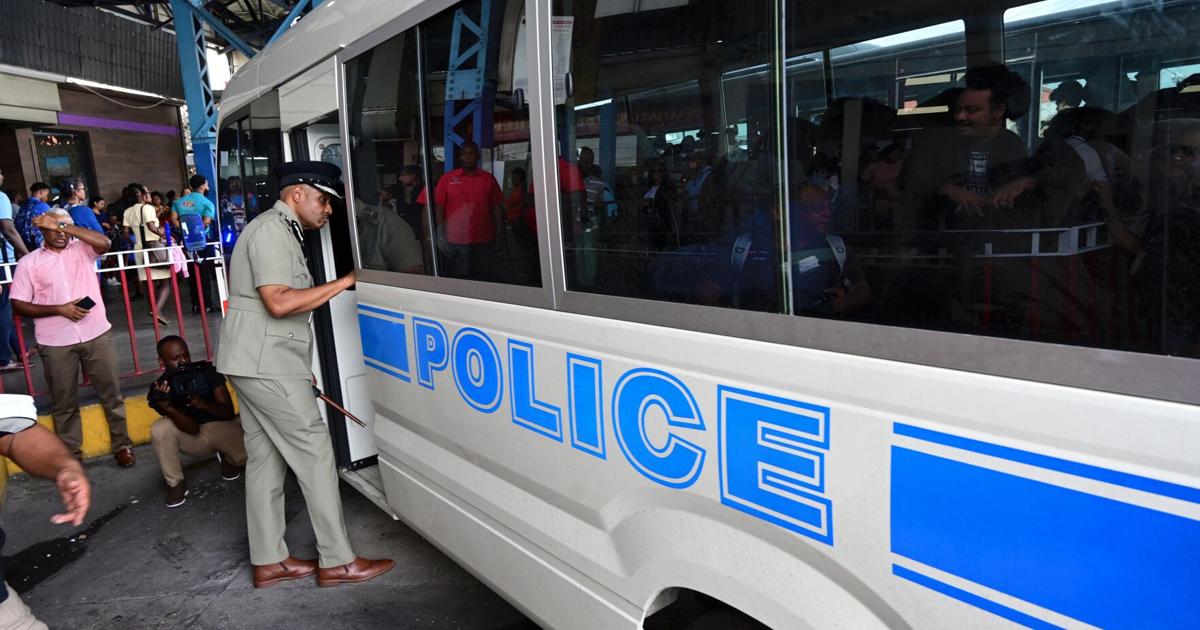
A sudden industrial action by maxi-taxi operators in Trinidad and Tobago left thousands of travelers stranded in the capital Port of Spain on Wednesday, prompting a rapid, public-spirited intervention from the Trinidad and Tobago Police Service (TTPS) to ferry stranded people, particularly vulnerable groups, safely to their homes.
By 2:30 p.m. that afternoon, TTPS police buses had already begun pulling out of the City Gate transit hub in central Port of Spain, prioritizing women, school children, elderly residents, and people with disabilities for trips to key destinations along the densely populated East-West Corridor, including the major town of Arima. Senior TTPS leadership personally oversaw the launch of the emergency relief operation, with Commissioner of Police Allister Guevarro and Assistant Commissioner of Police (Specialised Support) Brian Soodeen on-site to coordinate logistics and speak with affected commuters.
In an on-site interview, Guevarro explained that the emergency transportation effort was planned from early that morning, after the TTPS leadership anticipated that the protest would leave thousands stuck in the capital. After a morning risk assessment that concluded leaving large crowds of stranded people in Port of Spain overnight would create unnecessary public safety risks, the service mobilized every available police bus to address the gap. “I spoke with ACP Brian Soodeen early yesterday morning, and we mobilized all readily available police buses to help get people home. Right now we have five buses on the road, but I wish we had 50 to meet the full demand,” Guevarro told reporters.
He emphasized that the 2:30 p.m. launch was intentional, timed to coincide with the end of the school day to get vulnerable children and older residents out of the capital as quickly as possible. The operation planned multiple round trips between Port of Spain and Arima throughout the afternoon and evening, with Guevarro confirming the TTPS would continue providing support for as long as the protest disrupted transit services. He also pushed back against any suggestions that the operation exceeded the TTPS’s mandate, framing the intervention as a core part of the service’s mission to serve the public.
“People often think of the police only as law enforcers, but today we are proving that we are here to help the public in any way we can when a crisis arises,” Guevarro said. “This service is completely free to commuters, and we made this decision because it was the right thing to do for public safety. The end justifies the means here. We also made sure to retain enough personnel and resources to respond to any other emergencies across the country while this operation runs.”
Soodeen, who oversaw the implementation of Guevarro’s initiative, added that all drivers and personnel assigned to the operation had received full safety briefings before departing, to ensure every passenger reached their destination without incident. “The Commissioner anticipated the risk of stranded commuters early this morning, so we had time to put this operation in place before the situation escalated,” Soodeen said. “We will continue to provide this support as long as it is needed.”
The emergency response was widely praised by stranded commuters, who described the TTPS’s intervention as a timely, thoughtful solution to an unexpected crisis. Sandra Maharaj, a 68-year-old resident of Sangre Grande who was stuck in Port of Spain when the protest began, said she had been terrified she would be unable to get home, as many local residents do not have private cars or access to alternative private transport. “I have to commend the police for what they did today. When I heard about the protest, I was so worried about how I would get home. A lot of us don’t have cars, and we don’t have relatives who can just drop everything to come pick us up,” Maharaj said. “The officers saw the problem and acted immediately. That meant the world to people like me.”
Russel Thomas, 74, of Arima, said the priority given to vulnerable groups showed the TTPS had carefully planned the response to avoid harm. “People came into Port of Spain for work, medical appointments, business, and suddenly they had no way home. With the daily crime reports we see, I was worried we would see muggings or pickpocketing in the crowd here at City Gate. The police stepped in at exactly the right time,” Thomas said. “Giving priority to children and the elderly wasn’t what everyone wanted, but it showed they had a clear plan to help the people who needed it most. The Commissioner and his officers absolutely deserve credit for this.”
Jeremy, a commuter from St Augustine who declined to give his full name, added that the operation showed a side of the TTPS that the public rarely sees. “We usually see police when there’s a crime, an accident, or during protest operations, so it’s not often positive press for them. But today, no matter what you think of the service, you have to commend them. They saw a crisis developing and acted before it got out of hand,” he said.