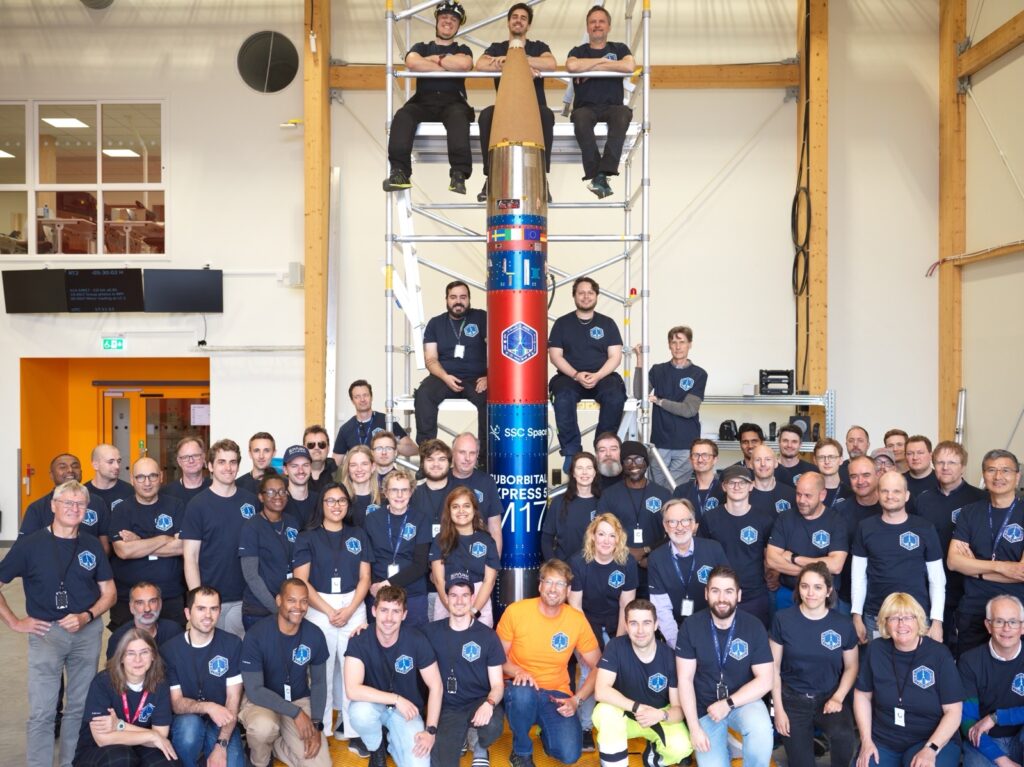
CHARLESTOWN, Nevis — A small Caribbean island nation has entered the global space research landscape with a groundbreaking achievement: the successful deployment of the first space life sciences experiment originating from the entire Caribbean region. This milestone marks a defining moment for science, education, and cross-border innovation in the Federation of St Kitts and Nevis, placing the country alongside a expanding cohort of nations advancing international space exploration.
The experiment lifted off on May 31, 2026, as part of the SSC SubOrbital Express SIX-5/M17 mission, launching from Esrange Space Center in Kiruna, Sweden. The historic project was brought to fruition through a groundbreaking multilateral collaborative partnership, bringing together Nevis’ Ministry of Education, the University of Zurich (UZH), and the Center for Space and Aviation Switzerland and Liechtenstein (CSA).
In an official statement following the launch, the government of St Kitts and Nevis emphasized that the mission carries historic significance far beyond Nevis’ borders. For the entire Caribbean, it proves that small island developing states are fully capable of making meaningful contributions to cutting-edge scientific inquiry and global technological progress.
At its core, the experiment is designed to address a longstanding gap in space biology research: understanding how altered gravitational conditions alter the behavior of human immune cells. Researchers will analyze how both microgravity, the near-weightless environment of space, and hypergravity, an environment with greater gravitational pull than Earth, impact gene expression and core cellular functions. Any insights generated from the mission are expected to directly inform global research into protecting human health during long-duration spaceflight, a critical area of study as nations plan deeper exploration missions beyond low-Earth orbit.
A core defining feature of the initiative is its focus on building local scientific capacity, rather than relying solely on external researchers. Four experienced science educators from Nevis were selected to participate directly in the project, working side-by-side with leading international space scientists to develop the experiment’s design and support its implementation. This opportunity gave the local educators first-hand, practical experience in space research and advanced scientific research techniques that they can bring back to their classrooms.
Government officials explained that the collaboration has already delivered lasting benefits to education and research infrastructure across the federation. Local teachers and students have gained unprecedented access to real-world, global scientific research practices, while new purpose-built laboratory facilities and expanded research capabilities have been established locally. The initiative has also transformed STEM (Science, Technology, Engineering, and Mathematics) education across Nevis by creating tangible, direct connections between standard classroom learning and high-profile global scientific exploration.
This mission, officials noted, showcases the transformative impact of strategic international academic and government partnerships, while highlighting the untapped potential of Nevisian educators and students to contribute to cutting-edge scientific innovation on the global stage.
As researchers begin the process of collecting and analyzing data from the experiment, educators and students across Nevis will continue to participate in every step of the research process. The findings generated will not only advance global understanding of human biology in altered gravitational environments, but also serve as a powerful inspiration to cultivate the next generation of scientists, engineers, and innovators across the entire Caribbean region.