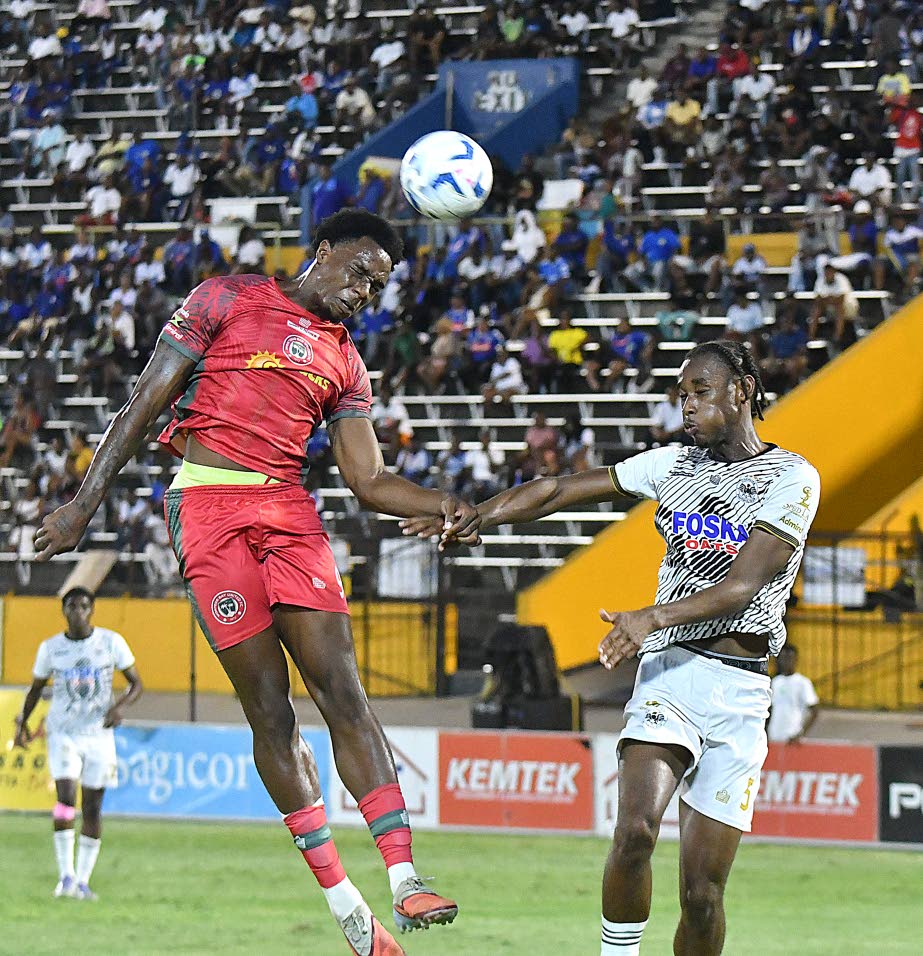
The 2025/2026 Jamaica Premier League (JPL) came to a close last Sunday, with Portmore United lifting the championship trophy after a hard-fought final victory over Cavalier FC at Kingston’s National Stadium. But the nine-month campaign, which wrapped up amid celebration on the pitch, was overshadowed by a string of high-profile operational and administrative hurdles that have sparked widespread questions about the top-flight league’s near-term future. Despite these headwinds, Professional Football Jamaica Limited (PFJL) Chief Executive Officer Owen Hill remains steadfast in his conviction that the league will continue growing and cement its status as one of the top competitions in the Caribbean region.
The first major disruption hit in late October, when Hurricane Melissa swept across Jamaica, forcing a seven-week league suspension. Multiple clubs in western Jamaica suffered severe infrastructure and financial damage from the storm, with St Elizabeth-based Treasure Beach FC granted an extended grace period to rebuild and return to competitive play. While the hurricane-related shutdown was widely accepted as an unavoidable act of nature, a cascade of other off-field crises compounded the league’s challenges through the rest of the season.
Governance instability emerged as one of the most pressing issues, starting with the resignation of PFJL chairman Livingstone Morrison just five months after he stepped into the role, succeeding Chris Williams last September. Two high-profile club leaders – Montego Bay United chairman Yoni Epstein and Mount Pleasant Football Academy owner Peter Gould – also stepped down from the PFJL finance committee, citing what they described as troubling governance practices within the organization’s board.
Broadcast instability created additional friction for fans and stakeholders alike. Last August, Pivott LLC was announced as the league’s new official broadcast partner, taking over from defunct regional network SportsMax. But for months after the deal was signed, the majority of JPL matches never made it to air. Today, Pivott LLC is locked in a $100-million legal dispute with PFJL over the failed broadcast partnership. When independent social media content creators stepped in to fill the gap by live-streaming matches on YouTube, PFJL ordered them to stop, later moving matches to its own official YouTube channel before reaching a last-minute deal with RUSH Sports to broadcast the play-offs across the Caribbean.
In an interview with the Jamaica Observer, Hill acknowledged that these setbacks did impact league operations, but emphasized that the competition weathered the storm and stayed on its growth path. He argued that it is critical to distinguish between administrative turbulence and the core quality of the league’s on-field product.
“Despite those challenges, the Jamaica Premier League still delivered one of its strongest play-off campaigns in recent memory,” Hill told the outlet. “Record numbers of goals attracted sponsor engagement even in this tough global economic climate, and the league still provides a solid platform for player development and showcase. Those are signposts on the journey reminding us that the football product itself remains strong.”
Hill added: “With that said, we cannot minimise the impact of the issues, either. These are serious matters, and as an organisation we have to acknowledge them honestly. What I believe is most important is how we responded. From my perspective, this season exposed areas that require improvement, but it also demonstrated the resilience of the clubs, partners, and the football ecosystem overall.”
The Observer has confirmed that several key JPL sponsors, including title sponsor Wray & Nephew, have raised concerns about the league’s direction following this season’s disruptions and are currently reevaluating their future sponsorship commitments. Still, Hill says existing sponsor relationships remain solid, and he is confident partnerships will continue long into the future.
“While there were challenges this season, we have also been able to demonstrate very tangible positives: increased play-off attention, strong fan affinity, growing digital reach and continued player development feeding into the national programme,” he explained. “Importantly, our sponsors recognise that the Jamaica Premier League is more than just a football competition. It is a national platform that connects brands to culture, passion, youth engagement and community impact.”
“Sponsors want confidence that the organisation is learning, evolving, and building for sustainability, and those conversations have been central to our engagement with them. The overall sentiment from partners has been one of continued belief in the potential of the league. Naturally, they expect improvements, and so do we,” Hill added.
With the 2025/26 season only just wrapped, the 2026/27 campaign is set to kick off in less than three months. PFJL has already begun full-scale planning for the new season, with a focus on addressing the gaps exposed by this year’s challenges to deliver a far smoother experience for clubs, sponsors, and fans.
“While it is important for us to properly assess the lessons from the past season, the reality is that planning for 2026/27 is already underway. Discussions around competition structure, broadcast arrangements, sponsorship alignment, club readiness, operational systems, and fan engagement have already started because we understand the urgency of improving the overall product,” Hill said.
“One of the key priorities will be strengthening consistency across all operational areas. That includes refining broadcast delivery, improving matchday execution, enhancing communication workflows, and ensuring that sponsors and supporters experience a more seamless product throughout the season. The responsibility now is to convert momentum into stability and efficiency for 2026/27 and beyond. The objective is to improve in the critical areas.”