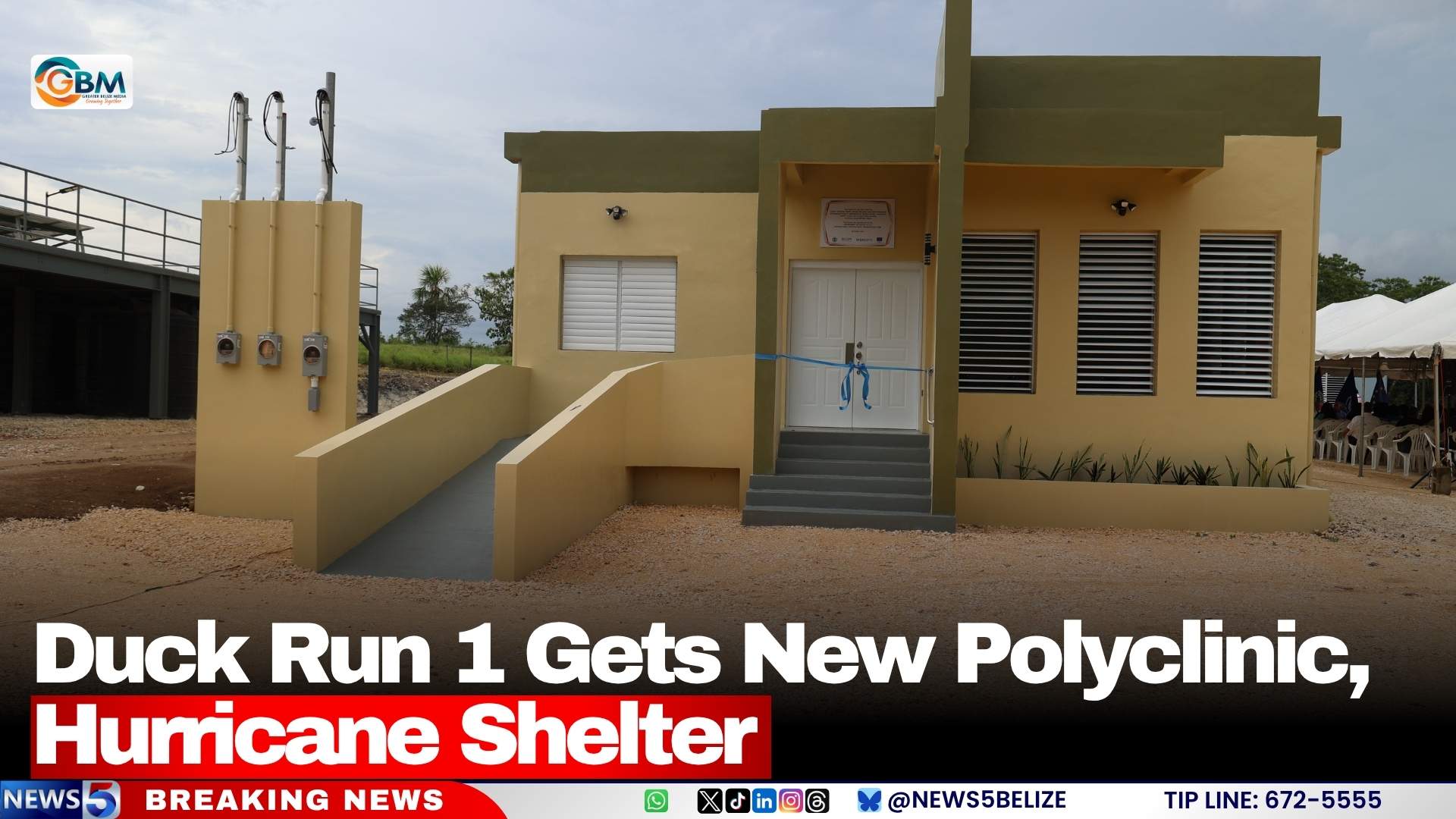
On Thursday, a landmark infrastructure project officially opened its doors to residents of Duck Run 1 Village, located in Belize’s Cayo District, delivering a much-needed dual-purpose facility that combines critical primary healthcare access with emergency storm protection. The new polyclinic and hurricane shelter, the product of a collaborative partnership between the government of Belize and the International Organization for Migration (IOM), represents a key milestone in a broad regional development effort focused on boosting climate resilience and upgrading community well-being across western Belize.
The entire cross-community initiative, branded “Building Climate Change Resilience and Social Integration of Displaced People in Settlements of Western Belize,” was first launched back in February 2022, with core funding of BZ$4.6 million provided by the European Union. Of that total investment, more than $1.5 million was allocated to the construction of the new Duck Run 1 facility, which was formally transferred this week to Belize’s Ministry of Health and Wellness for long-term operation and community use.
Unlike many single-purpose infrastructure projects, this development delivers dual benefits to local residents: the polyclinic will expand access to routine and urgent primary care services for a community that previously faced longer travel times for basic medical treatment, while the reinforced structure doubles as a hurricane shelter capable of accommodating dozens of local families during extreme weather events that have become increasingly frequent amid global climate change.
The broader initiative covers six vulnerable communities across western Belize: Santa Familia, Billy White, Los Tambos, and the three Duck Run settlements (Duck Run 1, 2, and 3). Beyond the construction of new healthcare and emergency infrastructure, the program has delivered a suite of complementary upgrades to support long-term community resilience. Project activities include the construction of five combined hurricane shelters and community centers across the target region, improvements to existing potable water systems, upgrades to storm drainage infrastructure to reduce flood risk, the procurement of new firefighting equipment for local emergency response teams, and hands-on training for community health workers to strengthen local care capacity.
Officials involved in the project note that the initiative addresses two overlapping challenges facing western Belize: the need to improve access to basic social services for local and displaced communities, and the growing urgency of adapting to the impacts of climate change, which has brought more intense and frequent hurricanes to the Caribbean region in recent decades. The handover of the Duck Run 1 facility marks the first of several completed infrastructure projects set to open across the six target communities in the coming months, with organizers saying the development will serve as a model for climate-resilient infrastructure investment across Central America.