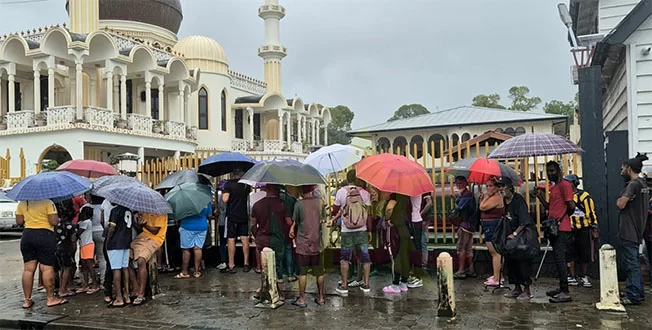
As the first day of Eid al-Adha, also called the Feast of Sacrifice, dawned on Wednesday in Suriname, hundreds of low-income residents gathered early outside mosques across Paramaribo and Wanica, waiting patiently for their allocated share of fresh beef or mutton. For generations, this annual religious tradition has centered on sharing sacrificial meat: Muslims divide offerings into three parts, keeping one portion for their own families, giving a second to relatives, and donating the third to people experiencing financial hardship, with the minimum allocation usually set at one kilogram per household. This year, however, the long-held custom is facing unprecedented strain driven by “rocket-like” surges in cattle and sheep prices.
On-the-ground observations at multiple mosques across the two districts painted a consistent picture of the challenges communities are navigating. Congregation members worked tirelessly to process the limited available meat, administrative teams kept meticulous logs of total stock and individual allocations to ensure fairness, and community leaders faced agonizing decisions about how to stretch limited resources to serve as many needy families as possible. Reports from the sites confirm that price hikes have reached extraordinary levels: one healthy, fully grown bull was recently priced at as much as $11,000 US dollars, a sum out of reach for most local congregations.
The impact of these soaring costs is visible in the sharp drop in the number of sacrificial animals purchased this year. Just last year, congregations that ordered five animals already considered that a reduction from previous years; in 2026, that number has fallen further, with most communities only able to afford two or even one single animal. A small number of congregations have been completely unable to source any sacrificial animal at all this year, while a handful of better-resourced communities managed to fund seven animals, a small number still far below typical pre-inflation levels. For communities that can still offer meat to needy residents, a numbered ticketing system is strictly enforced to avoid overcrowding and ensure orderly distribution.
Under the tradition, each sacrificial animal is collectively purchased by seven congregation members, making the per-person cost far more manageable than individual purchase — even so, many households cannot contribute this year due to broader economic pressures. Despite the significant challenges, community leaders have expressed deep gratitude to members and donors who have stretched their budgets to keep the tradition alive, allowing the congregation to fulfill its core religious obligation. Leaders emphasize that beyond the ritual of the sacrifice itself, the most important elements of Eid al-Adha are the intention to give, community solidarity, and care for the most vulnerable members of society. Still, many hold out cautious hope that next year will bring more stable, affordable prices, so the tradition can operate without the severe financial strain that marked 2026’s observance.