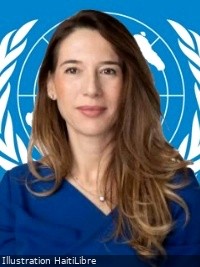
Following her inaugural fact-finding mission to violence-battered Haiti, a top United Nations official has delivered a devastating assessment of the country’s child protection crisis, warning that minors now account for almost half of all members of the armed gangs that control large swathes of Haitian territory.
Vanessa Frazier, the UN Secretary-General’s Special Representative for Children and Armed Conflict, shared her grim findings at a UN Headquarters press briefing on Thursday, May 21, 2026. She detailed that for children growing up in Haiti, daily life is defined by a relentless fight for survival, shaped by unending terror, constant threats of violence, family separation, forced displacement, and severe psychological trauma – all conditions that criminal gangs actively exploit to target vulnerable young people.
Frazier’s report documented a sharp and alarming escalation in violence against children over just the last year. Between 2024 and 2025, the number of children forcibly recruited and deployed by gangs nearly tripled. Over the same period, killings, mutilations, and abductions of minors almost doubled. Sexual violence, once an occasional byproduct of gang conflict, has become a routine tactic, deliberately deployed to spread terror and retaliate against entire communities that resist gang control.
Central to Frazier’s recommendations is a fundamental shift in how authorities respond to children found with gangs during security operations. She emphasized that any child encountered in these contexts must first be recognized and treated as a victim of exploitation, not a criminal combatant. These children, she argued, must be transferred immediately to specialized child protection services, where they can access critical care, psychosocial support, and long-term reintegration programming.
For the small number of children suspected of involvement in serious offenses, Frazier clarified that international juvenile justice standards must be strictly upheld. Deprivation of liberty, she stressed, should only be used as a measure of last resort, prioritizing rehabilitation over punishment.
To scale up support for former child gang members, UN and local partners are ramping up reintegration efforts across Haiti, most notably in the capital Port-au-Prince and the southern city of Les Cayes. In Les Cayes, a former facility is currently undergoing major renovations to create a dedicated reintegration center that can accommodate up to 600 children who have left gang life.
Frazier’s visit came amid a widening national humanitarian and security collapse that has deepened the vulnerability of Haitian children. Hundreds of thousands of minors currently live in areas fully controlled by armed gangs, completely cut off from access to education, healthcare, and basic social protection services. During her mission, Frazier learned that more than 18,000 schools across Haiti have been destroyed, damaged, or forced to cease operations due to gang violence. This widespread collapse of the education system leaves children isolated, idle, and far more susceptible to recruitment, exploitation, and abuse by criminal groups.
“No child should have to grow up in such conditions,” Frazier said, reflecting on her meetings with survivors. “I met young children and adolescents who were already vulnerable in their own homes, and have been trapped in an unbroken cycle of violence both inside and outside their communities. They told me they want only one thing: to go to school, to play, to learn, and simply be children again.”
Even amid the widespread chaos and trauma, Frazier highlighted the remarkable resilience of Haitian children, who have held onto their hopes for the future despite unimaginable hardship. “Even in the darkest moments, Haitian children continue to show extraordinary strength,” she said. “They deserve more than just survival. They deserve the chance to grow, to chase their dreams, and reclaim the childhood that has been stolen from them.”