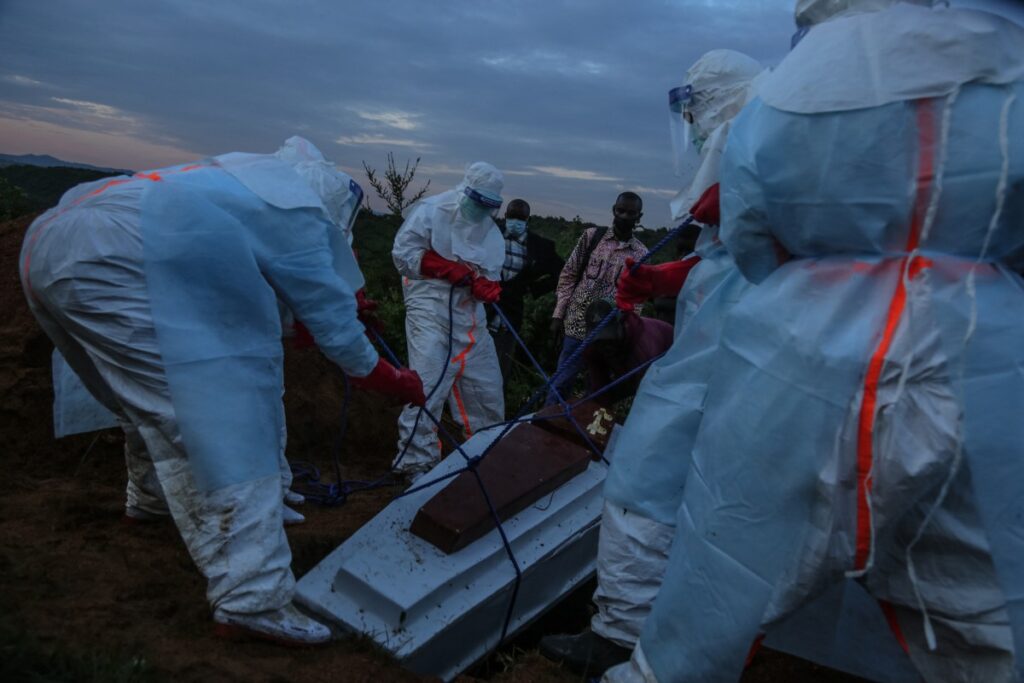
GENEVA, SWITZERLAND — In an updated official briefing held Friday, the World Health Organization (WHO) announced a critical escalation of its public health risk assessment for the ongoing Ebola outbreak in the Democratic Republic of the Congo (DRC), raising the national-level threat from high to very high.
Speaking to reporters at the organization’s Geneva headquarters, WHO Director-General Tedros Adhanom Ghebreyesus outlined the tiered risk breakdown: while the national threat now stands at very high, the risk of regional cross-border spread remains categorized as high, and the global risk level stays at low.
As of the latest update, outbreak data reveals a stark gap between confirmed and suspected infections that points to significant underreporting. So far, 82 cases have been laboratory-confirmed, with seven recorded deaths among confirmed patients. However, Tedros emphasized that the true scale of the epidemic is far larger, with nearly 750 suspected cases and 177 suspected fatalities across affected areas of the country.
“The Ebola outbreak in the Democratic Republic of the Congo is spreading rapidly,” Tedros told the assembled press, confirming the urgent need for expanded response efforts.
Neighboring Uganda has so far seen a contained impact, with only two confirmed cases traced back to cross-border travel from the DRC, one of which resulted in death. The situation in Uganda remains currently stable, per WHO’s assessment.
A major complicating factor slowing the global public health response, Tedros noted, is persistent violence and widespread insecurity in affected regions of the DRC. Unrest has blocked aid workers from accessing hard-hit communities, delayed diagnostic testing, and hindered the implementation of life-saving containment measures that could slow the outbreak’s advance.