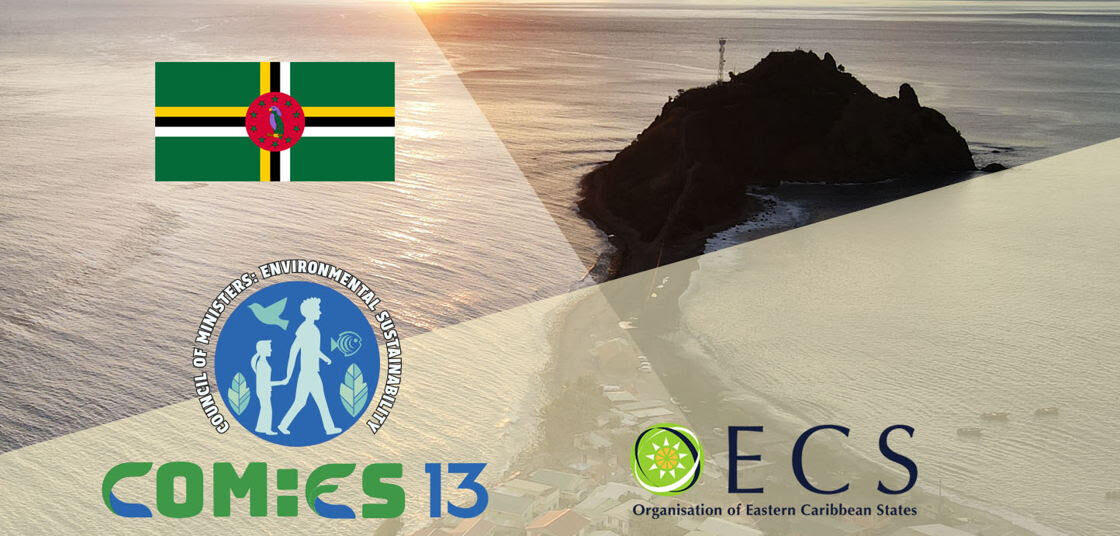
Against a backdrop of accelerating climate risks that disproportionately threaten vulnerable small island nations, the Organisation of Eastern Caribbean States (OECS) Commission has announced it will convene the 13th session of its Council of Ministers: Environmental Sustainability Meeting (COM:ES 13) in Dominica from May 27 to 28, 2026. Built around the central theme “The OECS Collective Resolve: Innovative Pathways in a High-Risk Global Landscape,” the high-level gathering will bring together a diverse cross-section of stakeholders to advance coordinated regional action on environmental protection and climate adaptation.
Per an official OECS press statement, attendees will include cabinet ministers leading environmental sustainability portfolios from all OECS full member states and associate members, alongside representatives from regional and international development partners, specialized technical agencies, leading climate researchers, and practicing environmental professionals. The entire two-day meeting will be chaired by Cozier Frederick, Dominica’s Minister for Environment, Rural Modernisation, Kalinago Upliftment and Constituency Empowerment.
Organizers emphasize that the meeting convenes at a defining moment for Small Island Developing States (SIDS), which have faced escalating climate-driven threats and systemic environmental challenges despite contributing the least to global carbon emissions. Central discussions will center on deepening cross-border cooperation among OECS member nations while co-developing practical, innovative solutions that boost regional sustainability and climate resilience across the Eastern Caribbean.
COM:ES 13 builds on foundational policy commitments reached during the 10th session of the council, when ministers formally endorsed the OECS Environmental Sustainability Roadmap to 2030. This strategic framework aligns with two broader regional and global commitments: the St. George’s Declaration for Environmental Sustainability (SGD 2040) and the Antigua and Barbuda Agenda for SIDS (ABAS), ensuring OECS actions align with larger shared climate and sustainability goals.
Over the course of the two-day gathering, ministers and technical experts will dive into seven core priority areas that shape regional environmental health: ocean governance and sustainable fisheries, biodiversity and ecosystem protection, climate adaptation and disaster resilience, integrated land and water resource management, scaled-up sustainable energy adoption, and cross-border pollution and waste reduction. The agenda also carves out space to address pressing ongoing challenges that threaten regional livelihoods and ecosystems, including gaps in accessible climate financing, large-scale ecosystem restoration needs, marine plastic pollution, expansion of renewable energy infrastructure, and the rapidly growing crisis of invasive sargassum seaweed blooms along Caribbean coastlines.
The meeting’s program combines multiple engagement formats to drive actionable outcomes, including interactive ministerial panels, evidence-based technical presentations, contributions from partner organizations, and closed-door strategic discussions designed to accelerate ambitious, coordinated environmental action across all OECS member states. A long list of regional and international institutions have confirmed their participation, including the Caribbean Community Climate Change Centre, the Commonwealth Secretariat, the World Bank, the European Union, Expertise France, and the International Union for Conservation of Nature, among dozens of other development and conservation partners.
Complementing the official ministerial meeting, the OECS Commission and the Government of Dominica will co-host a public Environmental Sustainability Exhibition running from May 25 to 28, 2026, at the Goodwill Parish Hall in Roseau, Dominica’s capital. Carrying the sub-theme “From Aspiration to Focused Action,” the exhibition will showcase cutting-edge environmental projects, community-led climate solutions, and innovative green technologies from across the OECS region, with targeted focus on renewable energy deployment, mangrove restoration and conservation, and community-scale sargassum management.
The exhibition is designed to be accessible and educational for general visitors and local students alike, featuring interactive displays, hands-on educational exhibits, immersive virtual reality experiences, documentary videos, and on-site project showcases that illustrate how Eastern Caribbean nations are already responding to climate and environmental challenges. Highlighted initiatives on display will include the European Union-funded BioSPACE and Integrated Landscape Management (ILM) programmes, the Resilient Ecosystems Through Mangrove Restoration (REMAR) Project, the Sargassum Regional Strategies for Ecosystem-Based Actions (SARSEA), and a range of other programs focused on boosting climate resilience, expanding sustainable energy, improving ocean governance, and advancing sustainable fisheries.
In closing, OECS Commission leaders noted that COM:ES 13 will serve as a critical regional platform to strengthen cross-border collaboration, reinforce the organization’s commitment to equitable sustainable development, and advance the goal of building a resilient, inclusive future for Eastern Caribbean communities amid growing global climate uncertainty.