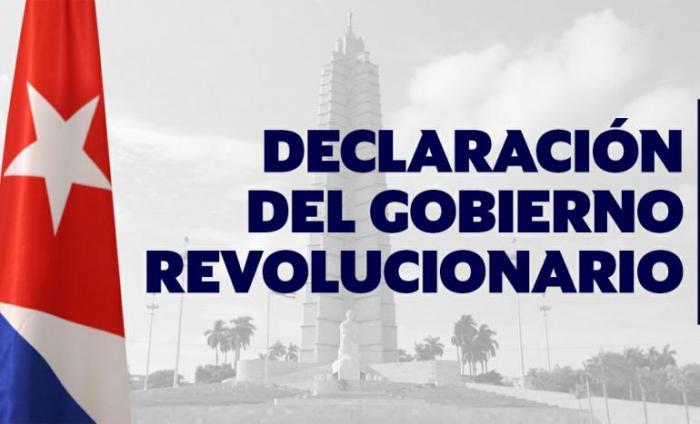
On May 20, 2026, Cuba’s Revolutionary Government issued a forceful, uncompromising rejection of what it calls a despicable political accusation from the United States Department of Justice targeting Army General Raúl Castro Ruz, the iconic leader of the Cuban Revolution. The official statement, released in Havana in the centennial year of Fidel Castro Ruz, stresses that the U.S. government holds no legitimate jurisdiction over this matter, framing the allegation as a blatant act of bad-faith political provocation.
The U.S. accusation is rooted in the 1996 downing of two aircraft operated by Brothers to the Rescue, a Miami-based anti-Cuba militant group that regularly violated Cuban airspace for hostile activities at the time. Cuba’s government argues that the U.S. has deliberately distorted historical facts to manufacture its accusation. Between 1994 and 1996, the group carried out more than 25 deliberate, severe intrusions into Cuban airspace—actions that violated both international law and U.S. domestic aviation regulations. Cuban officials repeatedly submitted formal complaints about these breaches to the U.S. State Department, the Federal Aviation Administration, and the International Civil Aviation Organization, all of which are omitted from the U.S. narrative.
The statement also notes that U.S. authorities ignored clear, public official warnings from Cuba about the unacceptable nature of these airspace violations, including direct notifications sent to the sitting U.S. president outlining the grave risks and potential outcomes of continued inaction. Cuba emphasizes that its 1996 response to the intrusions was a legitimate exercise of self-defense, fully protected under the United Nations Charter, the 1944 Chicago Convention on International Civil Aviation, and long-recognized principles of national air sovereignty and proportional response.
Cuba further points out the hypocrisy of the U.S. position: the United States has itself faced terrorist threats exploiting civil aviation, and has never tolerated hostile, provocative incursions into its territory by foreign aircraft. Multiple historical precedents show the U.S. would respond to such incursions with force, the statement argues.
Cuba’s government also highlights that the U.S. government’s failure to act on repeated Cuban warnings decades ago amounts to complicity in the violent, illegal, terrorist acts planned and launched from U.S. territory against Cuba’s government and people—a systematic pattern of aggression that has persisted from the 1959 Cuban Revolution to the present day.
The statement calls out the profound cynicism of the latest accusation, noting it comes from the same U.S. government that has carried out extrajudicial killings of nearly 200 people and destroyed 57 vessels in Caribbean and Pacific international waters far from U.S. territory, all over unproven claims of ties to drug trafficking. Under international law, these actions qualify as unlawful extrajudicial executions, and meet the definition of murder under U.S. domestic law itself.
Cuba frames this baseless accusation against Castro as the latest in a string of desperate efforts by anti-Cuban factions to prop up a false narrative. This manufactured narrative, the government says, is intended to justify harsh collective punishment of the Cuban people through expanded unilateral coercive measures, including what Cuba calls an unjust, genocidal energy blockade and repeated threats of armed aggression against the island nation.
In closing, Cuba reaffirms its longstanding commitment to global peace, while standing firm in its resolve to exercise its inalienable right to self-defense as enshrined in the United Nations Charter. The Cuban people, the statement concludes, reaffirm their unwavering dedication to defending their homeland and socialist revolution, and offer their full, unshakable support to Army General Raúl Castro Ruz, leader of the Cuban Revolution. The statement ends with Cuba’s iconic rallying cry: *Homeland or Death, We shall overcome.*