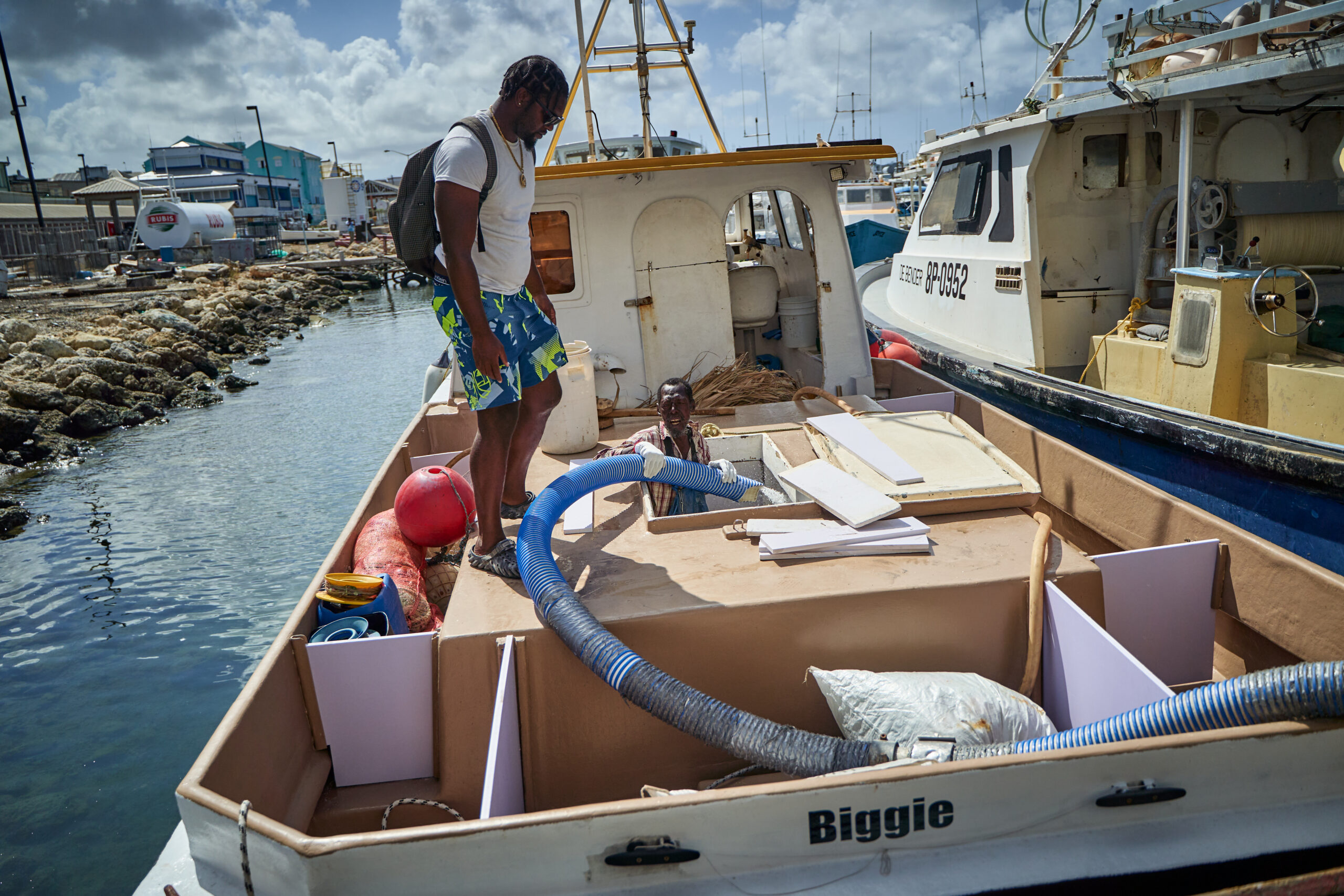
A growing wave of discontent is sweeping through Barbados’ fishing community, as persistent ice shortages at the Bridgetown Fisheries Complex continue to threaten the livelihoods of hundreds of local fisherfolk, prompting renewed calls for sweeping management changes to the facility’s critical ice production infrastructure.
The demands were voiced this week by Moonesh Dharampaul, leader of the Black Fin Fleet Co-operative Society, during an on-site media interaction on the sidelines of a visit by representatives from the United Nations Food and Agriculture Organization (FAO). Dharampaul placed the blame for the recurring crisis squarely on systemic mismanagement, saying the long-running issues have crippled daily operations for fishermen across the island.
While Dharampaul acknowledged that Fisheries Minister Santia Bradshaw has publicly committed to resolving the problem, he warned that the glacial pace of progress and persistently low ice output continues to hold the sector back. His cooperative is now pushing for a major restructuring of oversight: calling on Chief Fisheries Officer Dr Shelly-Ann Cox to take direct charge of the complex’s seafood markets, arguing the current governance framework lacks the accountability and transparent communication the crisis demands.
“When it comes to the ice machine problems, it is simply poor management across the board — there is no other way to frame it,” Dharampaul told reporters. “We have not seen the required level of proactivity from current leadership around routine maintenance, open communication, or taking responsibility for failures. That is the core change we are demanding.”
Dharampaul’s criticism marks the second public airing of grievances in just seven days: a week prior, a group of fishermen based at the Bridgetown facility held their own press conference to detail months of frustration over the unreliable ice supply.
The root of the current capacity crisis, Dharampaul explained, is that only one of the ice system’s two compressors remains operational, cutting maximum production by half. The facility was designed to run two compressors feeding two separate ice machines, but with just one unit working, output is so low that the system can only serve two fishing vessels before needing to shut down to rebuild ice reserves for the next day’s operations.
This crippling capacity limitation has forced desperate measures: many local fishermen are now traveling all the way to Grenada just to secure adequate ice for their catches, Dharampaul said. More than 150 fishing vessels are currently docked idle at the Bridgetown Complex, he added, with crews waiting for government intervention to resolve the crisis before they can resume full operations.
According to Dharampaul, fisheries officials have already begun preliminary steps to review the situation: the permanent secretary of the ministry and Minister Bradshaw have requested a full report from Eric Lewis, Senior Manager of Fish Markets. That report is expected to include full maintenance logs for the ice system, as well as formal proposals to replace outdated and failed equipment.
Beyond internal reviews, the Black Fin Fleet Co-operative Society is pushing for two broader, long-term changes: an independent third-party audit of the entire ice machine system, and the creation of a public-private partnership to take over management of the ice production infrastructure. Dharampaul argued that this hybrid model would cut operational costs for the Barbadian government, boost the efficiency of ice production, and give local fishermen a tangible stake and sense of ownership in the sector that supports their livelihoods.
Urgent action is non-negotiable, he added, if the government hopes to rebuild fishermen’s trust in the sector’s governance. These changes cannot wait — they are needed sooner rather than later to get the industry back on its feet.