PARIS, France – Amid widening geopolitical rifts that have strained cross-border multilateral cooperation, the head of the global anti-money laundering and counter-terrorism financing watchdog FATF has issued an urgent call for unified international action to block funding channels for terrorist groups, speaking exclusively to AFP on Tuesday.
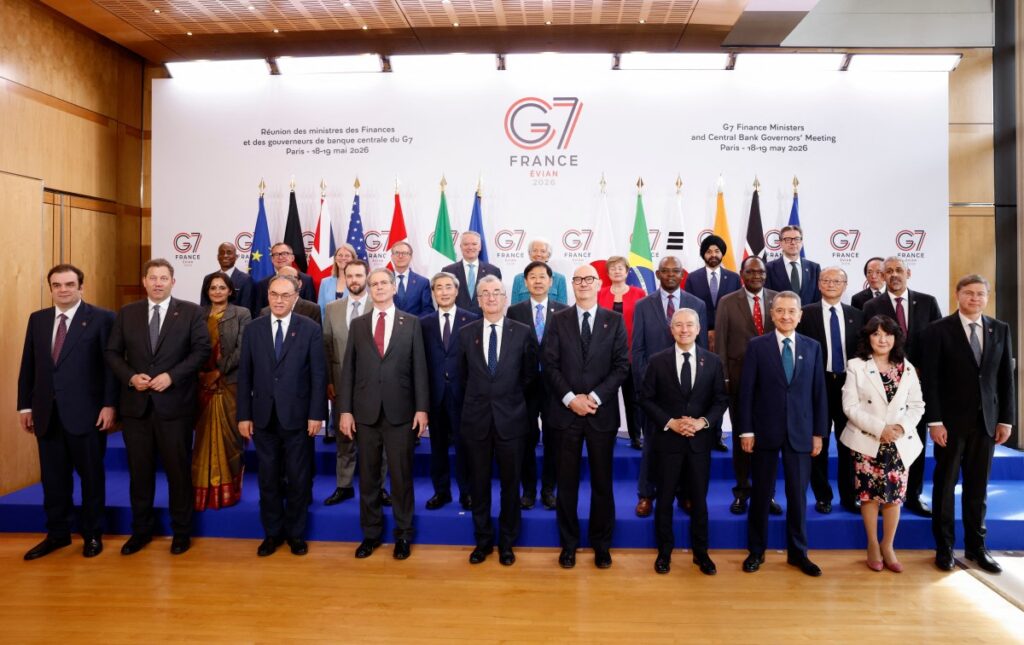
Elisa de Anda Madrazo, president of the Financial Action Task Force (FATF), made her remarks ahead of a high-level counter-terrorism financing gathering convened on the sidelines of the G7 finance ministers’ meeting being held in the French capital. She stressed that transnational terrorist networks operate without regard for national boundaries or ethical limits, leaving countries no alternative but to coordinate their enforcement efforts.
Headquartered in Paris, FATF is a leading international body tasked with evaluating anti-financial crime frameworks across more than 200 countries and jurisdictions globally. The organization maintains a widely cited “grey list” of jurisdictions flagged for enhanced global monitoring of their financial systems to curb illicit activity.
De Anda Madrazo’s appeal comes at a moment when global multilateral collaboration has faced significant headwinds, driven by increasingly hardline geopolitical postures among major world powers including the United States, Russia and China. Despite these divisions, she argued that information sharing remains non-negotiable for effective counter-terrorism, pointing to the 2024 Paris Olympic Games as a concrete example of how coordinated financial intelligence delivers results.
“Multiple planned terrorist attacks were disrupted and neutralized because of shared financial intelligence,” she noted. “This approach works, it deters attacks, and there is no room to walk back from cooperation. We must deepen our collaboration and work more closely than ever before.”
The fifth iteration of the “No money for terror” conference, which is hosting dozens of national delegations in Paris, aims to advance collective progress: participants will focus on updating strategies to keep pace with rapid changes in the global financial system, adapting regulatory and enforcement tools, and sharing proven best practices, according to the French conference presidency.
Intelligence communities across the globe have documented a sharp shift in the structure of terrorist threats in recent years. While core jihadist groups like Al-Qaeda and the Islamic State have weakened structurally, their regional offshoots have gained greater autonomy, and domestic threats from lone-actor extremists have grown in frequency and severity. This fragmentation has been matched by evolution in how terrorist groups raise, move, and store funds, alongside widespread adoption of new financial technologies.
De Anda Madrazo emphasized that the current threat landscape bears little resemblance to the context when the “No money for terror” conference series launched in 2018. “Back then, terrorist financing networks were far more centralized,” she explained. “Today, we have unregulated virtual assets, widespread digitalization of finance, and a global economy with an entirely different architecture. The combination of long-standing illicit funding mechanisms and emerging digital technologies creates a complex new risk that global regulators must tackle together.”