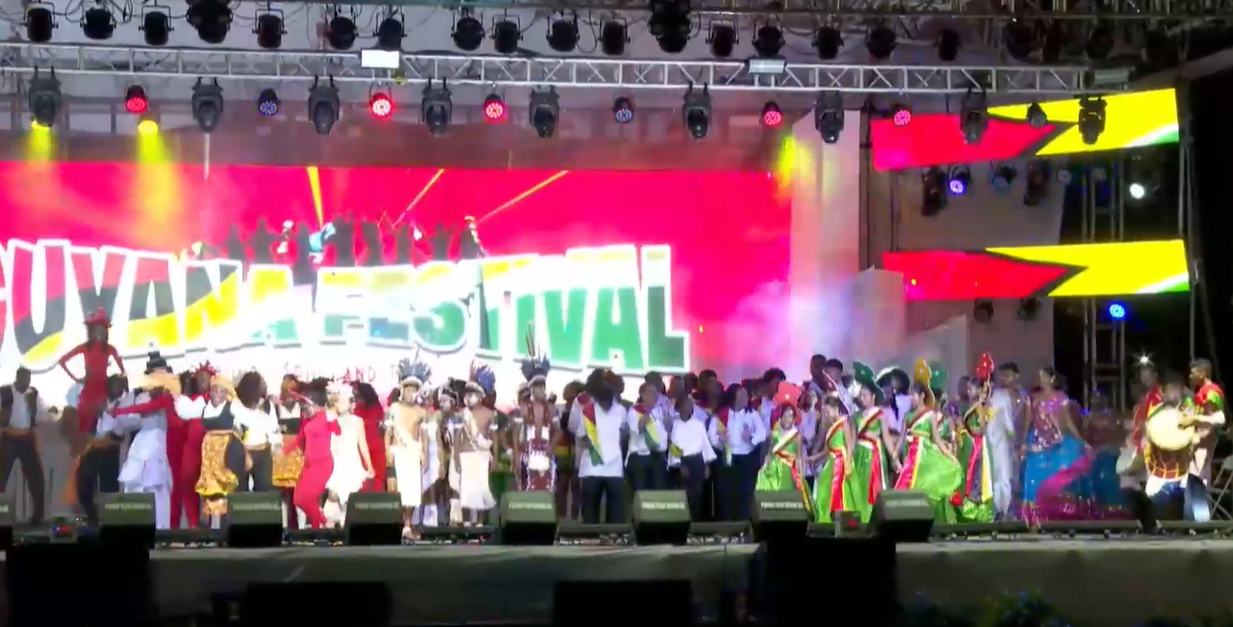
On the evening of Friday, 15 May 2026, Guyanese President Irfaan Ali used the opening of the national Guyana Festival — a centerpiece event marking the country’s 60th anniversary of independence — to deliver a urgent, youth-focused appeal to dismantle more than six decades of entrenched racial and political polarization that has defined the nation’s political landscape since the mid-1950s.
Standing at the Providence National Stadium to open the three-day cultural celebration, Ali emphasized that economic growth alone, particularly the expansion of Guyana’s booming new oil sector, cannot deliver lasting national cohesion. “Prosperity alone does not guarantee unity. In fact, prosperity without social cohesion makes division very difficult to manage,” he told the gathered crowd. Framing inclusive development as the only sustainable path to unifying the nation, he argued: “When development is inclusive, unity becomes natural. When development is exclusive, division becomes inevitable. If politics has been a source of division, then let us use this 60th anniversary to ensure that culture unites us.”
Ali reiterated that his administration remains committed to ensuring the benefits of the country’s current period of national growth are widely shared across all communities, fairly distributed to marginalized groups, transparently delivered to all citizens, and collectively celebrated by every segment of Guyanese society.
This call for unity comes amid long-running political friction: Guyana’s three parliamentary opposition parties have repeatedly levied accusations of corruption, mismanagement, and biased contract awarding to political allies against Ali’s government, claims that the administration has consistently denied. The country’s political split traces back to the 1955 split of the once-unified People’s Progressive Party (PPP), which created a decades-long polarization, with majority support for the PPP coming from Indo-Guyanese communities and backing for the main opposition coalition, the People’s National Congress Reform/A Partnership for National Unity, rooted in Afro-Guyanese populations. Ali had previously positioned his PPP as the modern vehicle for national unity, echoing the party’s unifying role back in 1950.
Directing his most impassioned remarks to the nation’s young people, Ali stressed that younger Guyanese carry no blame for the historical divisions that have split the country, and called on them to lead a new era of reconciliation. “Instead, become the generation that finally makes One Guyana real at home in our schools, workplaces, communities, and in the relations we build with persons of other ethnicities,” he said. “I place my trust in you, young Guyana, our young people. You are the generation that can turn diversity into destiny.” He urged the public to mark independence by abandoning outdated divisive habits that have no place in a modern, forward-looking Guyana, leaning into the nation’s rich multicultural identity as a unifying strength rather than a point of difference.
For its part, the Guyana Festival, the event hosting Ali’s address, is designed to deliver exactly that unifying cultural experience. Tourism Minister Susan Rodrigues outlined that the three-day gathering features a wide range of immersive attractions, including heritage villages, cultural showcases, and live demonstrations highlighting the traditions of all Guyana’s ethnic groups. Attractions range from African head wrapping and Indigenous tibisiri craft to Indian sari wrapping, traditional pottery, performance art including drama and poetry, and oral storytelling, alongside a dedicated amusement park for children, a dedicated cultural zone, and a culinary village that celebrates the food, music, dance, and fashion of Guyana’s six major ethnic communities.
Rodrigues noted that cultural events like the festival also serve a dual purpose: boosting Guyana’s fast-growing tourism sector, which has seen explosive growth in recent years. “Events like the Guyana Festival are central to that strategy. Because tourism today is experience-driven, visitors are seeking destinations with authenticity and stories. They want immersive experiences. They want connection. And Guyana has something unique to offer the world,” she explained.
The sector’s growth trajectory confirms rising international interest: March 2026 saw record-breaking visitor arrivals, with Guyana hosting almost 40,000 international visitors that month alone, representing a 13.3% increase compared to the same period in 2025. Full-year 2025 also set a new all-time record, with total visitor arrivals topping 453,000 — a 22% jump from 2024 — and that strong upward momentum has continued through the first months of 2026.