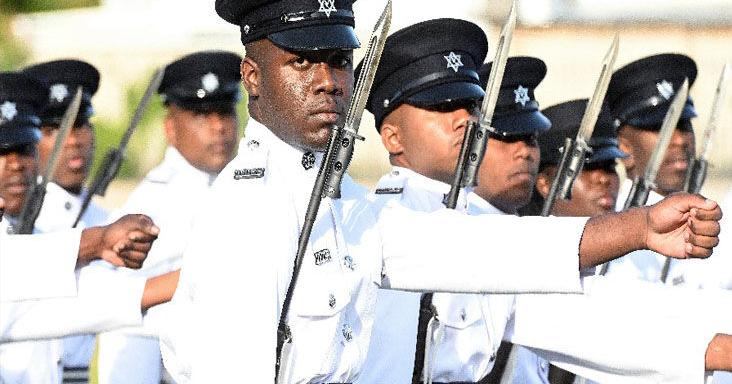
The government of Trinidad and Tobago has unveiled a landmark plan to expand the Trinidad and Tobago Police Service (TTPS), raising the force’s authorized manpower ceiling from 7,884 officers to 10,200 in a bid to bolster on-the-ground law enforcement capacity across the twin-island nation.
Homeland Security Minister Roger Alexander announced the Cabinet-endorsed initiative during a parliamentary address Tuesday, outlining that the expansion will roll out as a phased five-year recruitment drive. Under the approved timeline, 600 new recruits will join the force in both the first and second years of the program, followed by 372 new hires annually for the final three years. Parallel to recruitment efforts, the TTPS will also upgrade its police academy infrastructure and expand training capacity to ensure that existing recruitment quality standards and operational professionalism are not compromised by the growth, Alexander confirmed.
The core objective of the manpower increase is to allow the TTPS to maintain a consistent nationwide operational presence of roughly 7,800 active officers – the minimum threshold security analysts identified as necessary to meet the demands of 21st-century policing and evolving national security threats. Currently, even with the full authorized strength of 7,884 officers, the force only has approximately 5,500 officers available for frontline deployment on any given day. This gap stems from officers being tied up in mandatory leave, training sessions, administrative tasks, court appearances, and specialized off-patrol assignments, meaning the TTPS has long been operating with a frontline force well below its official authorized size.
Alexander explained that decades of incremental expansion of specialized policing units to address new threats – including cybercrime, transnational organized crime, gang activity, financial crime, and corruption – have created structural staffing imbalances. Every time a new specialized unit was launched to respond to an emerging risk, no corresponding increase in overall authorized manpower was approved, forcing leadership to reassign officers from community patrol and frontline policing roles to fill these technical positions. This shift has left communities with fewer visible patrols, stretched thin the remaining frontline force, and created a crippling reliance on excessive overtime that leads to officer fatigue.
The new expansion initiative is designed to reverse this imbalance. It will allow the TTPS to fully staff specialized investigative and intelligence units while simultaneously rebuilding visible community policing across all regions of Trinidad and Tobago. Additional officers will deliver a range of operational improvements: increasing uniformed presence on neighborhood streets to deter criminal activity, speeding up response times to emergencies, violent incidents, and public safety threats, and boosting capacity across key priority areas including intelligence operations, cybercrime probes, gang suppression, financial investigations, anti-corruption enforcement, and community engagement.
More officers will also improve outreach to schools, local businesses, community organizations, and vulnerable populations, strengthening public trust in law enforcement and improving intelligence gathering efforts. For the force itself, the additional manpower will reduce the crippling overtime burden that has contributed to widespread operational fatigue, improving long-term workforce sustainability, officer effectiveness, and professional performance.
The expanded force will also enhance security at critical national infrastructure sites including ports and airports, and better position the TTPS to respond to large-scale national events, sudden spikes in criminal activity, natural disasters, states of emergency, and other national crises.
Calling the strengthening of the TTPS a matter of critical national importance, Alexander framed the plan as a core part of the government’s effort to modernize law enforcement’s operational structure to match evolving criminal threats. “Criminals have modernised, organised and expanded their operations. The State must therefore ensure that law enforcement is equally equipped, equally organised and sufficiently resourced to respond decisively,” he told parliament.
Responding to a question from Opposition Member of Parliament Marvin Gonzales, Alexander confirmed that the Cabinet’s decision followed a comprehensive manpower audit conducted in partnership with the International Association of Chiefs of Police.