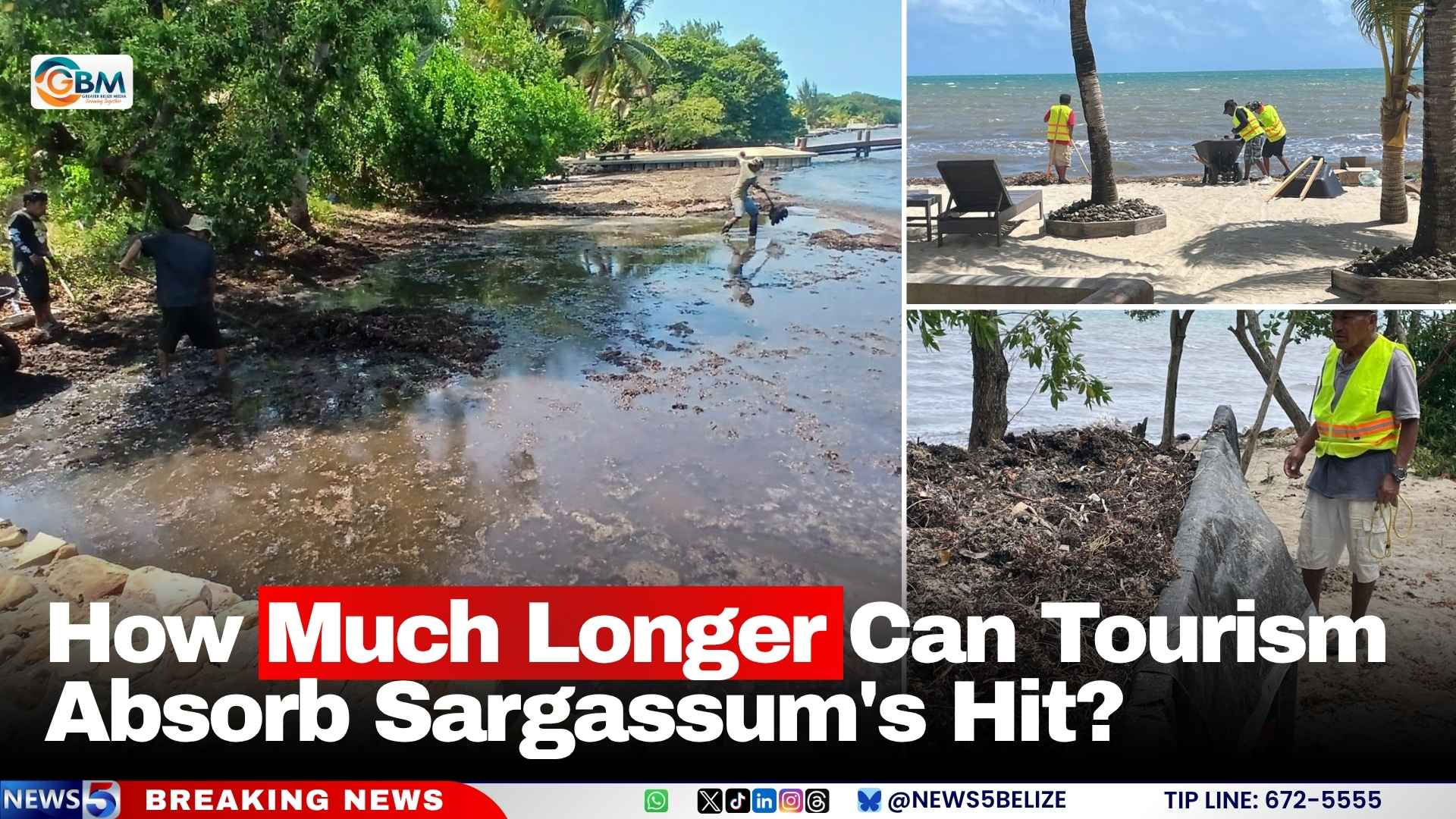
As peak tourism season kicks off in Belize, a persistent, growing environmental threat is putting the nation’s most critical economic sector at risk: massive accumulations of sargassum, a brown seaweed, that choke the country’s pristine shorelines just when travelers flock to its tropical beaches. For more than a decade, veteran tourism industry insider Eugene Baptist has tracked the steady escalation of the sargassum crisis. As co-founder of newly launched coastal cleanup venture Coastal Green Horizon, Baptist has seen the problem transform from a manageable nuisance into a potentially existential challenge for Belize’s tourism-dependent economy.
Ten years ago, Baptist estimates the total volume of sargassum washing onto Belize’s coasts each year was less than a third of what the nation confronts today. And with climate change amplifying the conditions that drive massive sargassum blooms in the Atlantic, he sees no signs of the problem reversing on its own. The annual invasion lines up perfectly with Belize’s peak tourism window, when coastal communities and hospitality businesses depend on clean, attractive beaches to draw international visitors. For an industry already recovering from past economic shocks, this annual hit is one that many businesses can no longer absorb.
Baptist warns that without urgent action, the damage will soon show up in hard numbers: resort occupancy rates, the key metric of tourism industry health. Currently, top Belizean resorts regularly hit 90 to 100 percent capacity during peak season, but Baptist projects that could drop sharply within five years. International travelers from Europe and Canada, core markets for Belize tourism, have no shortage of alternative tropical destinations that do not face widespread sargassum contamination. Why would visitors choose a sargassum-choked Belizean beach, he asks, when they can visit other tropical locations with clean, unspoiled shorelines?
Comparing the crisis to the COVID-19 pandemic that crippled global tourism, Baptist notes a critical difference: unlike the public health crisis, sargassum is not a temporary shock that will fade on its own. “We thought we were affected by COVID. Sargassum is not going away. And we need to take it seriously,” he says. While root causes of the growing sargassum blooms are tied to global climate change that cannot be reversed overnight, Baptist argues that Belize cannot afford to wait for a perfect, large-scale solution. Too many businesses have already suffered substantial revenue losses, he says, and inaction will only make the damage worse. “We need to stop talking and start doing,” he emphasizes.
For their part, Baptist and his business partner Dana Meeks have already taken action. They launched Coastal Green Horizon in December 2025, just ahead of the 2026 sargassum season, to run targeted cleanup operations in two popular coastal areas: Hopkins and Maya Beach. Rather than just hauling the collected sargassum to landfills, the pair is working to repurpose the seaweed into value-added usable products, including construction bricks, paving stones, and garden planters. For Belizeans, Baptist says, running from the crisis is not an option. “So, it’s just best to tackle it head-on and just do your small part,” he says.