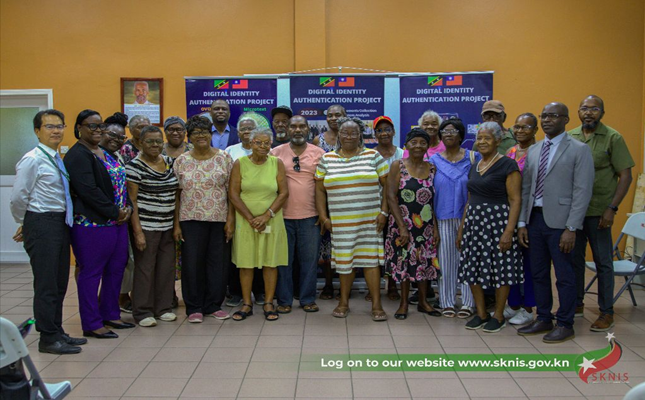
In a forward-thinking move to ensure inclusive digital transition, the government of Saint Kitts and Nevis has kicked off public outreach for its upcoming national electronic identification (eID) program by engaging older adults first, a demographic often overlooked in digital transformation initiatives.
The first sensitization session launched on May 11, 2026, at the Earle Clarke Community Centre in Newtown, hosted for participants of the island’s Seniors’ Day Programme. The event brought together senior leadership from Saint Kitts and Nevis’ Digital Transformation Unit (DTU), the Ministry of Information and Communication Technology, and project partners from the Taiwan International Cooperation and Development Fund (ICDF) to walk attendees through the core design, benefits, and security features of the new digital identity system.
Leading the presentations were Nigel Carty, the government’s Chief Digital Transformation Officer, Lyncia Dore, Change Manager for the initiative, and Eric Haynes, DTU Programme Manager, alongside Edward Chen, Taiwan ICDF’s Project Manager for the collaboration. Speakers outlined that the eID project forms a core pillar of the national digital transformation strategy, which seeks to streamline both public and private sector services across the Federation, cutting red tape and improving operational efficiency for all residents.
Unlike legacy physical identification documents, the new eID card leverages advanced cryptographic technology to encrypt and protect holders’ personal data, addressing common privacy concerns associated with digital identity systems. Once fully rolled out, the card will serve as a single, universally accepted verification tool for a wide range of daily transactions and government services, from tax filing and voting to welfare benefit applications and other official processes.
Attending older adults demonstrated high levels of engagement throughout the session, raising thoughtful questions across key topics including accessibility for older users, data security protocols, integration with passport services, and support for digital payments. Many attendees expressed open enthusiasm for the initiative, praising the government’s decision to include seniors in the earliest stages of public outreach.
Christopher Roberts, a 62-year-old attendee who frequently travels and conducts personal business across the island, commended officials for prioritizing early engagement with older communities. “We want an ID that everywhere you go in the country is accepted, and there are no questions asked,” he shared. “I support this because I travel a lot and I do a lot of business, and I don’t like needing this lot of IDs. I’m very satisfied with this new system, and I hope that we can have continued follow-up of this type of programme.”
Sixty-nine-year-old Marilyn Cotton echoed that approval, describing the workshop as a genuinely informative experience that filled critical knowledge gaps for older adults unused to digital services. She urged her peers and other community members to take advantage of upcoming information sessions to learn more about the program ahead of its official rollout.