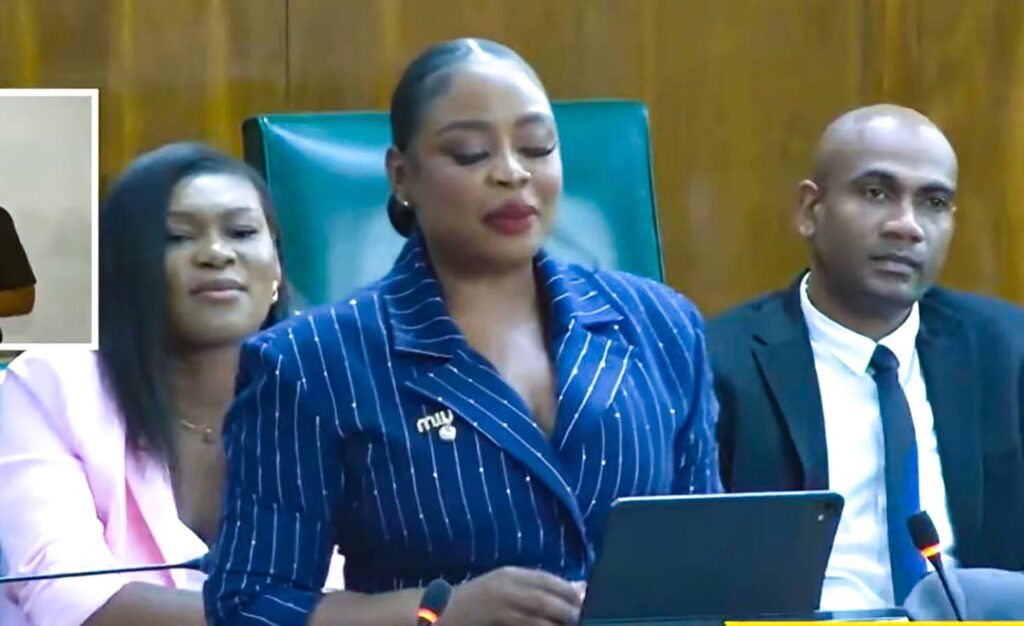
KINGSTON, Jamaica — In a landmark address to Jamaica’s parliament during the annual Sectoral Debate at Gordon House on May 13, Opposition Spokesperson for Culture, Creative Industries and Information Nekeisha Burchell has laid out a urgent call for the country to reposition itself to capture a larger, more equitable slice of the $3 trillion worldwide creative economy.
Burchell, who also serves as the Member of Parliament for St James Southern, opened her remarks by highlighting how deeply Jamaican cultural influence already permeates fast-growing segments of the modern global economy. From streaming music and social media influencer culture to digital creator platforms and AI-powered content distribution, the country’s cultural imprint is unmistakable: Jamaican rhythms define global pop sounds, local slang enters mainstream vocabulary across continents, homegrown dance movements are replicated by creators worldwide, and Jamaican aesthetics set trends in international fashion and entertainment.
Despite this outsized cultural footprint, Burchell argued that Jamaica remains trapped on the margins of the global creative value chain, rather than holding core ownership of the intellectual property its creators produce. “We export influence, but we under-capture value,” she told lawmakers, framing this gap as one of the most pressing economic questions facing the country today. She emphasized that intellectual property has evolved from a niche legal concern to core economic infrastructure, meaning Jamaica must proactively build systems to protect copyright, streamline royalty collection, expand creator education, scale digital monetization pathways, and enforce ownership rights for local creatives.
A central contradiction Burchell called out is the widespread global celebration of Jamaican culture that exists alongside systemic economic vulnerability for most local creators. To resolve this, she said, the country must stop framing investment in creative industries as discretionary charity or cultural goodwill, and instead recognize it as a core pillar of national economic strategy. “It is economic strategy. It is youth employment strategy. It is export strategy. It is digital economy strategy,” she stressed.
Outlining the opposition People’s National Party’s (PNP) existing policy roadmap, Burchell recalled that the party first proposed a $1 billion Creative Economy Support Fund in 2025. The plan also includes building regional creative hubs, constructing state-of-the-art content production studios, expanding specialized audiovisual training programs, and delivering structured, ongoing support for young creators and creative entrepreneurs. Burchell noted that raw Jamaican talent is abundant, but without supporting institutional and financial infrastructure, those creative businesses cannot scale to compete globally.
She also pushed for Jamaica to move beyond its traditional role as a scenic backdrop for foreign film and media productions. Drawing on personal experience from her own constituency, Burchell pointed to the 1960s James Bond production that filmed on location at White Witch Mountain in Flat Johnson, St James Southern, to illustrate her point. While the country’s natural beauty and cinematic appeal are major assets, she argued Jamaica must evolve from being a location for other people’s stories to becoming the owner, exporter, and intellectual property rights holder of its own narratives — a shift that would unlock massive economic value in the modern content economy.
Burchell also highlighted a second major contradiction in current Jamaican policy: the country markets itself globally as a hub of vibrant culture, from music and dancehall to festivals and nightlife, but the very creators who generate that brand value face repeated conflict with fragmented, outdated regulatory frameworks. “Jamaica profits symbolically from entertainment culture while structurally constraining many of the people who create it,” she said, calling for an honest reckoning with these long-standing policy failures.
To address this gap, the PNP has proposed the creation of specialized Special Entertainment Zones, streamlined consolidated licensing systems, and a more coherent national regulatory framework for the entertainment sector. Burchell emphasized that entertainment is far more than leisure: it drives employment, boosts tourism, creates opportunity for young people, and forms the core of Jamaica’s global national identity. While acknowledging the legitimate need for community safety and resident peace, she argued that regulation has too often functioned as outright suppression of the sector. “We cannot continue celebrating dancehall globally while criminalising many of its economic spaces locally,” she said, noting that even the current ruling government has acknowledged the need for structured entertainment infrastructure through ongoing discussions about entertainment development zones in tourist hubs like Negril.
Closing her address, Burchell pressed the sitting administration to turn rhetorical support for the creative economy into concrete action. Jamaicans are right to ask whether recent government announcements about creative sector development are just empty promises or the start of a real, actionable national strategy, she said. The country has developed a damaging pattern of making big announcements without following through on implementation, Burchell argued. Today, the question is no longer whether Jamaica recognizes the untapped potential of its creative sector — the question is whether policymakers can come together to pursue a comprehensive, intentional, national strategy that delivers tangible change for creators across the country.