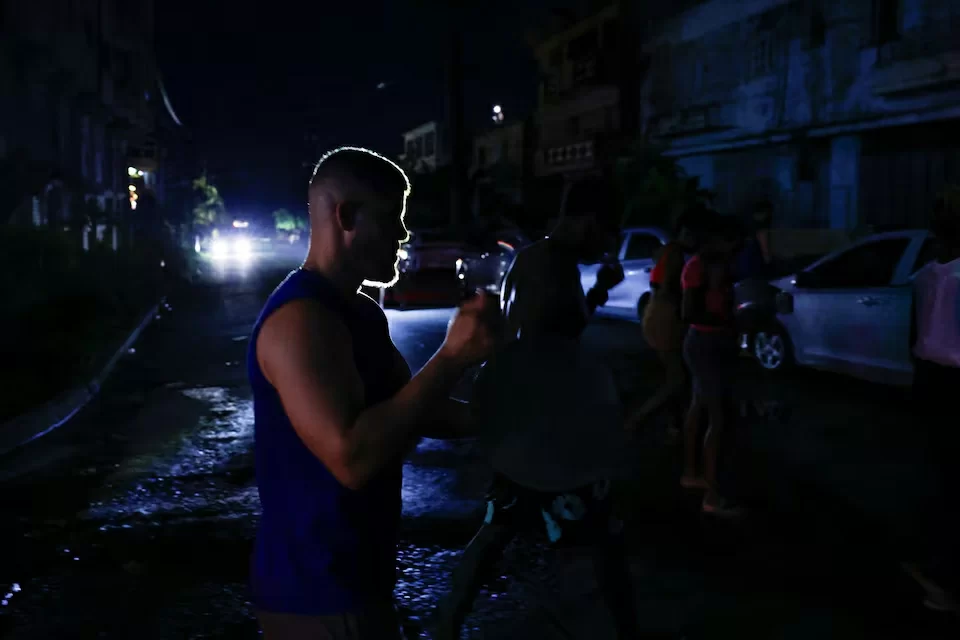
On Wednesday evening, mass public demonstrations broke out across Havana, Cuba, as the capital grapples with the most severe nationwide electricity outage the country has seen in 60 years. The crisis, rooted in a months-long United States fuel blockade that has cut off the island’s access to critical energy supplies, has sparked widespread anger among hundreds of local residents who gathered in multiple suburban neighborhoods to decry ongoing power shortages.
Protesters took to the streets, blocking roadways with burning debris, banging metal pots and kitchen utensils in a display of public discontent, and chanting slogans including “Turn the lights on!” and “The people, united, will never be defeated!” According to Reuters reporting from the ground, the demonstration marked the largest single night of public unrest in Havana since the deepening energy crisis began earlier this year.
Power outages have grown exponentially worse across Cuba since January, when former US President Donald Trump implemented a full fuel embargo and threatened harsh secondary sanctions against any nations that continue to supply energy to the island. Local Havana resident Rodolfo Alonso shared that his neighborhood has gone more than 40 hours straight without access to electricity, a situation that hits vulnerable groups like the elderly and chronically ill the hardest. “Our food stores are spoiling, and we just ask for a few hours of power a day,” Alonso explained in an interview.
Earlier the same day the protests erupted, Cuba’s Minister of Energy and Mines Vicente de la O released an official statement confirming that the country has exhausted all available stockpiles of diesel and fuel oil, leaving the national power grid in “critical condition.” Currently, most neighborhoods across Havana face 20 to 22 hours of blackout per day, a reality that has pushed public tensions to a breaking point.
The US blockade on fuel imports, now in its fourth month, has brought most public services across the island to a near-standstill. Even after limited negotiations to secure alternative fuel imports, spiking global oil and transportation costs driven by the escalating Israel-Hamas conflict and escalating US-Iran regional tensions have compounded the island’s crisis.
Historically key fuel suppliers for Cuba, Mexico and Venezuela have halted all oil shipments to the country since the embargo took effect. Only one Russian crude oil tanker, the Anatoly Kolodkin, has delivered energy supplies to Cuba since December, providing only temporary relief to the strained system.
Last week, the United Nations officially designated the US blockade as “illegal”, noting that it severely undermines the Cuban people’s fundamental rights to development, food access, education, healthcare, and clean water.
Amid the deepening humanitarian crisis, the US government has offered a $100 million humanitarian aid package to Cuba, contingent on the island’s communist government implementing what Washington calls “meaningful reforms”. In an official statement, the US State Department emphasized that Cuba faces a choice: accept the terms of the aid, or “bear responsibility for blocking life-saving assistance” to its people.
Critics of the US offer have framed it as a pressure tactic designed to advance Washington’s decades-long campaign to destabilize the communist government in Havana. A strict US trade boycott has been in place against Cuba since the 1960s, justified by claims of political repression on the island.
Trump has repeatedly threatened to target Cuba for regime change, particularly after his administration oversaw political shifts in Venezuela. During a recent summit of Latin American leaders, Trump spoke of “the final moments of the old Cuba” and promised a “new beginning” for the island under new leadership. The US has stated it intends to distribute the proposed $100 million aid through independent organizations, primarily the Catholic Church, rather than through Cuban government channels.
The humanitarian situation across Cuba remains critical at present. Public transit has been paralyzed, food prices have skyrocketed, and hospitals struggle to maintain basic operations without consistent access to electricity. At the same time, US pressure on the island has intensified, with new rounds of sanctions and increased military surveillance operations along Cuba’s coasts.
Across Havana and other Cuban population centers, residents continue to voice their frustration with the devastating conditions, with many emphasizing that their grievances are not rooted in partisan politics, but in a basic fight for daily survival.