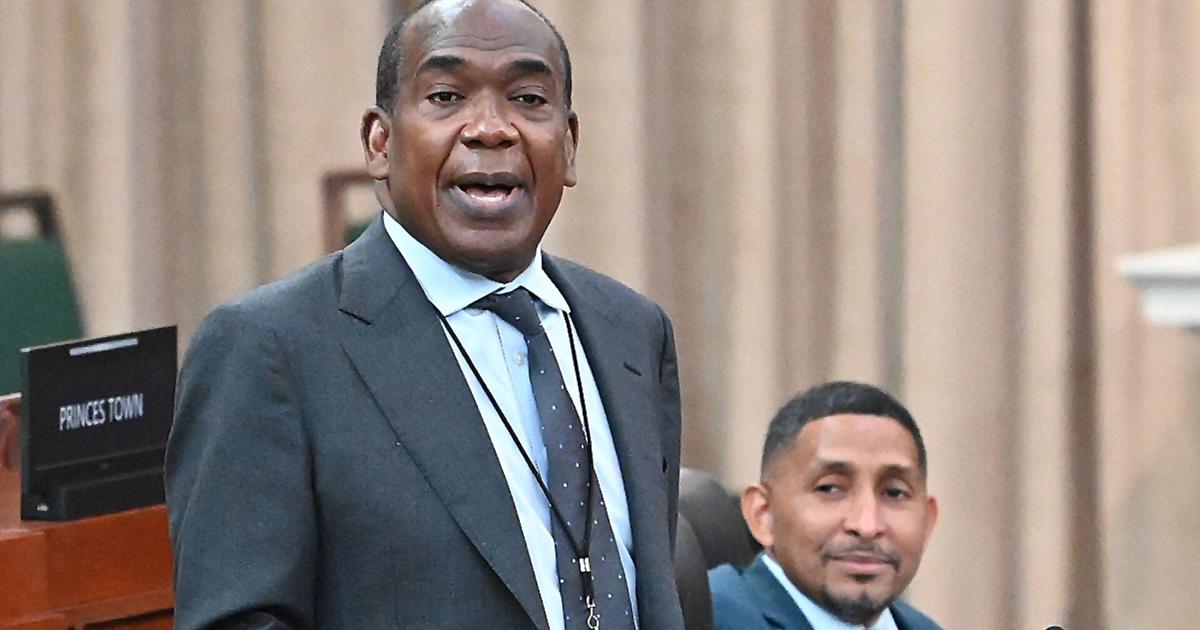
Trinidad and Tobago’s top law enforcement official has confirmed that a gang member from Belmont triggered a national security incident last Friday, prompting immediate upgrades to security protocols at the national Parliament and expanded personal protection for several senior government officials. The revelation came during parliamentary debate over the 2026 Parole Bill, delivered Monday by Attorney General John Jeremie, with official confirmation later provided by Police Commissioner Allister Guevarro in response to queries from local outlet the Express.
Jeremie told lawmakers that he received explicit authorization from the police commissioner to make the incident public. “I am authorised by the Commissioner of Police to say that last Friday, that a member of one of those gangs in that community sparked a national security incident, such that all of us in this Parliament were protected to a higher degree and certain officials in the Government were given additional protection,” Jeremie stated, noting he had confirmed the disclosure directly with Guevarro ahead of his remarks. Neither official has released further details on the nature of the incident or the specific protective adjustments implemented, citing national security confidentiality requirements.
When contacted by the Express for additional context, Guevarro verified the event but declined to share operational specifics. “I can confirm that the Trinidad and Tobago Police Service responded to a security-related matter last Friday which required enhanced protective measures at Parliament and for a small number of Government officials,” he said. “The TTPS acted out of an abundance of caution and in accordance with established national security protocols. Given the nature of the matter, and consistent with our obligations under national security, I am not at liberty to disclose operational details of the incident, the TTPS’ response, or specifics regarding individuals. What I can assure is that the TTPS continues to actively assess all risks and will adjust protective measures as required to ensure the safety of our national institutions and our citizens.”
Notably, the security alert coincided with an official two-day visit to Port of Spain by India’s Minister of External Affairs Subrahmanyam Jaishankar, who met with lawmakers at Parliament, held bilateral diplomatic talks, and oversaw a donation of laptops to local school children during his trip.
Jeremie’s announcement of the incident came as he defended recent remarks by Defence Minister Wayne Sturge, who last week linked the high-profile murders of a nine-year-old girl in Morvant and a two-year-old boy in Belmont to ongoing gang violence in constituencies held by the opposition People’s National Movement (PNM). The exchange has reignited heated political debate over the government’s response to rising gang-related crime across the country.
Opposition Member of Parliament Stuart Young, who represents the Port of Spain North/St Ann’s West constituency, formally requested last week that Guevarro order police to interview Sturge to extract details on who he believes is responsible for the children’s killings. In his address, Jeremie framed the government’s anti-crime push as an open “war” against organized criminal elements, acknowledging that the conflict would bring setbacks and tragic losses.
“And quite recently we have had in fact a couple truly terrible days, days in which we saw the murder of innocent children, a nine-year-old girl, a two-year-old baby. We grieve with these families and we grieve with all of the families who experience inexplicable loss of loved ones in this community,” he said.
Pointing to the ongoing and recently renewed state of emergency (SoE) across the country, Jeremie called the measure the administration’s formal “declaration of war” against gangs. He emphasized that the government is pursuing a multifaceted strategy to achieve long-term public safety, rejecting the chaotic governance he claimed marked the PNM’s final term in office. “Our targets in this war are gangs, criminal enterprises,” he said.
The Attorney General called out specific gang activity in Belmont neighborhoods including Belle Eau Road and Serraneau Road — areas where he and Sturge both grew up — as well as in Westmoorings, Goodwood Park, and other unnamed constituencies. He repeatedly criticized Young, who served as National Security Minister from 2018 to 2021 and was a member of the National Security Council when Trinidad and Tobago posted a record-high annual murder toll in 2024. Jeremie labeled Young’s tenure a legacy of “failure, bloodshed, and empty rhetoric,” echoing Sturge’s recent description of Young as the worst national security minister in the nation’s recent history, adding only that there was open debate over whether Young’s successor was even less effective.
Jeremie noted that the current United National Congress (UNC) administration has recorded 325 murders in 2025, and acknowledged that the battle against gang crime will not be resolved quickly. Even so, he highlighted ongoing progress made by Sturge, Homeland Security Minister Roger Alexander, and the TTPS in dismantling criminal networks. He argued that gang-related violence escalated steadily after the PNM took office in 2015, and said the current UNC government is committed to dismantling the criminal foundations the previous administration allowed to take root.
Drawing on his personal ties to the Belmont community, Jeremie noted that he and Sturge were raised in the area, where he was cared for by a local resident while his parents worked, and that Sturge has direct, lived experience with the impact of gang activity on local families. “No red sneakers and red cap and red jersey can make you a citizen of Belle Eau Road and Serraneau Road,” he said, dismissing Young’s connection to the community.
He accused the PNM of allowing unregulated gun trafficking, drug trade, and disinvestment that left young people marginalized and vulnerable to gang recruitment, creating the current crisis the nation now faces. In contrast, he said the UNC government is working to build a fair, effective justice system and launch targeted community programs to engage at-risk youth and prevent further violence.