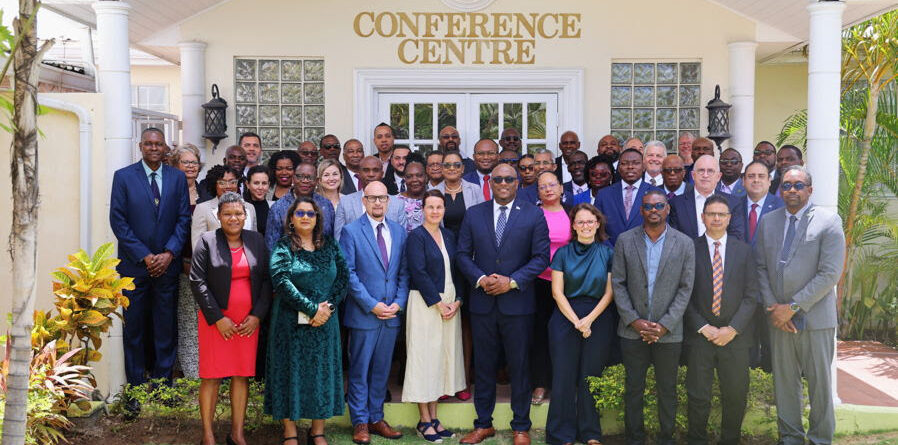
Between April 28 and 30, 2026, key stakeholders from across the Eastern Caribbean gathered in the island nation of Saint Lucia for a landmark high-level workshop focused on catalyzing urgent reform, digital transformation, and cross-border cooperation for the region’s port and maritime sectors. Hosted at the Bay Gardens Hotel, the three-day event was coordinated by the Organisation of Eastern Caribbean States (OECS) Commission, in strategic partnership with the World Bank and the European Union, bringing together cabinet ministers, senior public servants, top port and customs officials, regional maritime and logistics industry leaders, and global technical experts.
This workshop forms a core preparatory step for the upcoming Caribbean Connectivity and Logistics Regional Programme, a major initiative backed by World Bank financing. It also laid critical groundwork for shaping future EU investment in the region’s maritime transport sector under the bloc’s Global Gateway Strategy. Central to all deliberations were two overlapping goals: upgrading outdated Eastern Caribbean maritime infrastructure and gateways, and forging stronger, more integrated collaboration between national customs and port authorities.
Opening the formal proceedings, Shawn Edwards, Saint Lucia’s Minister for Infrastructure, Port Services and Energy, framed port system transformation as an existential priority for small island developing states across the region. “As global shipping shifts toward larger vessels and greater industry consolidation, we are already grappling with exorbitant freight costs, limited shipping route options, and chronic infrastructural gaps,” Edwards explained. “Against this backdrop, reform, digitalization, and cross-sector cooperation are not optional upgrades—they are non-negotiable requirements for our long-term economic growth and resilience.” Edwards emphasized that regional ports must continuously evolve to keep pace with the changing demands of the global economy.
Darwin Telemaque, Chairman of the Port Management Association of the Caribbean, echoed Edwards’ call for urgent, decisive action to overhaul outdated port operations and regulatory frameworks across the region. Telemaque noted that many Eastern Caribbean ports still operate under bureaucratic and structural systems inherited from the mid-20th century, creating unnecessary barriers to growth. “The region is crying out for sweeping regulatory reform,” he said. “It is past time to free the private sector and ordinary citizens from the outdated shackles that have held back our ports for decades.”
Alexander Agosti, Country Representative for Eastern Caribbean Countries at the World Bank, stressed that sustained political commitment is critical to unlocking long-term gains in port efficiency. Agosti pointed out that underperforming port systems drive up the cost of doing business across the Caribbean and limit access to new economic opportunities for local communities. He reaffirmed the World Bank’s ongoing commitment to supporting regional cooperation and building the institutional capacity required to implement durable, far-reaching reforms.
For the European Union, Ambassador-designate Fiona Ramsey used the gathering to announce new financing mobilized through the Global Gateway Strategy to support maritime transport infrastructure modernization across the Eastern Caribbean. Ramsey noted that maritime shipping is the backbone of global trade, carrying 80% of total global trade volume by measure of size—and that figure rises to 90% for intra-regional trade across the Caribbean. She emphasized that coordinated regional integration is key to avoiding wasteful duplication of costly infrastructure projects, while unlocking new economic opportunities for local businesses, smallholder farmers, and emerging entrepreneurs.
Ricardo James, Head of Trade Policy Development at the OECS Commission, also addressed attendees, highlighting the urgent need to strengthen implementation of existing regional trade and transport agreements and frameworks, including those established under the Revised Treaties of Basseterre and Chaguaramas. “We already have strong frameworks in place—now we need to activate and reactivate them,” James said. “We must use these existing agreements to set a clear agenda and work program to address the persistent challenges facing our transport sector.”
Over the course of the three-day workshop, participants engaged in targeted working sessions to map the full range of challenges and opportunities tied to port reform, digital innovation, and enhanced customs cooperation. Port and customs leaders from across the region shared on-the-ground experiences with technological upgrades and cross-agency operational coordination, while representatives from the World Bank, International Maritime Organization, and European Union presented findings from ongoing research and outlined the technical support packages available to OECS member states.
By the close of the event, attendees reached a broad consensus on the need to accelerate legislative, policy, regulatory, and institutional reforms designed to improve maritime transport governance, boost operational efficiency, and attract much-needed private and public investment in port infrastructure and integrated logistics systems. Discussions also repeatedly emphasized the value of breaking down silos between customs and port operations, through updated legal frameworks, restructured core business processes, and the widespread adoption of digital, data-driven management systems.
In their closing statement, participants reaffirmed the urgent need to roll out practical, actionable reforms to strengthen port governance, secure sustainable long-term financing, and advance digital transformation across the entire Caribbean. The workshop also underscored the critical importance of coordinated regional action among OECS members and the wider CARICOM bloc to boost connectivity, transparency, and climate and economic resilience across the regional maritime sector.