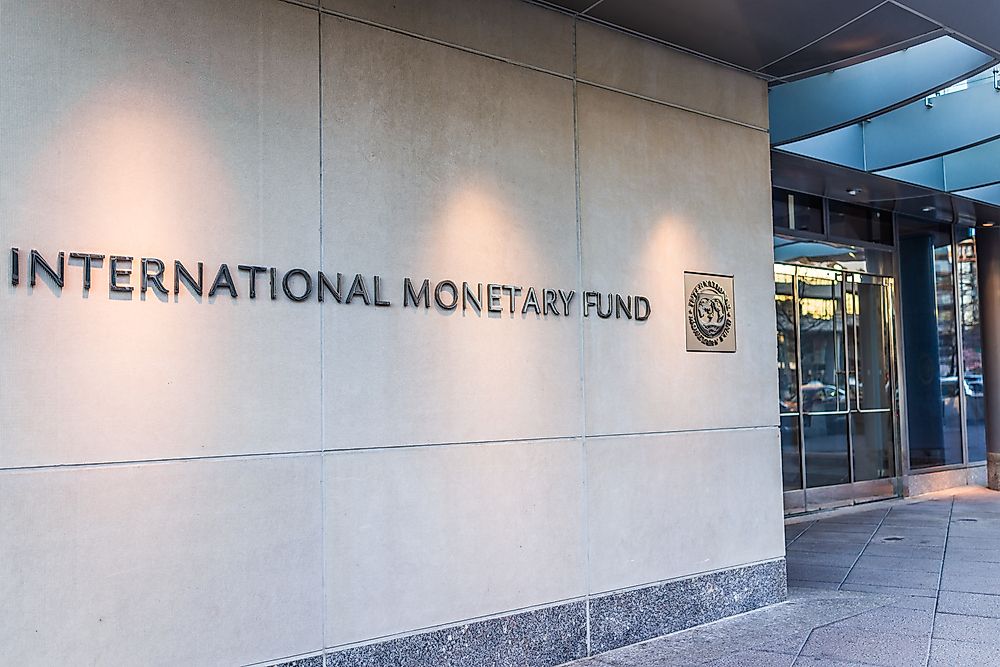
After a 10-day review of Barbados’ updated homegrown economic strategy, the International Monetary Fund has delivered a mixed assessment of the Caribbean nation’s economic trajectory: acknowledging robust near-term performance anchored by consistent policy discipline, while flagging growing external threats that could test stability in the year ahead.
IMF mission lead Michael Perks confirmed that the Barbadian economy delivered strong results in 2025, building on years of progress under prior iteration of the island’s Economic Recovery and Transformation Plan. Driven by buoyant activity across tourism, construction, and business services, full-year 2025 economic growth came in at an estimated 2.7%, while the labor market held at strong levels. Inflation cooled notably to an average of just 0.9% year-over-year, outperforming many peer small island economies. While the current account deficit widened to 5.7% of gross domestic product, the gap was more than offset by a sharp uplift in foreign direct investment, which provided solid support to the country’s balance of payments.
By the end of 2025, Barbados’ gross international reserves held steady at roughly $1.5 billion, equal to around six months of import coverage – a buffer more than sufficient to defend the country’s fixed exchange rate peg, a key pillar of macroeconomic stability. On the fiscal side, performance remained equally strong: the primary fiscal surplus hit 4.2% of GDP in the 2025/26 fiscal year. Strong corporate tax collections allowed the government to ramp up public investment in both infrastructure and climate resilience projects, Perks noted.
Looking ahead to 2026, the IMF projects that Barbados will continue to record positive growth, though the pace will moderate compared to 2025 as cooling global demand creates headwinds. Those headwinds will be partially offset by ongoing tourism-linked construction projects and expanded public investment, however. Higher global commodity prices are expected to push up domestic living costs and widen the current account deficit, but the country’s strong reserve position is projected to keep the economy insulated through the near term. While the IMF expects external conditions to stabilize after 2026, the organization emphasized that the medium-term outlook remains clouded by unusually high uncertainty, with risks overwhelmingly tilted to the downside. Key risks flagged include escalating global policy volatility, sustained commodity price pressures, and Barbados’ inherent vulnerability to climate-fueled natural disasters.
Barbados has already logged significant progress under its first two economic recovery plans, which were backed by prior IMF financing arrangements. Gradual, consistent fiscal consolidation has put public debt on a clear downward trajectory, while landmark structural reforms – including overhauls of state-owned enterprises and the national pension system – have strengthened long-term fiscal foundations. The country rebuilt its international reserve buffer over the past several years, and successfully returned to international capital markets in 2025. It has also made major strides boosting climate and economic resilience through the IMF’s Resilience and Sustainability Facility.
To build on these gains, the IMF and Barbados’ Mottley administration have agreed to a new precautionary standby arrangement that will back the government’s updated BERT 2026 agenda, supporting the country’s commitment to prudent macroeconomic management. Perks explained that the government’s fiscal framework will continue to balance long-term debt sustainability with pressing development and social needs. To hit the target of reducing public debt to 60% of GDP by the 2035/36 fiscal year, the country will need to maintain strong primary fiscal balances, while preserving fiscal space for critical investments in resilience, infrastructure, and social support for vulnerable households. Any emergency fiscal measures introduced to counter external shocks should be temporary, targeted directly to the most impacted communities, and aligned with the country’s medium-term fiscal anchor, Perks advised. He added that consistent, disciplined fiscal policy will also help preserve the country’s ample reserve buffer and support the exchange rate peg, which remains critical to overall macroeconomic stability.
Steady implementation of planned structural reforms will further strengthen policy credibility, improve institutional frameworks, and solidify long-term growth prospects, Perks said. The reform agenda will be supported by ongoing technical assistance from the IMF and other international development partners.