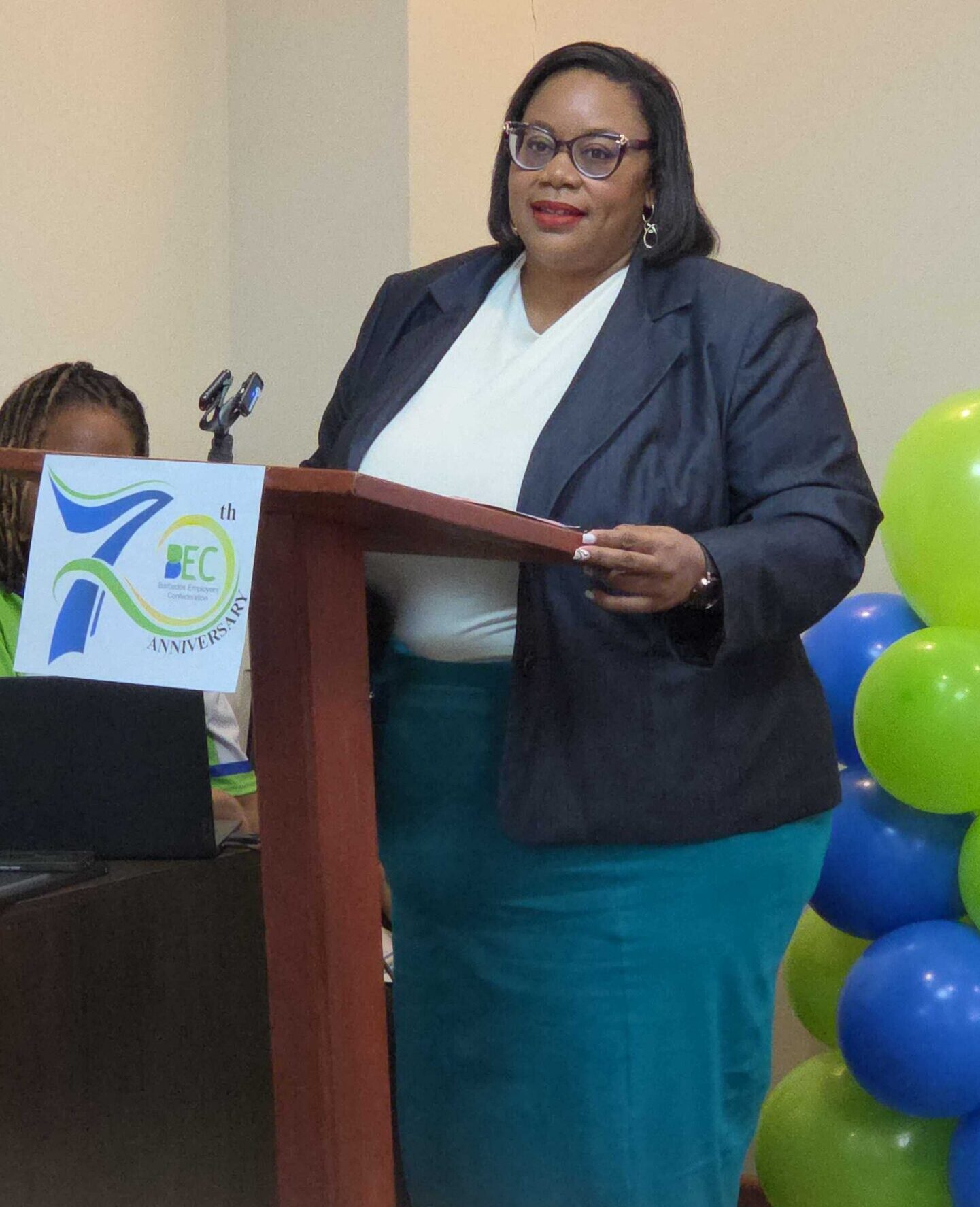
On Monday, the Barbados Employers’ Confederation (BEC) raised formal concerns that the accelerated rollout of recent policy changes including minimum wage hikes and new paternity leave requirements is placing unmanageable logistical and financial pressure on local businesses, calling for more deliberate, forward-planning for future labour market reforms.
BEC Executive Director Sheena Mayers-Granville clarified in an interview with Barbados TODAY that the nation’s employer association does not oppose expanding worker protections and benefits in principle. Instead, the core grievance centers on the abrupt timeline for implementing changes, which has left private sector operators scrambling to adjust. The most pressing issue cited is the rapid series of minimum wage increases, which were rolled out twice in 12 months – first last year, and a second upward adjustment this past January.
“One of the things we have consistently advocated for is adequate notice for changes in legislation, changes in wage policy, because employers need time to adjust and adapt,” Mayers-Granville explained. Beyond the direct upward pressure on labour costs that comes with mandatory wage increases, abrupt policy shifts create unexpected technical challenges for many operations, she added. A large number of businesses rely on automated payroll and human resources systems that require time-consuming updates to reflect new wage structures, adjusted social security contribution rates or modified tax obligations. Rushed timelines leave no room for these critical system adjustments, creating additional operational friction for small and medium-sized enterprises in particular.
Mayers-Granville also emphasized that sustainable wage growth cannot be disconnected from broader productivity trends across the Barbadian economy. While she acknowledged that rising cost of living justifies consideration of wage adjustments, she argued that policy makers must take a holistic, 360-degree view of the labour market. “Workers need to earn wages, but we also need businesses to grow to be able to sustain wage growth,” she said, framing long-term private sector expansion as a prerequisite for consistent improvement in worker compensation.
Turning to the newly enacted paternity leave legislation, Mayers-Granville noted that the BEC was an active contributing member of the advisory committee that recommended introducing the new benefit. However, the association’s support was always conditional on a full assessment of the policy’s impact on the National Insurance and Social Security Service (NISSS), the public body that will now cover paternity leave costs. “Our major concern lay in NIS’s ability to manage that,” she stated. “Our major recommendation was that we should have an actuarial study on the impact before the implementation.”
While Mayers-Granville confirmed that the requested actuarial assessment was ultimately completed, she pointed out that the 2023 rollout of the paternity leave law still did not include enough lead time for the BEC to educate member businesses on new compliance requirements and for employers to adjust their internal policies. Despite this gap in planning, the association has launched a targeted outreach and education campaign to help members align their operations with the new rules.
On a positive note, Mayers-Granville acknowledged that the new paternity leave framework brings tangible benefits to many Barbadian employers. Before the legislation was passed, a large group of proactive businesses already offered paternity leave as a voluntary employee benefit, covering 100 percent of the cost out of internal budgets. Now that the benefit is administered and funded through the NISSS, these businesses see a direct reduction in their labour costs, a change that Mayers-Granville described as a clear plus.
Even with this upside, the BEC continues to prioritize long-term stability of the national social security system, as the scheme takes on new social protection responsibilities alongside the country’s evolving social needs. “The ultimate goal remains ensuring the social security scheme is positioned [so] that it can manage the social protection items that we would want as our society develops,” Mayers-Granville said. The BEC will revisit the topic of labour reform this Wednesday, with a focused discussion on the critical connection between wage levels and productivity growth in the Barbadian economy.