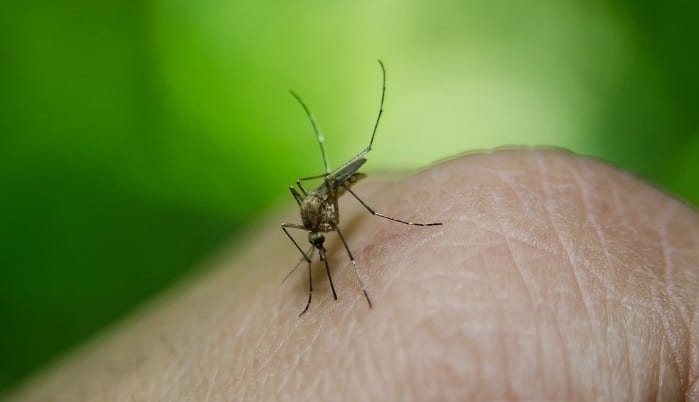
As mosquito-borne illnesses continue to push Caribbean public health systems to their breaking point, the Caribbean Public Health Agency (CARPHA) has launched a urgent regional call to ramp up source reduction efforts, kicking off Caribbean Mosquito Awareness Week 2026 at an opening ceremony in Trinidad on Monday.
Running from May 11 to 15 under the core theme “Stop Disease Transmission, Start Source Reduction”, this year’s awareness initiative arrives at a pivotal juncture: Caribbean nations are gearing up for the incoming rainy season, a period that reliably brings surging mosquito populations and elevated disease risk.
CARPHA officials emphasize that the campaign is far more than a public education exercise—it is a foundational step to protect regional public health. Dr. Mark Sami, CARPHA’s Director of Corporate Services, explained that source reduction, the practice of eliminating standing water where mosquitoes breed, stands as one of the most powerful tools to prevent mosquito-borne illness. Even the smallest, most common household items can become dangerous breeding grounds, he noted: a discarded bottle, a used cup, an old tire, a flower pot drainage tray, a clogged gutter or an uncovered water barrel all hold enough standing water to spawn thousands of mosquitoes.
These illnesses do not only harm individual health—they leave a widespread mark across every sector of Caribbean life. Dr. Sami pointed out that endemic diseases including dengue, chikungunya, Zika and malaria already strain overstretched health systems, disrupt regional economies, hurt the critical tourism sector, force school and workplace closures, and most critically, erode the well-being of Caribbean communities.
Dr. Horace Cox, Head of Surveillance, Disease Prevention and Control at CARPHA, reinforced that mosquito-borne diseases remain a substantial public health burden both globally and across the Caribbean. While dengue, Zika and chikungunya are all persistent major concerns, Dr. Roshan Parasram, Head of Vector Borne Diseases at CARPHA, flagged chikungunya as a particular pathogen to monitor closely, following large, disruptive outbreaks in Suriname and Cuba earlier this year. At the same time, he noted that dengue remains a constant endemic threat across the entire region.
A key silver lining for regional action is that all three of these high-concern diseases are spread by the same mosquito vector, meaning targeted source reduction efforts can cut transmission of all three at once. Parasram stressed that as insecticide resistance becomes increasingly widespread across the Caribbean, source reduction has grown even more critical as a long-term, sustainable control strategy. Done correctly, it is the most environmentally friendly, cost-effective and accessible measure available to communities to keep mosquito populations in check, he added, repeating that “source reduction is the key” to successful vector control.
Beyond grassroots source reduction education, CARPHA is leading a paradigm shift in regional disease preparedness: integrating climate and health data into new early warning systems that can predict dengue surges up to three months in advance. Cox explained that the agency’s technical team is developing new analytical tools that combine historical climate trends, current weather data and local disease surveillance data to forecast upcoming spikes in cases. If public health officials receive a reliable prediction one to three months before a surge is projected to hit, they gain a critical window to pre-deploy resources, run targeted prevention campaigns and intervene early to stop outbreaks from growing.
This year’s awareness week includes hands-on education activities for nearly 300 primary and secondary school students across Trinidad, including guided tours of insectaries, live source reduction demonstrations, displays of mosquito treatment techniques, training on personal protective measures, and showcases of emerging vector control technologies—from surveillance drones to mobile tracking apps and geographic information systems that map breeding sites.
To turn a one-week campaign into long-term regional change, CARPHA is expanding its school-focused outreach across the Caribbean through a regional Health Promotion Ambassadors Programme, which engages schools in selected member states. “This is a Caribbean-wide program,” Parasram explained. Participating schools complete structured training programs that measure student learning and help transform school grounds into spaces far less vulnerable to mosquito breeding.
Dr. Matthew Desaine, Medical Officer at Trinidad and Tobago’s Ministry of Education, highlighted the outsized role schools play in driving long-term public behavior change. “A child who learns why stagnant water must be removed from the environment can take that knowledge home to his parents,” Desaine said. “When our students are engaged in health education, environmental stewardship, and community action, they become the messengers of prevention.”
Desaine added that the fight against mosquito-borne disease cannot be confined to a single awareness week, a single campaign or a single rainy season—it requires sustained, year-round action from communities and institutions across the region.
CARPHA reports that the 2026 awareness week is funded through the Pandemic Fund Project, and aligns with the agency’s regional integrated vector management strategy, which aims to cut mosquito breeding habitats and strengthen long-term prevention capacity across the Caribbean. To keep community engagement high after the awareness week concludes, CARPHA is also launching a regional video competition that invites members of the public to share practical, accessible source reduction techniques they use in their own homes and communities.