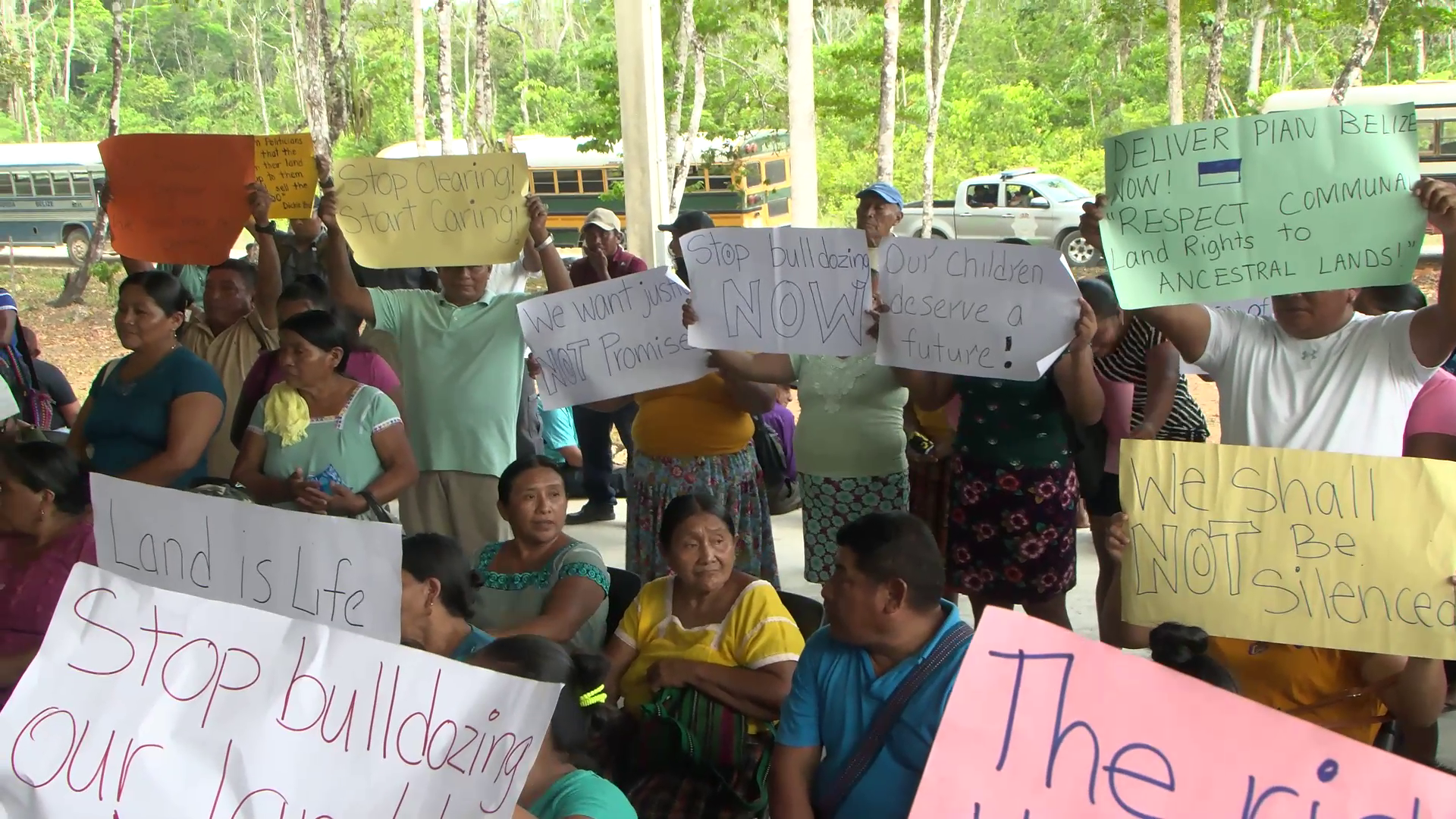
Nearly three years after the Caribbean Court of Justice (CCJ) ended its direct supervision of the long-running Maya land rights conflict in southern Belize, the dispute is once again heading to the regional high court. Maya community leaders announced that bilateral negotiations with the Government of Belize (GOB) have hit a dead end on critical outstanding issues, most notably the formal identification and legal protection of Maya customary land holdings. This latest development has reignited debate over the decades-long fight for indigenous land sovereignty, even as a controversial proposal of monetary compensation has emerged as a potential middle ground for third-party stakeholders.
Cristina Coc, spokesperson for both the Toledo Alcalde Association and the Maya Leaders Alliance, confirmed that the indigenous leadership has officially filed an application with the CCJ seeking clarification on the core directives of the court’s original 2015 ruling. After years of failed peaceful negotiation attempts, the coalition says turning back to the court is the only viable path forward.
“The gulf between the Maya people and the Government of Belize on core issues remains unbridgeable, particularly when it comes to mapping and formalizing boundaries for Maya customary lands,” Coc stated in a public address. “We have held dozens of meetings, explored multiple paths to a negotiated settlement, and invested extensive effort into resolving this conflict amicably, but none of these steps have narrowed our differences. We are filing this application because we have made no meaningful, substantive progress on implementing the CCJ’s original consent order and judgment. We hold the court in high esteem, and we are confident that the clarifications it provides will allow both parties to move forward with full, effective implementation of the court’s original ruling.”
As the dispute drags on, the idea of monetary compensation to resolve conflicting claims has gained mainstream attention, though the proposal remains deeply divisive. Some non-Maya landowners who hold investments in contested territories have indicated they would accept a fair payout to vacate their holdings, while others who have made large long-term investments in the land are unwilling to step away. Maya leaders, for their part, have outlined a nuanced stance on the compensation option, saying it should remain on the table for all parties but must be structured within a constitutional framework to avoid unfair outcomes for indigenous communities.
Pablo Mis, another spokesperson for the Toledo Alcalde Association and Maya Leaders Alliance, explained that the coalition has already advanced targeted proposals for flexible, constitutionally-compliant compensation models that account for the varying circumstances of different stakeholders. “At its core, compensation should be an available option for both the Maya people and any third parties with claims to the land,” Mis noted. “For example, it would be completely unfair to force a third party who has built a life and made sustained investments on a parcel of land to leave without any compensation. At the same time, it is equally unjust to ask the Maya people to cede vast tracts of their customary land to third-party speculators who have never occupied or developed the land, just to line the pockets of investors. These are complex nuances that require clear, decisive leadership from the Belizean government to address properly.
Mis added that all compensation negotiations must be rooted in the constitution of Belize as the ultimate guiding framework for both parties. In a nod to the strain ongoing legal and negotiation processes have placed on the country’s public finances, Mis also shared that the Maya coalition has offered an innovative solution to avoid drawing from the national public purse: the creation of a dedicated, independently funded special reserve, developed in partnership with indigenous leaders, to cover compensation costs. This model, he noted, has already been used successfully to resolve similar indigenous land conflicts in other countries.