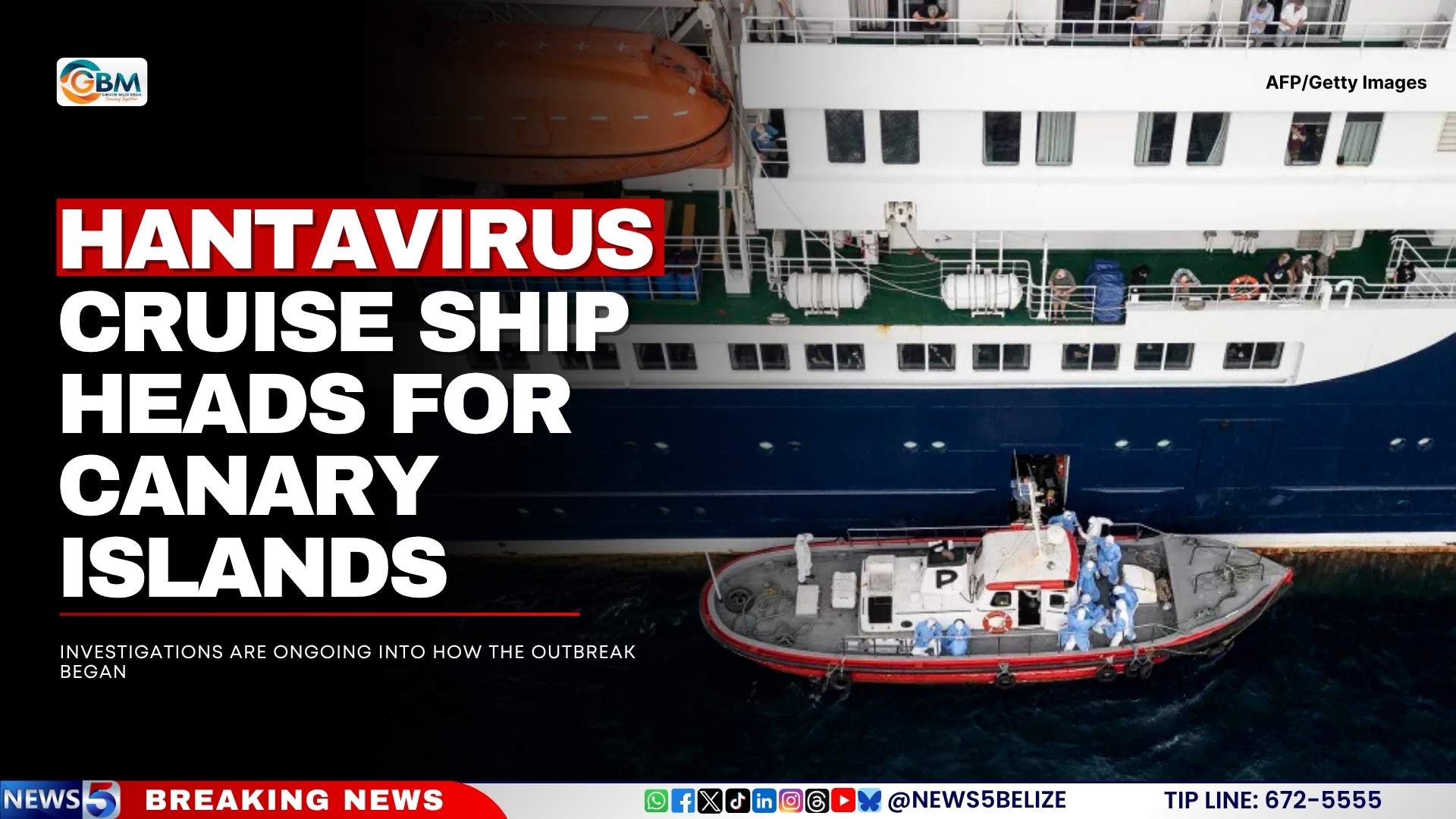
In an ongoing public health incident that has triggered international response coordination, a cruise ship linked to a deadly hantavirus outbreak is making its way to Spain’s Canary Islands, as health agencies across multiple nations work around the clock to trace and monitor potentially exposed contacts.
The expedition vessel MV Hondius departed Cape Verde on Wednesday, carrying close to 150 remaining passengers and crew members. All people onboard are currently held under strict isolation protocols, with continuous medical monitoring to track any emerging signs of infection. The vessel is projected to dock at the island of Tenerife within three days of its departure.
As of the latest update from public health officials, the outbreak has been connected to at least eight confirmed and suspected cases, with three deaths already recorded. The fatalities include a Dutch couple and a German passenger, while a British national who was hospitalized in intensive care in South Africa is now showing signs of improvement.
The World Health Organization has confirmed that the outbreak involves the Andes strain of hantavirus, a pathogen that can spread between people through close, prolonged contact in rare instances. Even with ongoing transmission on the vessel, global health leaders have emphasized that the overall risk of widespread infection to the general public remains very low.
Health authorities in a dozen countries across Europe and Africa, including Switzerland, South Africa and the Netherlands, have launched full contact tracing operations to locate and test passengers who developed symptoms either during the cruise or after disembarking at previous ports of call. The process of identifying all potentially exposed contacts has been complicated by the international makeup of the ship’s passenger roster, with travelers from more than 15 countries originally on the voyage.
Discussions around the vessel’s planned docking at Tenerife have been ongoing between regional and national Spanish health officials, with Spanish authorities confirming that the arrival can be managed safely under rigorous, established public health protocols. All passengers and crew will undergo comprehensive testing and extended quarantine protocols once the ship docks, per regional health requirements.
Investigations into the origin of the outbreak are still ongoing, with preliminary epidemiological findings pointing to possible exposure to the virus before passengers boarded the vessel in Buenos Aires, Argentina. Public health teams in Argentina have also launched preliminary checks at ports and departure points to identify any potential sources of the initial infection.