One of the longest-running territorial disputes in the Western Hemisphere is set to take a critical new step this week, as the United Nations’ highest court for inter-state disputes begins a seven-day public hearing into the conflicting claims over Guyana’s Essequibo region between the South American neighbors Guyana and Venezuela.
The oral proceedings, open to the public, are scheduled to take place at the iconic Peace Palace in The Hague, the Netherlands, the permanent headquarters of the International Court of Justice (ICJ). The hearing centers on the legal status of the 1899 Arbitral Award, a century-old border ruling that forms the core of the conflict between the two nations.
The dispute traces its origins back to 1899, when an international tribunal based in Paris issued the Arbitral Award that granted control of roughly two-thirds of the contested 159,000-square-kilometer Essequibo region to British Guiana, the predecessor state to modern-day independent Guyana. For decades, Venezuela has rejected the legitimacy of the ruling, arguing that the 1899 process was riddled with procedural and legal flaws. Under the terms of the 1966 Geneva Agreement, signed as Guyana prepared for independence from Britain, both countries agreed to pursue a negotiated settlement to the dispute.
The legal journey to the ICJ began in 2018, when Guyana formally submitted an application to the court, initiating official proceedings against Venezuela. Guyana’s filing asked the court to confirm the legal validity and binding force of the 1899 Arbitral Award that established the border between the two states.
From the outset, Venezuela has disputed the ICJ’s authority to hear the case. Shortly after Guyana filed its claim, Venezuela notified the court that it rejected ICJ jurisdiction and would not participate in the proceedings. That position was challenged in a December 2020 ICJ ruling, which found that the court did have the legal authority to hear the application, including questions related to the validity of the 1899 award and the final settlement of the land border dispute.
Venezuela filed a formal preliminary objection to this ruling in June 2022. In response, the ICJ issued a follow-up judgment this past April, rejecting Venezuela’s objection and confirming that it could proceed to adjudicate the substance of Guyana’s claims, within the bounds of the jurisdiction outlined in the 2020 ruling. This decision clears the way for this week’s public hearings on the merits of the dispute.
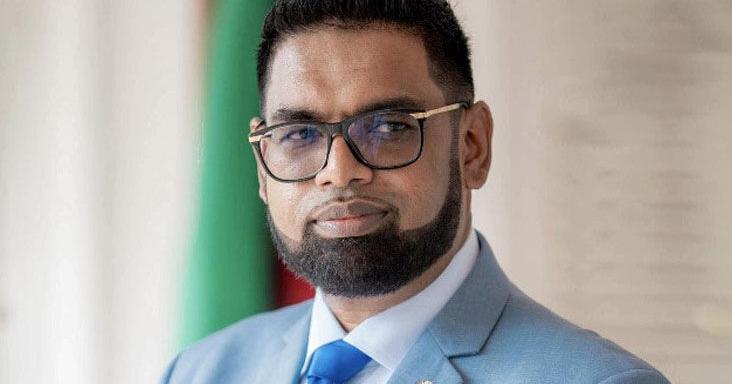
The dispute re-emerged in global headlines just days before the hearing, after Venezuela’s acting President Delcy Rodriguez wore a map-shaped brooch depicting Venezuela as including the entire Essequibo region during a diplomatic engagement with the Caribbean Community (Caricom). The move drew an immediate rebuke from Guyana’s President Dr. Irfaan Ali, who sent a formal letter to Caricom Chairman Dr. Terrance Drew. In the letter, Ali argued that using a Caricom-hosted event to advance a territorial claim against another Caricom member state risks being interpreted as the regional body acquiescing to or tolerating the claim.
Ali reaffirmed Guyana’s long-held position that the dispute is properly before the ICJ for a binding final ruling. “Guyana remains fully committed to the peaceful resolution of this matter in accordance with international law,” he stated. “We continue to repose our confidence in the court and to respect its processes and eventual judgement.”
Rodriguez assumed the role of acting President of Venezuela earlier this year, after a U.S. military operation led to the capture of former President Nicolas Maduro, who is currently detained and awaiting trial on criminal charges in a New York court.